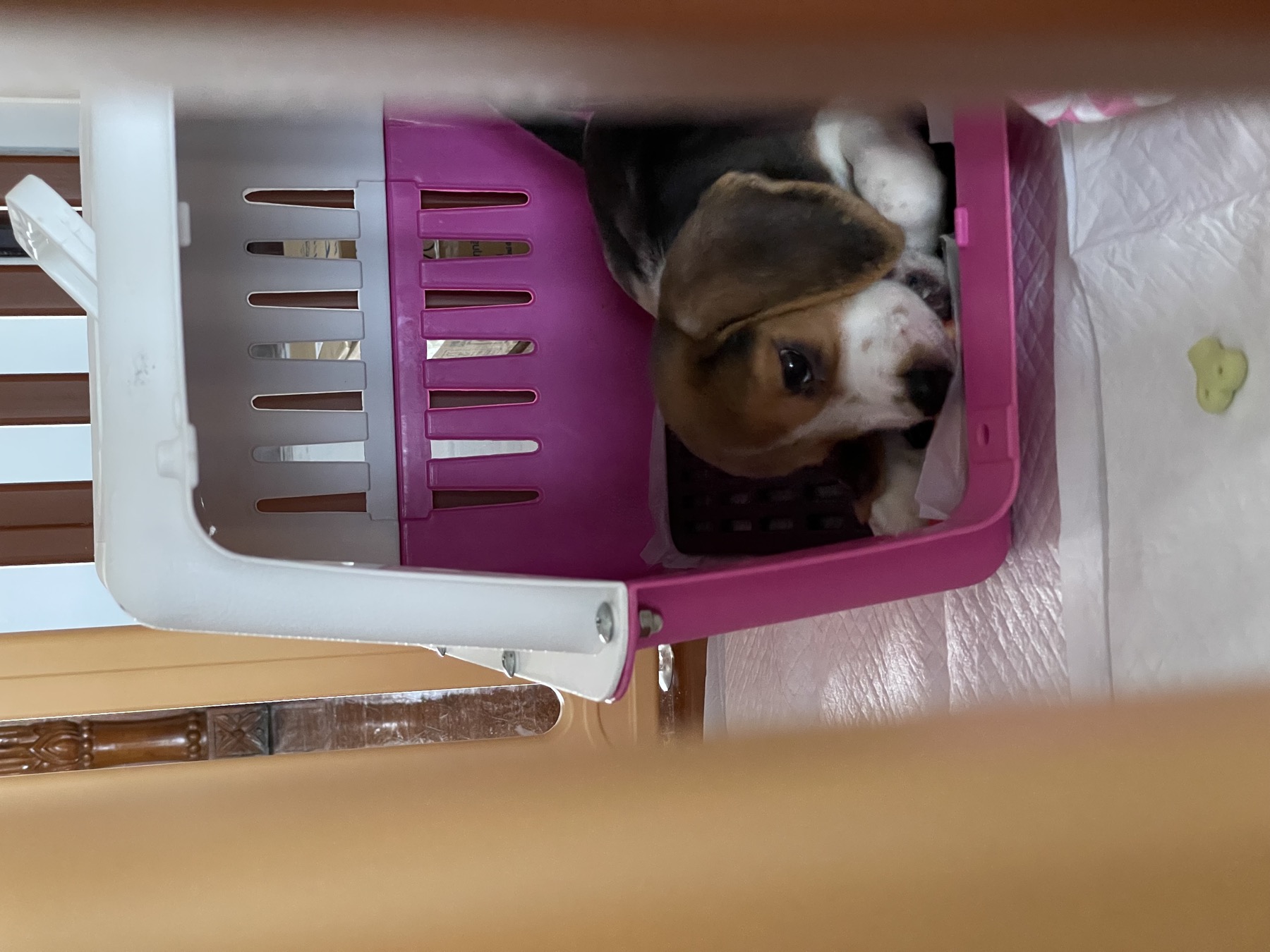
Crate Training Guide: How to Make the Crate Feel Safe, Not Punishing
Crate training works best when the crate becomes a safe, predictable resting place. It goes wrong when the crate becomes a penalty box. The difference is not the crate itself. It is the pattern you build around it: calm setup, short sessions, rewards, choice at the beginning, gradual door closing, and no yelling, dragging, or surprise confinement.
Quick answer: To make a crate feel safe instead of punishing, introduce it while the dog is calm, leave the door open at first, feed treats or meals near and inside it, close the door only for tiny successful moments, release before panic starts, and never use the crate after scolding. The goal is a dog who walks in because the crate predicts rest, food, quiet, and safety.
A crate is not a shortcut for exercise, companionship, supervision, or training. It is a management tool. Used well, it can help with naps, travel, recovery, guest visits, housetraining routines, and giving a dog a private place to decompress. Used badly, it can create fear fast. Dogs are excellent pattern detectives, which is inconvenient when the pattern is "human gets mad, door shuts, I am trapped."
What crate training is actually for
Crate training teaches a dog to settle comfortably in a defined space for reasonable periods. The crate can help when you cannot safely supervise every second, when a puppy needs a nap, when visitors come in, when maintenance workers are in the house, or when travel or veterinary care requires confinement.
It should not be used as a lifestyle substitute. A dog still needs movement, sniffing, play, social time, bathroom breaks, training, and a normal place in the household. If the crate is the only answer to every behavior problem, the plan is too thin.
Good crate training produces these signs:
- The dog enters without being pushed or dragged.
- The dog can eat, sniff, lie down, or settle inside.
- The dog does not panic when the door closes briefly.
- The dog is released while still calm often enough that the crate does not feel like a trap.
- The crate is associated with predictable routines, not anger.
Start by changing what the crate predicts
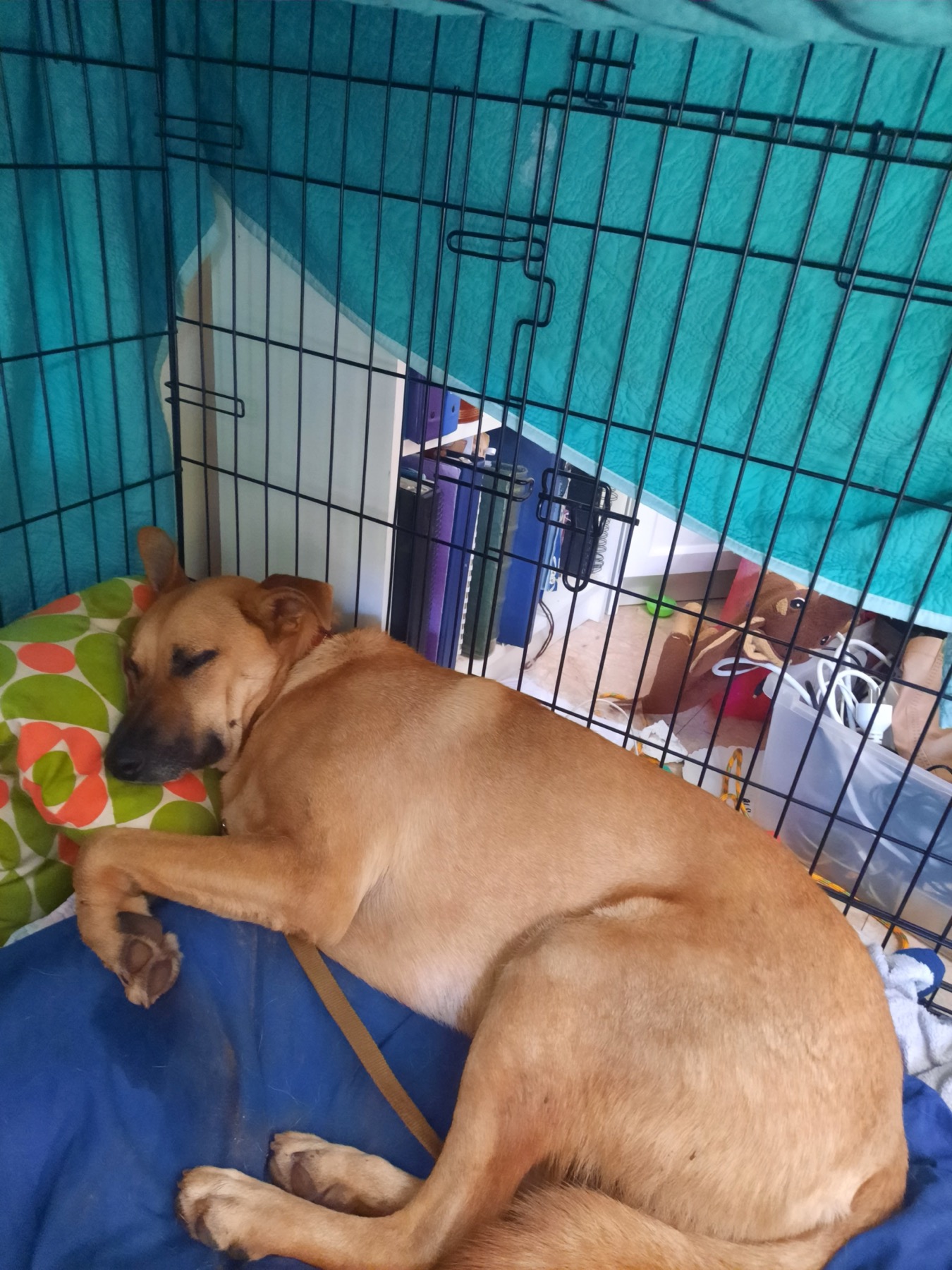
Dogs learn by association. If the crate predicts pressure, isolation, or being shoved away when people are annoyed, the crate will feel bad. If it predicts treats, meals, chew time, quiet naps, and release before distress, it starts to feel safe.
For the first few days, treat the crate like a piece of furniture your dog is allowed to investigate. Put it in a normal part of the home, not a distant punishment corner. Keep the door tied or propped open. Drop a few treats inside without making a production out of it. Let your dog go in and out.
Do not stand over the dog waiting for compliance. Do not slam the door the first time they step in. Do not celebrate like a game-show host and scare them back out. Calm matters.
A simple first-session pattern:
- Toss one treat near the crate entrance.
- Toss the next treat just inside.
- Let the dog step in, eat, and leave.
- Repeat for one or two minutes.
- Stop before the dog gets suspicious or bored.
Short and boring is better than long and dramatic.
Build the crate with rewards, not pressure
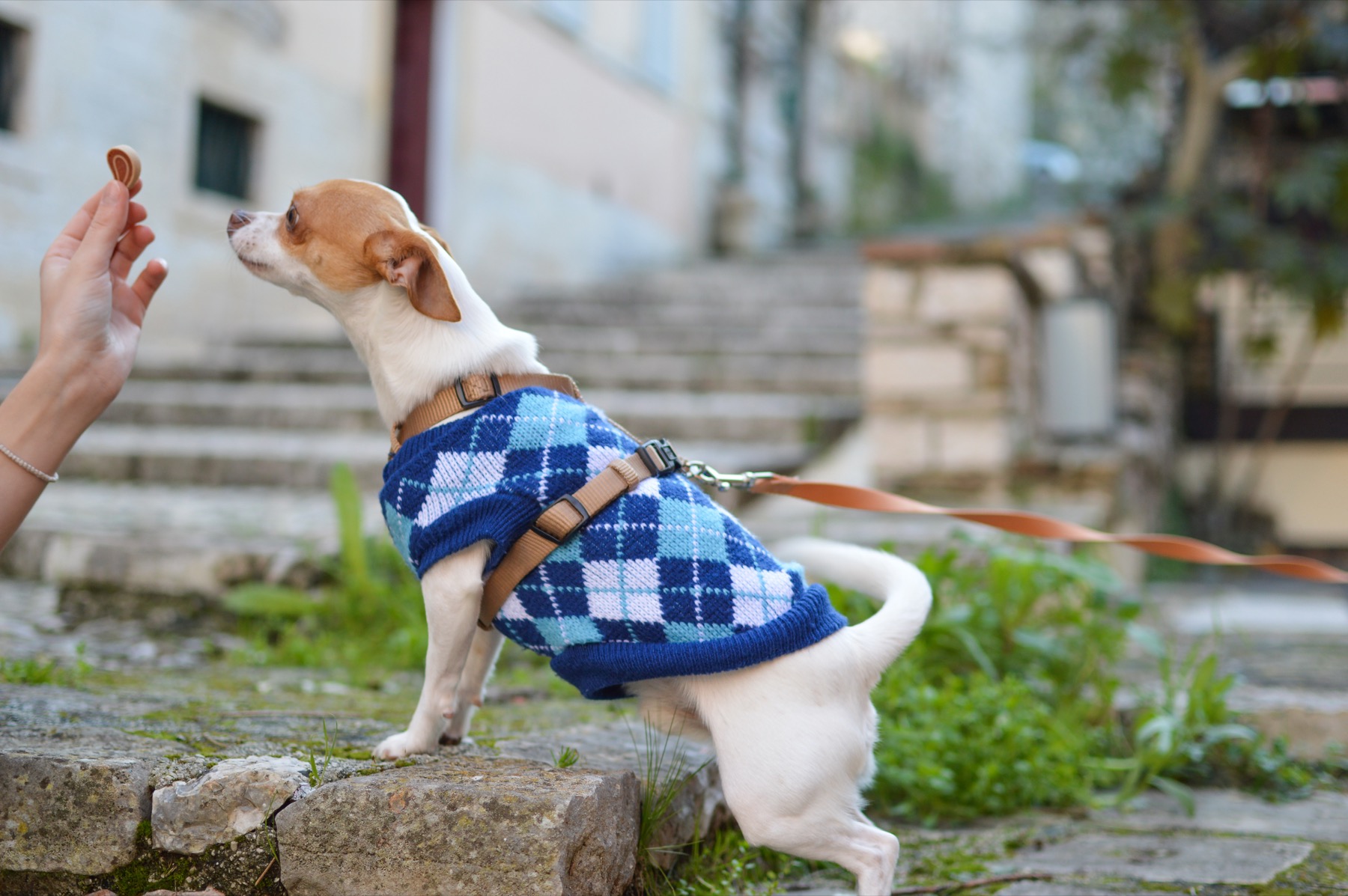
Reward-based training is the cleanest way to teach crate comfort because it lets the dog discover that entering the crate makes good things happen. You are not trying to win a wrestling match with a confused animal in your hallway. You are building a habit.
Use rewards your dog actually values. For some dogs, kibble works. For others, use tiny pieces of chicken, cheese, soft treats, or a stuffed food toy. Keep food safe for your dog and avoid anything that causes stomach trouble.
Try this progression:
- Feed treats at the crate entrance.
- Feed treats with the front paws inside.
- Feed treats with all four paws inside.
- Place a meal bowl just inside the crate.
- Move the bowl farther back over several meals.
- Add a cue such as "crate" only after the dog is already happily walking in.
The cue should predict a chance to earn something, not a command barked five seconds before confinement. Say it once, guide with a tossed treat if needed, and keep the session easy.
Choose the right crate and set it up well
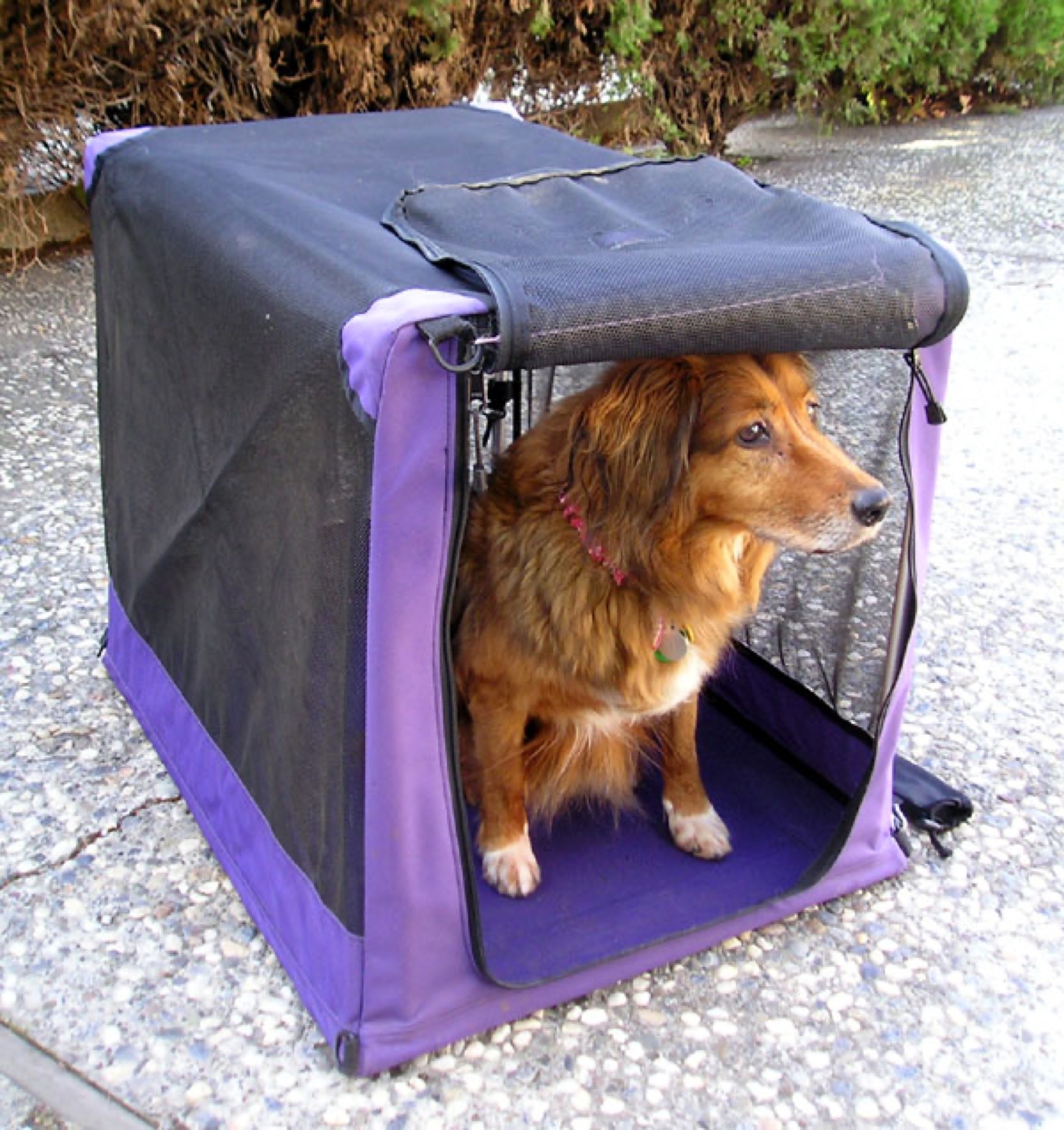
The crate should be large enough for your dog to stand up, turn around, and lie down comfortably. It should not be so cramped that the dog has to curl unnaturally, and it should not be used with collars, dangling tags, harnesses, or anything that could catch on the crate.
For puppies, a divider can help the crate fit their current size while allowing room to grow. For adult dogs, choose based on the dog's real body length and height, not a breed label on a box.
Setup checklist:
- Good ventilation.
- Stable floor and secure latch.
- Comfortable bedding if your dog does not chew or ingest bedding.
- Safe chew or food toy only when appropriate for that dog.
- Water plan for longer periods, especially in warm weather.
- Location away from direct heat, cold drafts, and household chaos.
Some dogs like a partial cover because it reduces visual stimulation. Others find covers unsettling or chew them. Watch the dog in front of you. The internet loves universal rules because nuance does not fit on a product card.
Close the door in tiny steps
The door is where many crate plans fail. People get the dog inside once, shut the door, walk away, and then wonder why the dog files a formal complaint with their lungs.
Door training should be gradual:
- Dog steps in, eats a treat, walks out.
- Dog steps in, you touch the door, treat, release.
- Dog steps in, door moves one inch, treat, release.
- Door closes for one second, treat through the bars, open.
- Door closes for five seconds while you stay nearby.
- Door closes while you take one step away and return.
- Build duration in small, uneven increments.
Uneven increments matter. Do not go 5 seconds, 10 seconds, 20 seconds, 40 seconds like you are training a stopwatch. Mix it up: 5, 12, 3, 20, 8. The dog learns that the door opens again and that calm behavior is easy to maintain.
Release while your dog is still comfortable. If you always wait for barking, pawing, or panic, you may accidentally teach that distress is the only reliable way to make the door open.
Increase duration only after the dog can relax
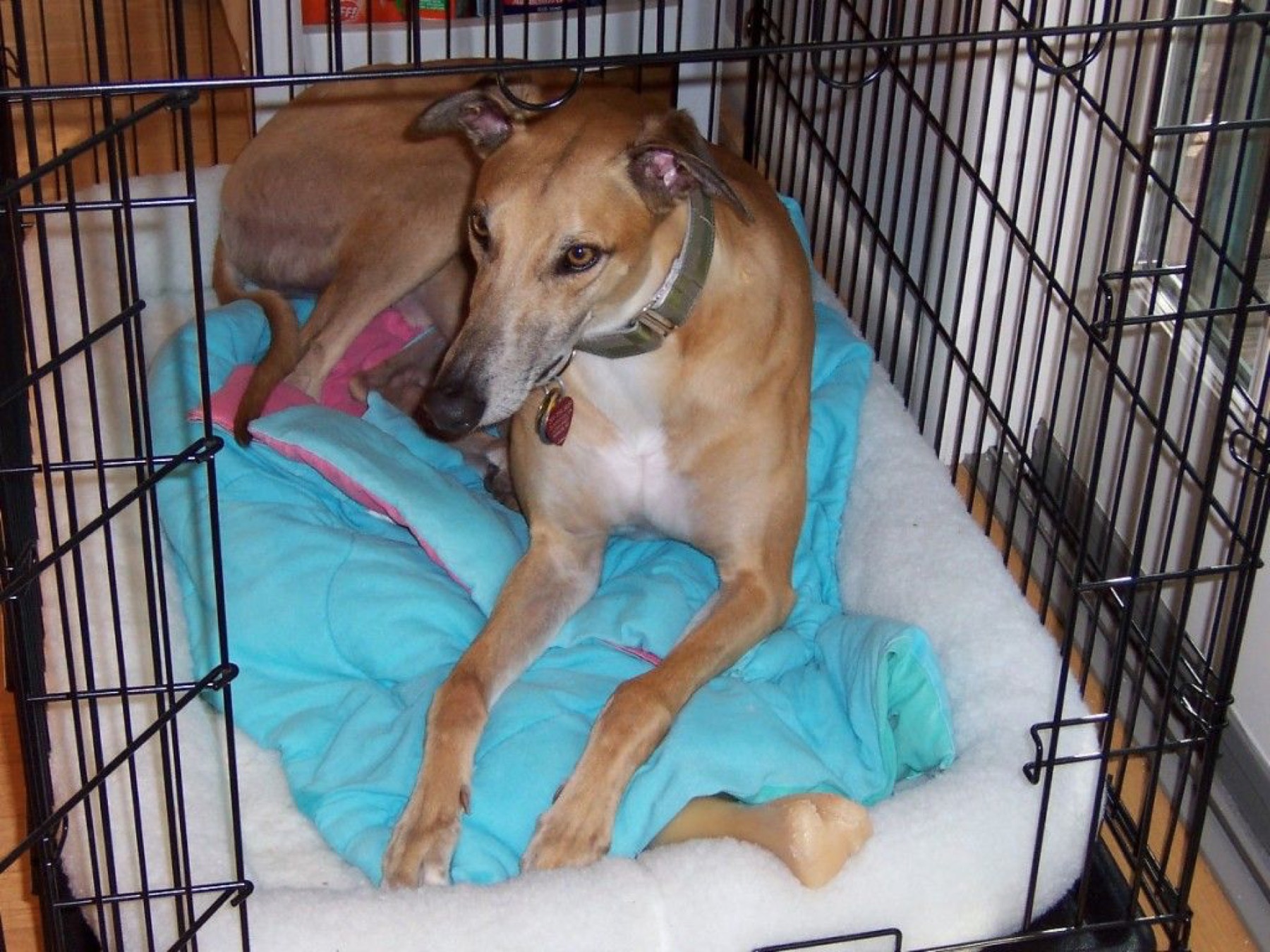
Time in the crate should grow after the dog shows comfort, not before. A dog who can stand quietly for ten seconds is not automatically ready for two hours because you have errands and optimism.
Look for relaxation signals:
- Loose body.
- Soft face.
- Normal breathing.
- Able to eat.
- Sniffs, shifts, then settles.
- Lies down without frantic scanning.
Stress signals include repeated escape attempts, drooling, trembling, hard panting when not hot, frantic barking, biting the crate, repeated elimination despite being taken out, or panic that does not decrease with easier training. Those signs mean the plan needs to slow down. In some cases, especially with separation-related distress, a certified trainer or veterinary behavior professional is the right next step.
A practical duration ladder might look like this:
- 10 to 30 seconds with you beside the crate.
- 1 to 3 minutes while you move around the room.
- 5 minutes while you sit nearby and ignore the dog calmly.
- 10 minutes during a chew or meal.
- 15 to 30 minutes during a normal nap window.
- Short absences only after the dog can relax while you are home.
Do not add distance, duration, and excitement all at once. Change one variable at a time.
Use the crate for safety, not isolation
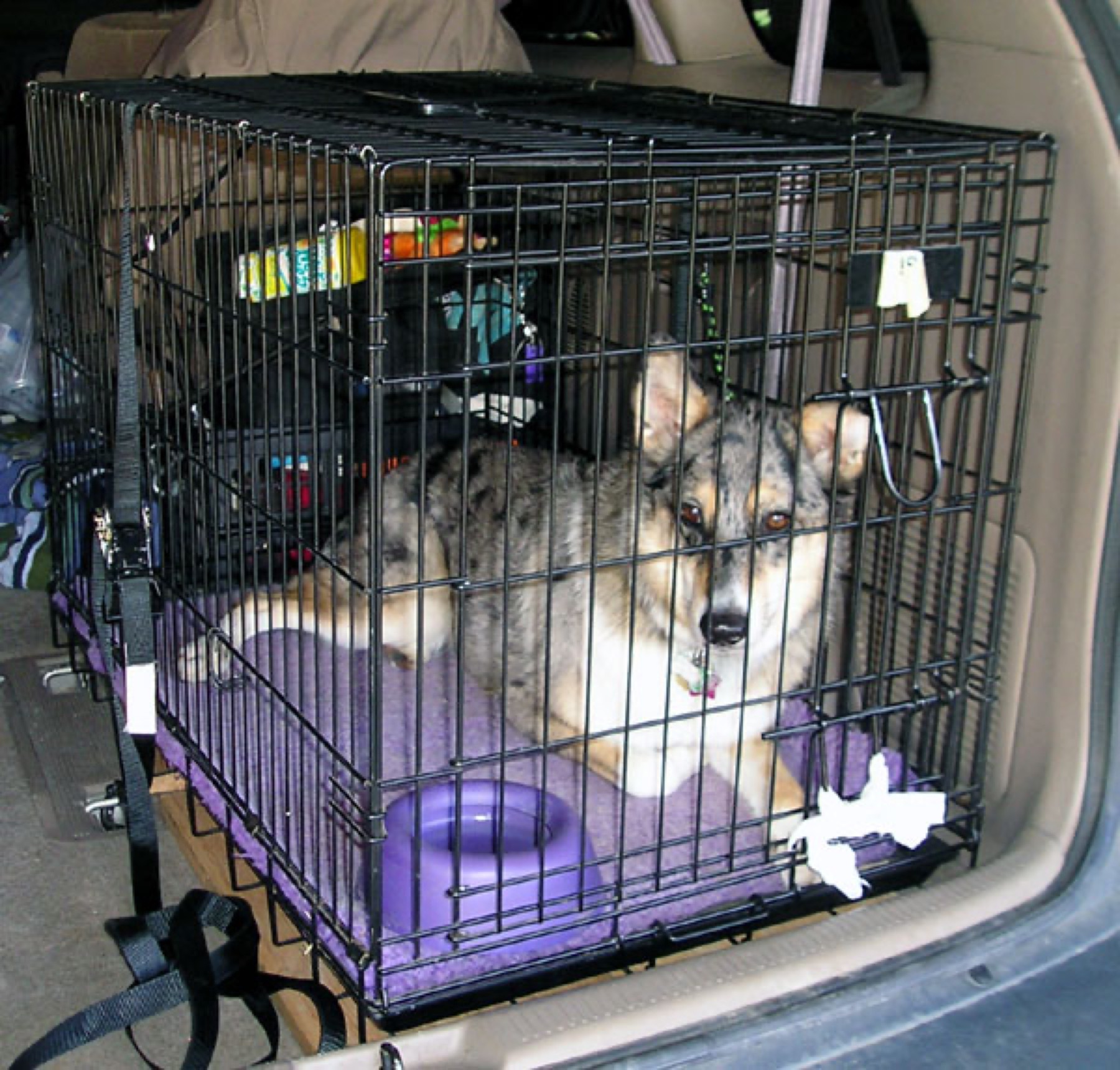
A crate can be useful when the environment is temporarily unsafe: cooking, cleaning with open doors, a repair person coming in, a puppy who needs a nap, a dog recovering from a procedure under veterinary instructions, or travel situations where secure containment is required.
That is different from using the crate to remove the dog from life whenever they are inconvenient. If your dog is crated all day, released into a burst of pent-up energy, then crated again because they are too much, the crate is not the root problem. The routine is.
Before planned crate time, ask:
- Has the dog had a bathroom break?
- Has the dog had age-appropriate exercise?
- Has the dog had some sniffing or mental work?
- Is the crate time reasonable for this dog?
- Is the dog being crated before they are overtired or already frantic?
Crate training goes better when the crate follows needs being met, not replaces those needs.
Do not use the crate as punishment
Using the crate as punishment does not only mean saying "bad dog" and locking the door. It includes any pattern where the crate follows anger, intimidation, physical force, or social banishment.
Avoid these mistakes:
- Dragging or pushing the dog into the crate.
- Yelling while sending the dog in.
- Crating immediately after scolding.
- Using the crate as a timeout for behavior the dog has not been taught to replace.
- Leaving the dog inside until they "give up" from exhaustion.
- Letting children bother the dog while crated.
If your dog jumps on guests, teach a greeting routine. If your puppy bites when overtired, schedule naps before the biting peaks. If your dog steals food, manage access and teach leave-it. The crate can support those plans, but it should not be the whole plan.
Crate size: enough room, not a playroom
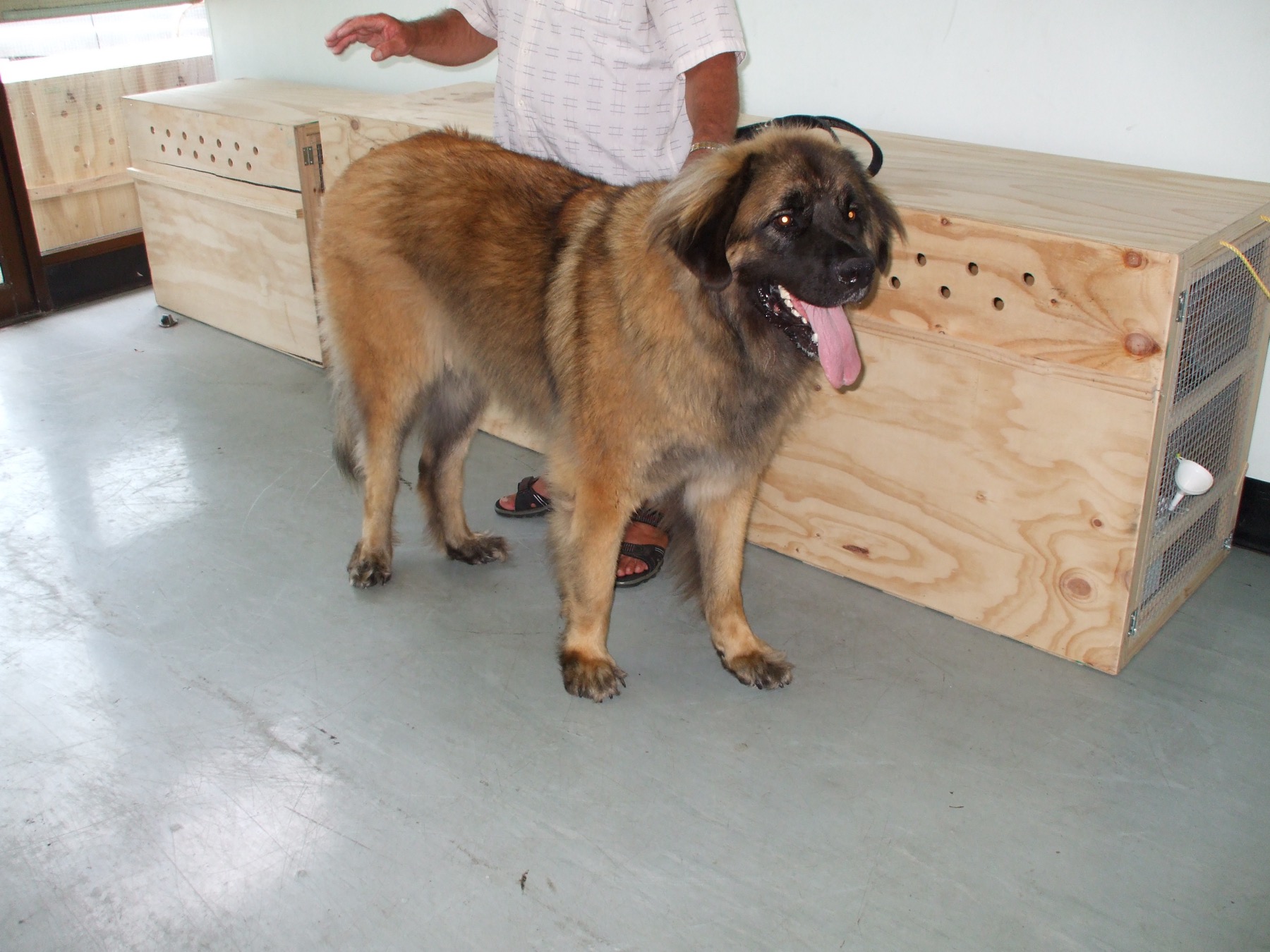
A crate should fit the dog. The usual guideline is enough room to stand, turn around, and lie down comfortably. More space is not always better for housetraining puppies because some puppies may sleep in one area and eliminate in another if the crate is huge.
For adult dogs, comfort matters more than making the crate artificially small. A big dog should not have to fold itself into a box like badly packed luggage. For puppies, use a divider and adjust as they grow.
If your dog has joint pain, mobility issues, heat sensitivity, medical needs, or panic around confinement, talk with a veterinarian or qualified behavior professional before relying on crate confinement. Conservative is better than clever here.
What to do if your dog already hates the crate
If the crate already has bad history, do not try to overpower the association. Reset the picture.
Start with the door removed or tied open. Feed meals near the crate, then at the entrance, then inside only if the dog chooses to enter. Use a mat, pen, or gated safe room as a temporary management option while you rebuild crate comfort. Some dogs need days. Some need weeks. A dog with severe confinement panic may need a customized plan.
The repair rule is simple: make the next version easier than the last version that failed.
Examples:
- If the dog panics when the door closes, practice with the door open.
- If the dog will not enter, reward looking at or walking near the crate.
- If the dog eats inside but bolts out, let them. Do not close the door yet.
- If the dog is fine while you sit there but panics when you leave, train distance separately.
You are not proving a point. You are changing an emotional response.
A sample first-week crate training plan
Use this as a flexible starting point, not a law.
Day 1: Crate appears with the door open. Treats and meals happen near it. No door closing.
Day 2: Treats are tossed inside. The dog enters and exits freely. One or two short sessions.
Day 3: Meals or stuffed food toys happen inside with the door still open. Add a cue only if the dog is comfortable entering.
Day 4: Brief door movement: touch, swing, close for one second, open. Reward calm behavior.
Day 5: Door closes for a few seconds while you stay beside the crate. Release before concern builds.
Day 6: Build to short settled periods while you move around the same room.
Day 7: Try a nap-window session after bathroom, exercise, and a calm chew. Keep it short enough to succeed.
If any day goes badly, repeat the easier day. Training plans are not haunted if you go backward. They are usually better for it.
Common crate training problems
My puppy cries in the crate. First check basics: bathroom, hunger, thirst, temperature, pain, and whether the session was too hard. Young puppies also need gradual alone-time training. Do not ignore intense panic. For mild protest, wait for a tiny pause before opening if you can do so without escalating distress, then make the next session easier.
My dog runs away when I say "crate." The cue may predict confinement too reliably. Rebuild it by saying the cue, tossing a treat in, and letting the dog leave. Do that many times before closing the door.
My dog sleeps in the crate at night but hates it during the day. Nighttime sleepiness is doing some of the work for you. Train daytime crate comfort separately with shorter sessions, food, and normal household movement.
My dog chews bedding in the crate. Remove unsafe bedding and ask your veterinarian or trainer about safe enrichment options. Ingested fabric can become a medical emergency.
My dog soils the crate. Rule out schedule, crate size, stress, diet changes, and medical issues. Puppies have limited bladder control. Adult dogs who repeatedly soil a crate may need veterinary input and a different confinement plan.
FAQ
Is crate training cruel?
Crate training is not automatically cruel, and it is not automatically kind. It depends on how the crate is introduced, how long the dog is confined, whether the dog's needs are met, and whether the dog can relax. A crate used gradually and positively can be a safe resting place. A crate used for long isolation or punishment can be harmful.
Should I put my puppy in the crate for a timeout?
Only if the crate already has a strong positive history and the "timeout" is really a calm nap or safety break, not punishment. If you are angry, do something else first. Put the puppy behind a gate, step away, reset the environment, or use a safe pen. The crate should not predict your frustration.
How long can a dog stay in a crate?
There is no useful one-size answer. Age, health, bladder control, exercise, training history, and temperament all matter. Puppies need frequent bathroom breaks. Adult dogs may handle longer periods, but long daily confinement should not be treated as normal just because the dog survives it. Build gradually and keep the routine humane.
Should I cover the crate?
Some dogs settle better with a partial cover. Others dislike it or chew it. Try a partial cover while you are home, watch your dog, and remove it if it increases stress, heat, or chewing risk.
What if my dog panics in the crate?
Stop making the sessions harder. Panic is not stubbornness. Use easier confinement, rebuild positive associations, and get qualified help if the dog shows intense distress, injury risk, escape attempts, heavy drooling, or panic when left alone.
Can I crate train an adult rescue dog?
Yes, but go slower and assume the crate may have history you do not know. Start with open-door choice, food, and very short sessions. If the dog has confinement trauma or separation distress, use a professional plan rather than forcing the issue.
Methodology and verification notes
This guide was written as editorial synthesis from humane, reward-based training guidance and current crate-training themes from dog welfare and training resources. It is not veterinary advice and does not claim hands-on evaluation of any crate product. For dogs with medical issues, injury recovery, severe anxiety, or confinement panic, consult a veterinarian, certified trainer, or veterinary behavior professional.