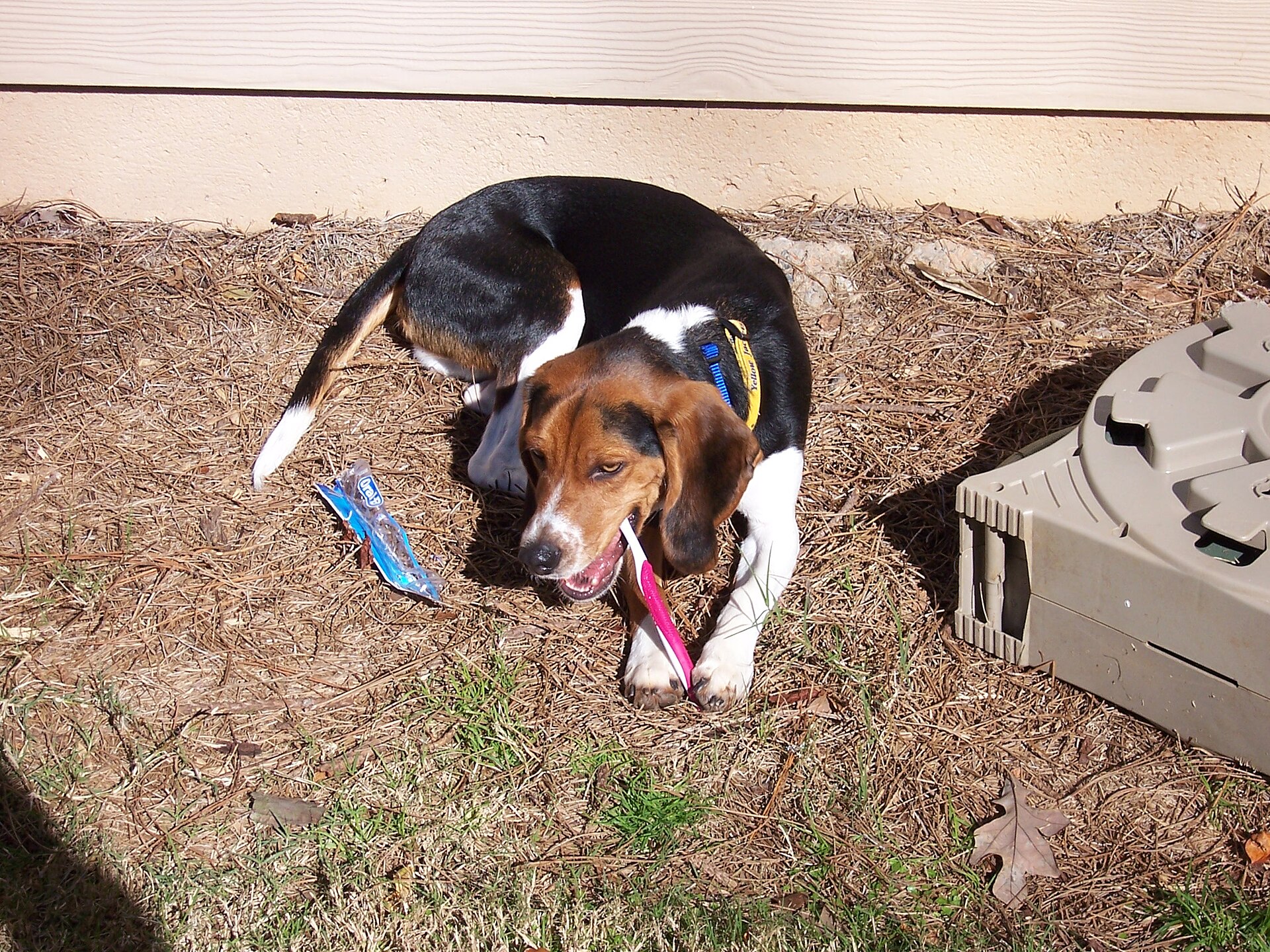
Dog Dental Care Guide: Teeth, Breath, Chews, and Vet Cleanings
Good dog dental care has four parts: regular checks at home, frequent brushing with dog-safe toothpaste, carefully chosen dental products, and veterinary exams with professional cleaning when needed. Brushing is the most useful home-care step. Dental chews can help, but they do not replace brushing or veterinary treatment. Persistent bad breath, bleeding gums, loose teeth, facial swelling, trouble eating, or obvious mouth pain deserve a veterinary appointment.
The practical routine is simple: look at your dog's mouth weekly, work toward daily brushing, choose products with credible evidence such as the Veterinary Oral Health Council (VOHC) Seal of Acceptance, and ask your veterinarian to assess the teeth and gums at routine visits. Some dogs need professional dental care earlier or more often than others.
This guide explains what owners can safely do at home, what bad breath may mean, where chews fit, and why a proper veterinary cleaning is more than cosmetic tartar removal.
Why dog dental care matters
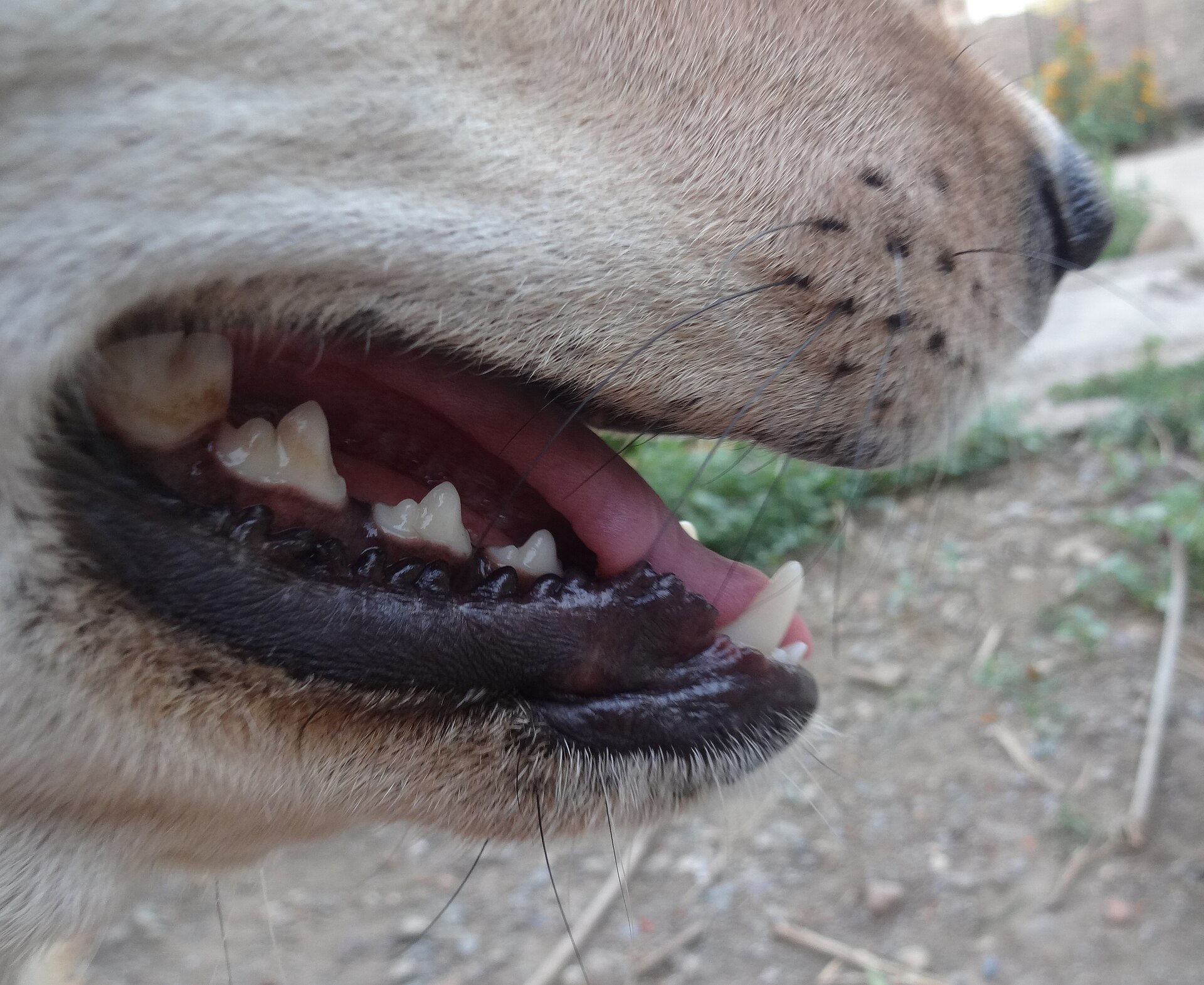
Plaque is a soft bacterial film that forms on teeth. If it is not disrupted, minerals in saliva can harden it into tartar (calculus). The visible brown material matters, but the more important problem is inflammation and infection around and below the gumline. That is where periodontal disease damages the tissues supporting a tooth.
Dogs often keep eating despite dental discomfort, so appetite alone is a poor all-clear signal. Watch for subtler changes:
- chewing on one side;
- dropping food or avoiding hard food;
- pulling away when the face is touched;
- pawing at the mouth;
- red, swollen, or bleeding gums;
- heavy tartar or a broken tooth;
- unusually strong breath;
- reduced interest in toys or chews.
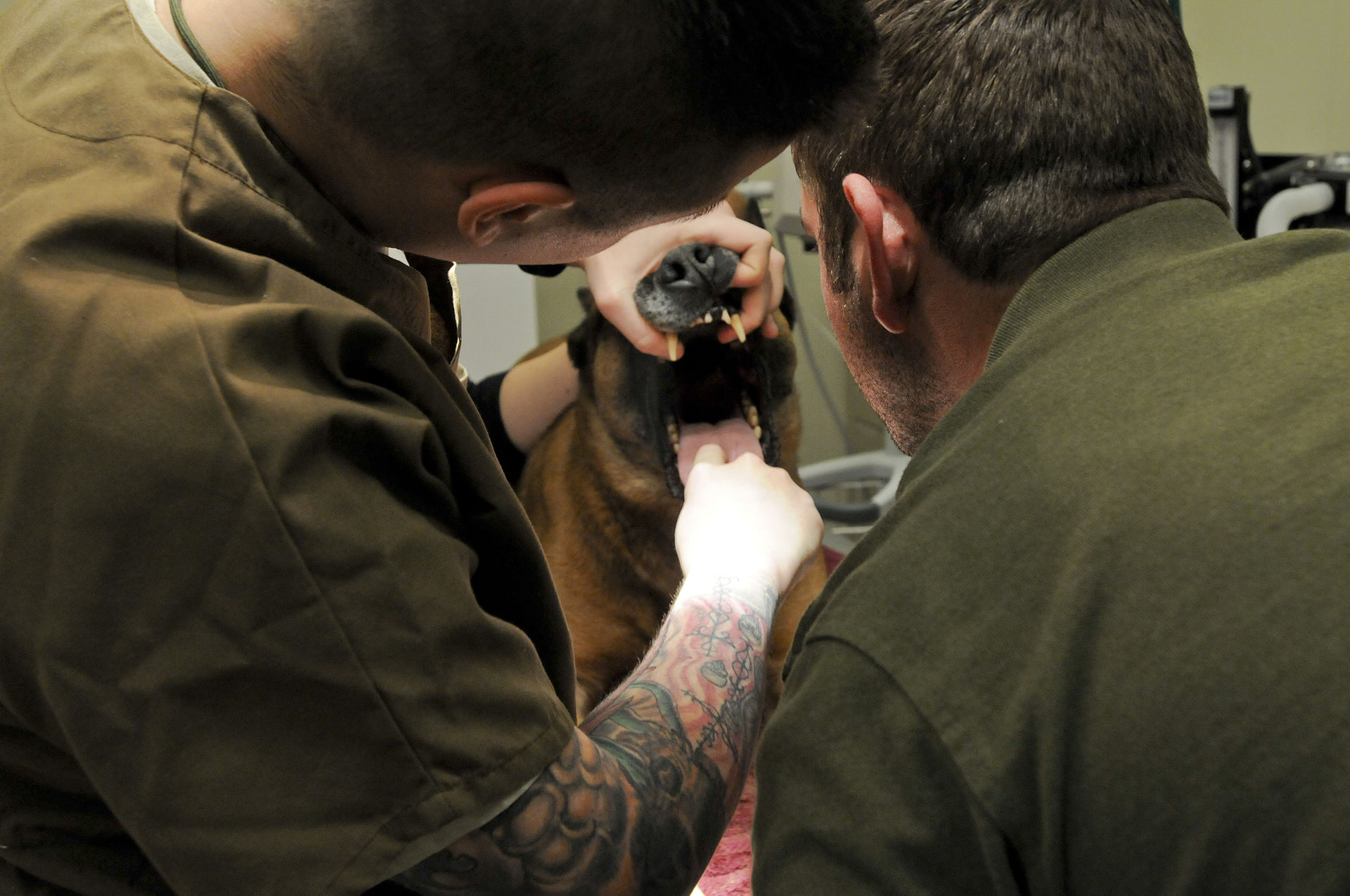
Dental disease is not something an owner should diagnose from a photograph. A calm weekly look can reveal a reason to book an exam, but a veterinarian must assess what is happening under the gums and decide whether treatment is needed.
The best home routine: brush, check, and build gradually
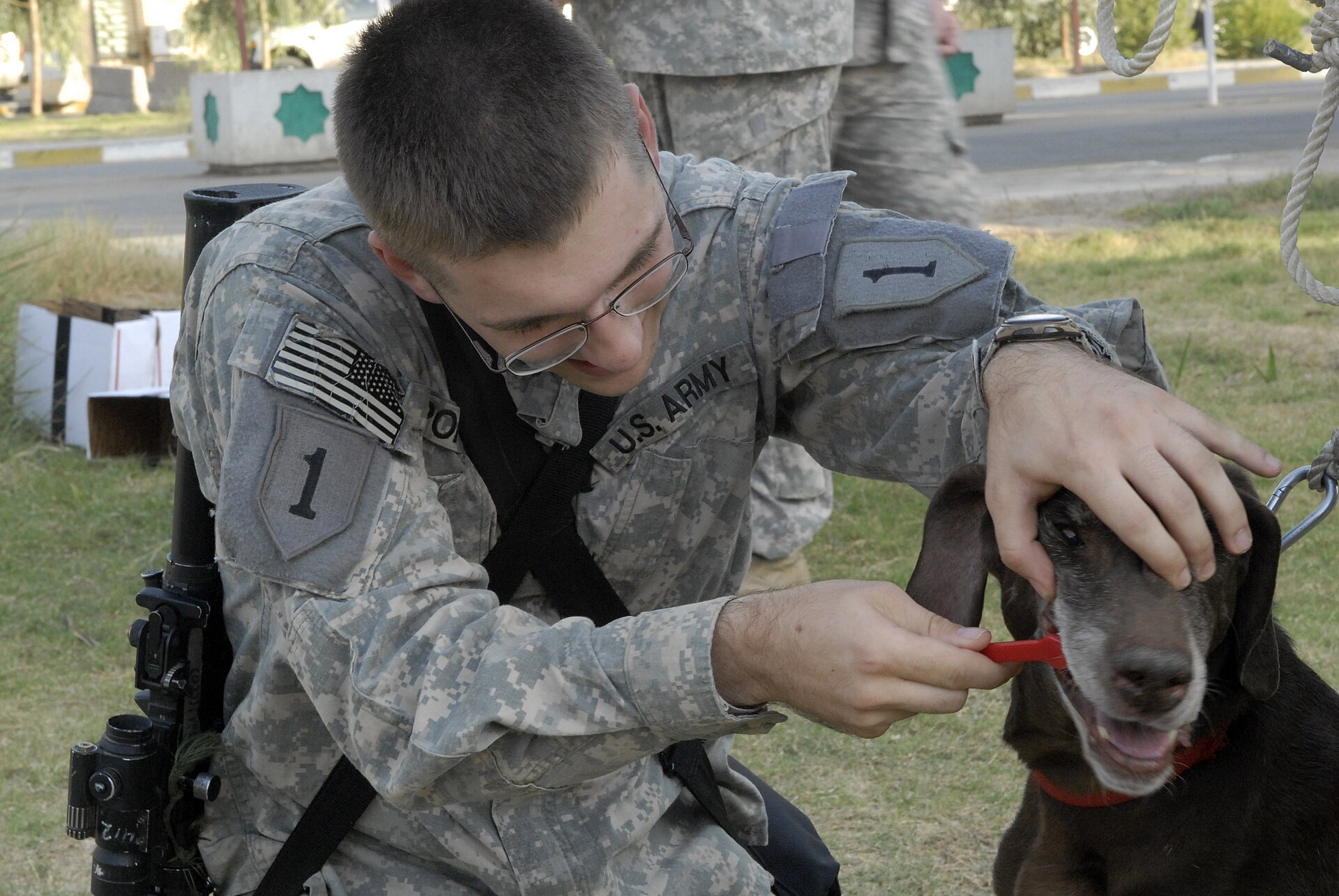
The American Veterinary Medical Association describes regular toothbrushing as the most effective home measure for keeping teeth healthy between veterinary cleanings. Daily brushing gives the best chance of disrupting plaque before it hardens, but an imperfect routine done consistently is better than one heroic wrestling match every few months.
How to brush a dog's teeth
- Start with handling, not scrubbing. When your dog is relaxed, briefly touch the cheek, lift the lip, reward, and stop.
- Introduce dog toothpaste. Let the dog taste a small amount. Never use human toothpaste; ingredients and swallowing directions are designed for people, not dogs.
- Add a soft dog toothbrush or finger brush. Start with a few teeth and only a few seconds.
- Focus on the outer tooth surfaces. Plaque commonly builds where the teeth meet the gums. You do not need to force the mouth wide open.
- Use gentle circles along the gumline. Pressure should be light. Stop if you see pain, marked bleeding, or fear.
- Increase duration gradually. A calm, repeatable session beats forcing a complete brushing.
- Reward cooperation. Finish with praise, play, or a small dog-safe reward.
Many owners find it easiest to brush at the same time each day. Put the brush somewhere visible, keep sessions short, and pair them with an existing routine such as the last evening walk.
A realistic four-week ramp-up
- Week 1: lift the lip for one or two seconds, then reward.
- Week 2: rub the outer teeth gently with a finger or gauze, if your dog remains comfortable.
- Week 3: introduce the brush and clean a few easy teeth.
- Week 4: work toward the outer surfaces on both sides.
If your dog is frightened, growls, snaps, or has a painful-looking mouth, stop. Do not turn dental care into a bite-risk exercise. A veterinarian can check for pain and help you choose a safer handling plan.
Bad dog breath: normal odor or warning sign?
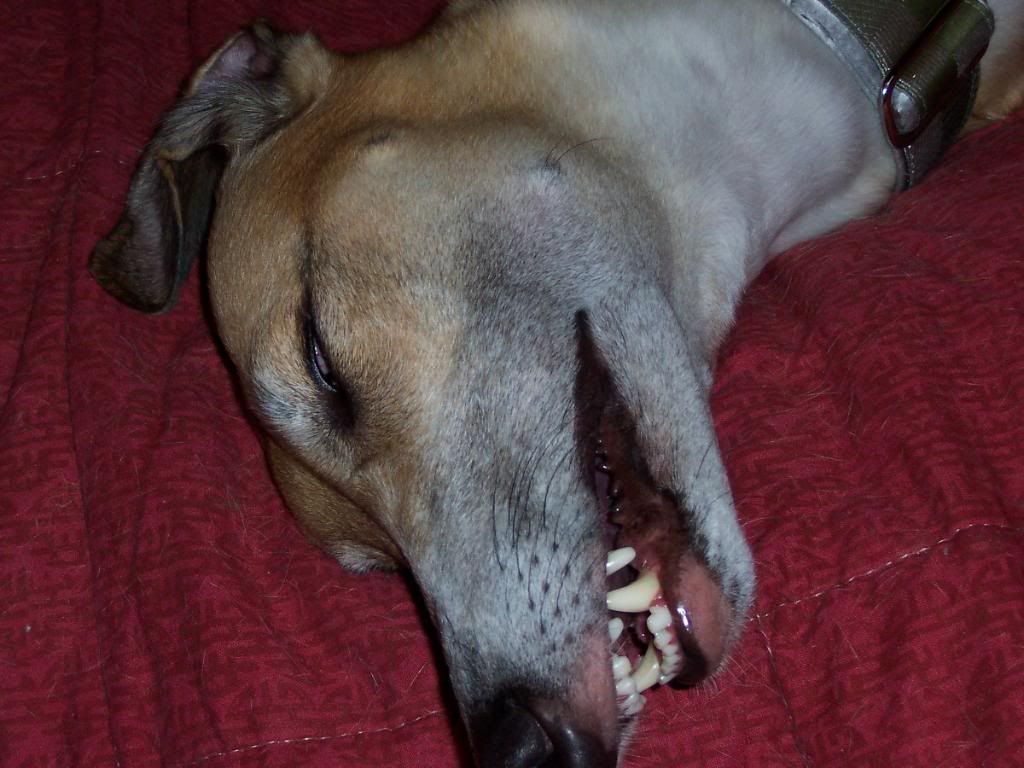
A dog's breath does not need to smell minty, but persistent foul breath is not merely a personality trait. It often accompanies dental disease, although mouth injuries, retained material, growths, and some medical conditions can also change breath.
Book a veterinary exam if bad breath is new, strong, worsening, or paired with:
- red or bleeding gums;
- excessive drooling;
- difficulty chewing or swallowing;
- loose, missing, discolored, or broken teeth;
- swelling around the muzzle, jaw, or below an eye;
- blood on toys or in the water bowl;
- appetite or behavior changes.
Breath fresheners may temporarily change odor. They do not tell you why the odor exists, and they cannot repair an infected or damaged tooth. Treating the smell while ignoring the mouth is like spraying air freshener beside a smoking toaster. The room improves; the problem does not.
Are dental chews enough for dogs?
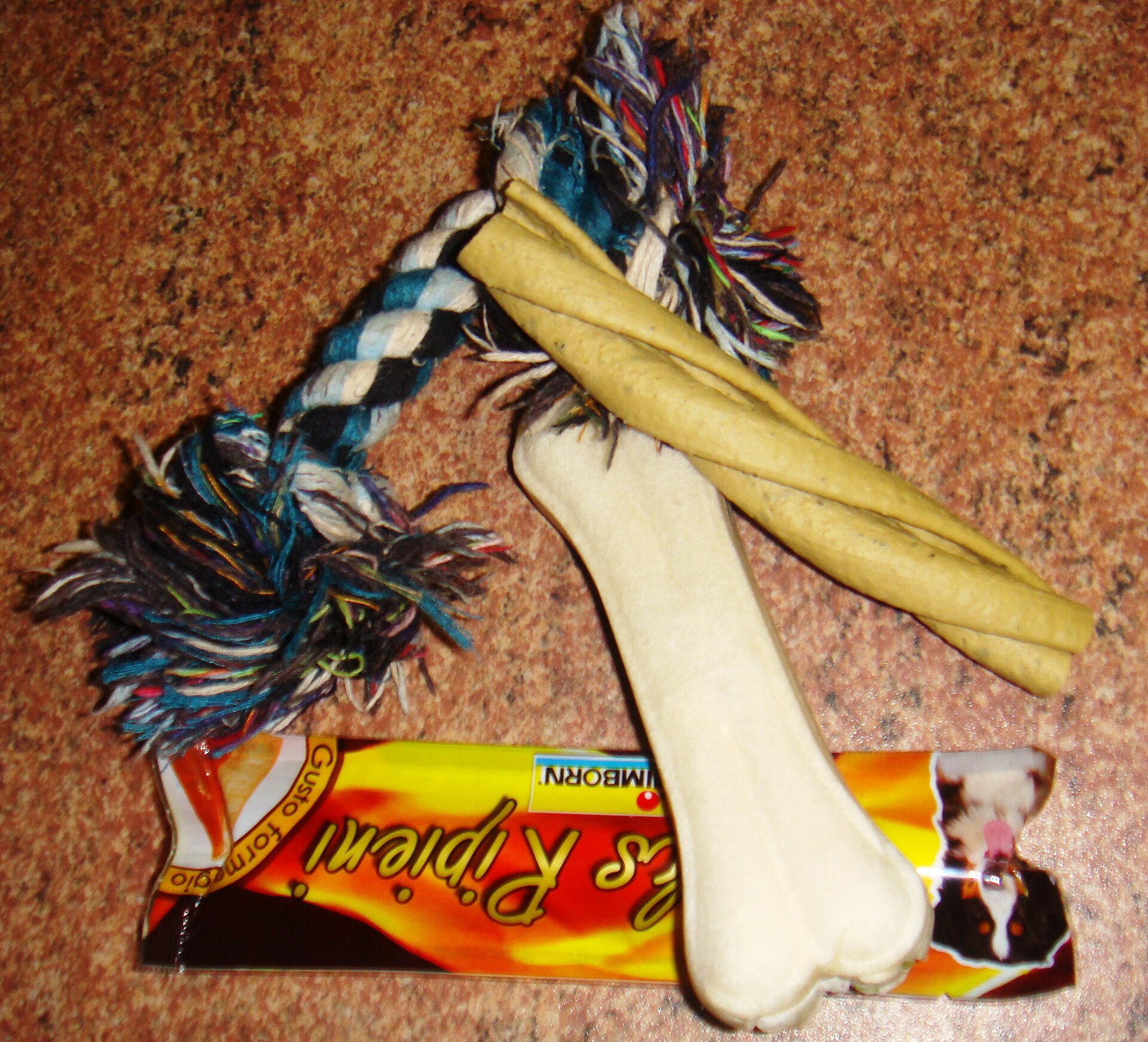
No. Dental chews can be a useful addition, but they are not a complete dental-care plan. A chew may mechanically reduce plaque or tartar on some tooth surfaces. It cannot reliably clean every tooth, reach below the gumline, diagnose disease, or treat a painful tooth.
When comparing products, the VOHC Seal is a useful evidence signal. VOHC reviews submitted data against standards for plaque or tartar control; the council does not personally test every product. Check the current accepted-products list because formulas and listings can change.
Choose a chew that:
- is intended for your dog's current weight and life stage;
- is large enough not to be swallowed whole;
- is used exactly as the label directs;
- fits your dog's calorie needs and dietary restrictions;
- is given under supervision;
- does not encourage your dog to break off and gulp large pieces.
Avoid extremely hard objects that can fracture teeth. Antlers, bones, hooves, and other rock-hard chews may outlast softer products, but longevity is a lousy bargain if a tooth breaks. Ask your veterinarian about chew safety for a dog with existing dental disease, food sensitivities, swallowing problems, a history of gastrointestinal obstruction, or a therapeutic diet.
What about water additives, dental diets, wipes, and powders?
Some may help when supported by appropriate evidence and used correctly. They are best treated as layers, not loopholes:
- Dental diets may use kibble shape, texture, or formulation to reduce plaque or tartar.
- Water additives and oral gels may support plaque control, but dosing and pet acceptance matter.
- Dental wipes can provide mechanical cleaning when a toothbrush is not tolerated, though they may not reach tight spaces as well.
- Powders and supplements vary widely; do not assume "natural" means effective or risk-free.
Look for an evidence-backed product suitable for your individual dog. No additive should delay an exam when there are signs of pain or disease.
What happens during a professional veterinary dental cleaning?
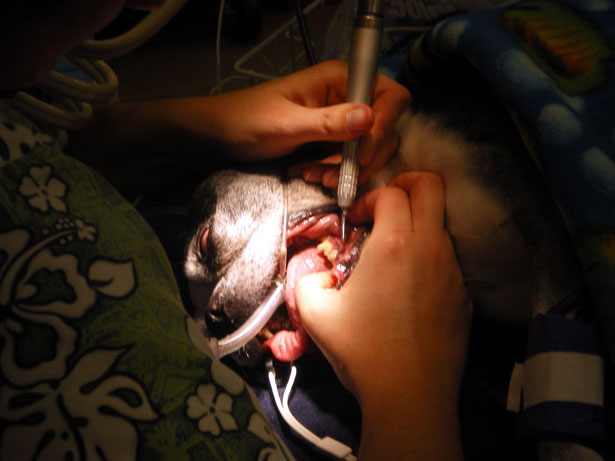
A proper veterinary dental procedure is not simply scraping visible tartar from an awake dog's front teeth. The veterinary team evaluates the whole mouth, cleans above and below the gumline, and can identify and treat problems that home care cannot reach.
Depending on the patient and clinic, the process may include:
- a pre-procedure examination and individualized anesthesia plan;
- bloodwork or other testing based on health, age, and history;
- general anesthesia with airway protection and monitoring;
- a tooth-by-tooth oral examination and periodontal probing;
- dental X-rays to assess roots and structures below the gums;
- scaling above and below the gumline;
- polishing;
- treatment such as extraction when a tooth cannot be saved safely;
- pain control and written aftercare.
Anesthesia has risks, which should be discussed honestly with the veterinarian. It also allows a complete, controlled examination and protects the airway during cleaning. The AVMA does not consider "anesthesia-free dentistry" an adequate substitute for comprehensive veterinary dental care because it cannot safely provide the same below-gum evaluation and treatment.
How often do dogs need veterinary dental cleanings?
There is no trustworthy one-size-fits-all schedule. The right interval depends on the dog's current oral health, age, genetics, tooth alignment, size, diet, home care, medical history, and speed of plaque accumulation.
Small and crowded mouths can be more difficult to keep clean. Dogs with previous periodontal disease may need closer monitoring. A young dog can also have retained baby teeth, a fractured tooth, or an abnormal bite that warrants attention.
Ask at every routine veterinary exam:
- What do you see at the gumline?
- Is there evidence of pain, a damaged tooth, or periodontal disease?
- Does my dog need a dental procedure now, or should we monitor?
- Which home-care products fit this dog?
- When should the mouth be rechecked?
An annual wellness visit is not a promise that a cleaning is needed annually, nor is it permission to ignore the mouth for a year. The veterinarian's findings should drive the plan.
When brushing is not appropriate
Do not start vigorous brushing over obviously diseased or painful gums. Brushing cannot remove established tartar, stabilize a loose tooth, treat an abscess, or mend a fracture. It may hurt and make the dog resist future handling.
Arrange veterinary care before brushing if you notice:
- facial swelling or swelling below an eye;
- a loose, fractured, or displaced tooth;
- pus, significant bleeding, or an oral growth;
- refusal to eat, trouble swallowing, or obvious pain;
- trauma to the mouth;
- sudden severe bad breath with illness or lethargy.
Urgency depends on the signs and the dog's overall condition. Call your veterinary clinic for triage rather than attempting to pry open a painful mouth.
A practical dental-care schedule
Daily or as close as practical
- Brush with dog-safe toothpaste.
- Supervise any dental chew.
- Notice changes in eating, chewing, drooling, or breath.
Weekly
- Lift the lips and look at the outer teeth and gumline.
- Check for redness, swelling, tartar, broken teeth, or new asymmetry.
- Wash the toothbrush and replace worn dental tools.
At routine veterinary visits
- Ask for an oral-health assessment.
- Review whether home care is working.
- Discuss the timing, benefits, and risks of professional dental care.
After a veterinary dental procedure
Follow the clinic's discharge instructions. If teeth were extracted, the dog may need soft food, medication, activity changes, and a pause before brushing or chewing. Do not restart products until the veterinarian says the mouth has healed enough.
Common dog dental-care mistakes
- Waiting for the dog to stop eating. Many dogs eat despite pain.
- Using human toothpaste. Dogs swallow toothpaste; use a product made for them.
- Assuming white visible teeth mean healthy gums. Important disease may sit below the gumline.
- Relying only on chews. Helpful is not the same as complete.
- Using very hard chews. A "natural" label does not make a tooth fracture less expensive.
- Forcing a fearful dog. Fear and pain need a slower or veterinarian-guided approach.
- Expecting brushing to remove hard tartar. Brushing helps control plaque; established calculus needs professional assessment.
- Choosing cosmetic awake scaling. Cleaning what can be seen is not a comprehensive dental procedure.
Frequently asked questions
How often should I brush my dog's teeth?
Daily brushing is the practical gold standard because plaque reforms continually. If daily care is not yet realistic, build toward it gradually and ask your veterinarian which additional evidence-backed products suit your dog.
Can I use human toothpaste on my dog?
No. Use toothpaste specifically made for dogs. Human toothpaste is not intended to be swallowed and may contain ingredients unsuitable for pets.
Do dental chews replace brushing?
No. Some can help control plaque or tartar, especially products with accepted evidence, but they do not clean every surface or treat disease below the gumline.
Why does my dog's breath smell bad?
Persistent foul breath commonly accompanies dental disease, but other oral or medical problems are possible. A veterinary exam is the sensible next step, especially when odor is new or accompanied by pain, swelling, bleeding, drooling, or eating changes.
Can a groomer clean my dog's teeth?
A groomer may offer superficial brushing, but diagnosis, below-gum cleaning, dental X-rays, extraction, and treatment belong with a veterinarian and veterinary team working within local law.
Is anesthesia-free dog dental cleaning safe and effective?
It is not equivalent to a comprehensive veterinary dental procedure. It cannot provide the same controlled below-gum examination, dental imaging, airway protection, or treatment. Discuss anesthesia risks and monitoring with your veterinarian rather than substituting cosmetic scaling.
How can I tell whether a dental product works?
Look for transparent evidence and recognized review signals such as the VOHC Seal of Acceptance. Confirm the exact product and current listing, use it as directed, and remember that acceptance for plaque or tartar control is not a claim that the product treats existing disease.
The bottom line
The strongest dog dental-care plan is not complicated: inspect the mouth regularly, brush frequently with dog-safe toothpaste, use evidence-backed dental products as support, and involve a veterinarian before discomfort becomes a crisis. Bad breath deserves attention, chews are helpers rather than replacements, and professional cleanings address parts of the mouth that owners cannot safely reach at home.
Methodology and verification: This guide is an editorial synthesis of current owner guidance from the American Veterinary Medical Association, Veterinary Oral Health Council, and American Animal Hospital Association dental-care materials. It was not written by a veterinarian and does not replace an examination. Product acceptance lists and clinical recommendations can change; review them with your veterinary team and recheck source guidance when updating this page.