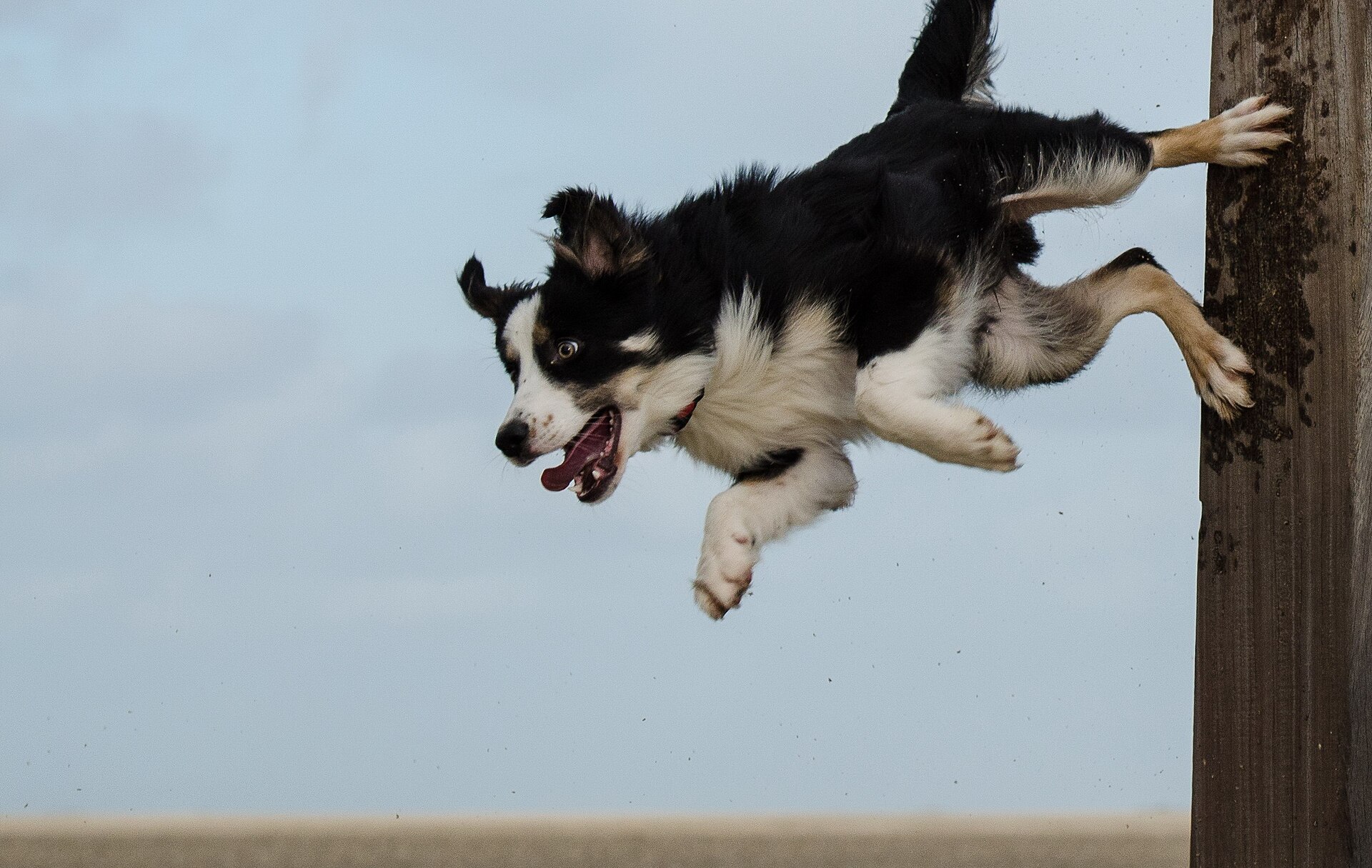
Dog of the Day: Border Collie
Today’s Dog of the Day is the Border Collie: quick enough to beat you to the plan, observant enough to notice you never really had one. Photo: Pixabay contributor 825545 via Wikimedia Commons, CC0.
The Border Collie is a lean, intensely attentive herding dog developed to move livestock in the border country of Great Britain. The breed is famous for intelligence, but “smart” is only the beginning. Border Collies were selected to notice movement, respond to subtle direction, cover ground efficiently, and keep working with remarkable focus.
That can make them extraordinary partners for people who enjoy training, hiking, dog sports, farm work, or building daily routines around an active dog. It can also make them a rough match for a household hoping that a long walk will automatically produce a sleepy couch ornament. A Border Collie without a useful outlet may start managing bicycles, children, shadows, sprinklers, or the family vacuum. Middle management arrives fast when nobody assigns a proper job.
For this Border Collie Dog of the Day feature, the short verdict is simple: this is a brilliant, athletic, sensitive breed for owners who want active collaboration. It is not a shortcut to an “easy” dog.
Border Collie quick facts
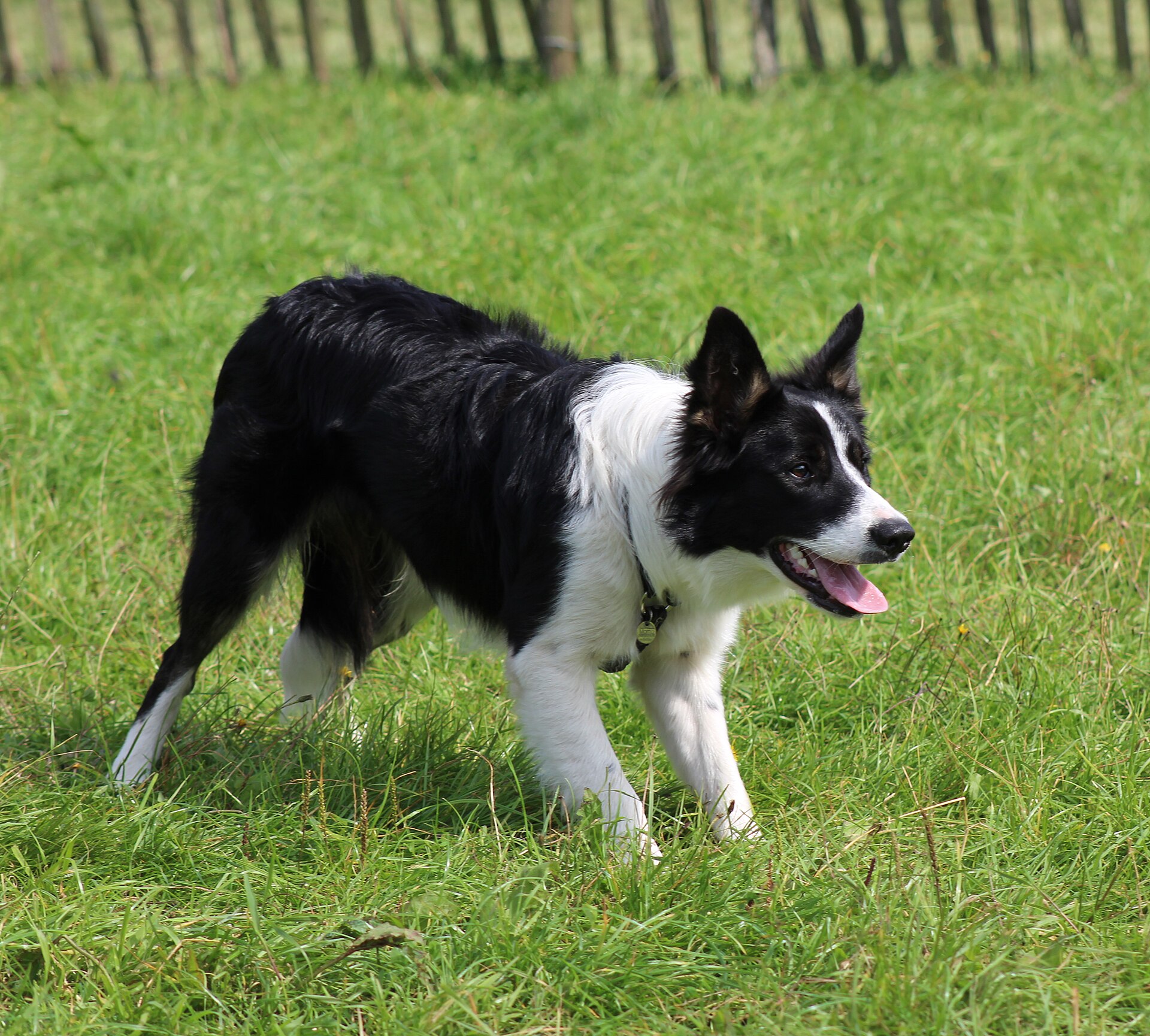
The low, controlled movement associated with stock work is part of the breed’s signature style. Photo: Mom0-goodeboi/Wikimedia Commons, CC BY-SA 4.0.
- Breed group: Herding / pastoral
- Origin: Great Britain, especially the border country associated with England and Scotland
- Original job: Gathering and moving livestock, particularly sheep
- Typical height: About 18-22 inches at the shoulder
- Common weight range: Roughly 30-55 pounds
- Typical lifespan: Often about 12-15 years, with individual variation
- Coat: Weather-resistant double coat; both rough and smooth varieties occur
- Colours: Black and white is iconic, but Border Collies appear in many colours and markings
- Shedding: Moderate, with heavier seasonal coat changes
- Temperament: Alert, responsive, energetic, trainable, sensitive, and strongly work-oriented
- Exercise needs: High, with an equally important need for mental work and recovery
- Best fit: Experienced or committed active owners who enjoy training and structured engagement
- Biggest reality check: A Border Collie needs more than mileage. The dog needs appropriate things to think about, clear boundaries, and practice settling.
These are useful breed-level guidelines, not promises about every individual. Genetics, early experience, health, training, and home environment all shape the dog in front of you.
What is a Border Collie’s temperament like?
Border Collies tend to be intensely aware of their surroundings. Many seem to track where every person, dog, ball, door, and questionable squirrel is located. That awareness supports brilliant work, but it may also contribute to sensitivity around motion, sound, chaotic handling, or inconsistent routines.
With their people, Border Collies can be affectionate, funny, devoted, and highly responsive. They often love learning because learning feels like cooperation. They may pick up cues quickly, including cues nobody meant to teach. If the dog spins before you throw a ball and the throw always follows, congratulations: the dog has trained both participants.
The breed is not uniformly outgoing. Some Border Collies are social butterflies; others are reserved with unfamiliar people. Thoughtful socialization should build calm confidence without forcing interaction. A dog does not need to greet every stranger to be well adjusted.
Herding instincts can appear as stalking, circling, chasing, blocking movement, or nipping at heels. Those behaviours should not be treated as cute proof of genius when directed at children, runners, cars, or other pets. Use management, reward safe alternatives, and get qualified help if chasing or nipping is becoming difficult to control.
Who does a Border Collie fit best?
A Border Collie often thrives with an owner who likes the process of working with a dog. The right home does not necessarily need sheep or a competition calendar, but it does need time, curiosity, structure, and realistic outlets.
The breed may fit well with:
- people who genuinely enjoy frequent training, not just the idea of owning a trained dog
- active households that can combine physical exercise with scent work, problem-solving, obedience, or dog sports
- owners who appreciate a sensitive, closely connected companion
- farms and working homes that understand safe, progressive stockdog training
- families able to supervise children and prevent chasing or herding games from becoming stressful
- people willing to teach calmness as deliberately as speed and tricks
The breed may be a poor fit for:
- homes looking for a relaxed, low-engagement pet
- people who are away for long periods without a realistic care and enrichment plan
- households where fast-moving children or pets cannot be safely managed
- owners who rely on repetitive ball throwing as the entire exercise program
- anyone choosing the breed mainly because “the smartest dog should be the easiest dog”
Intelligence raises the ceiling. It does not lower the workload.
Why Border Collies were bred to work
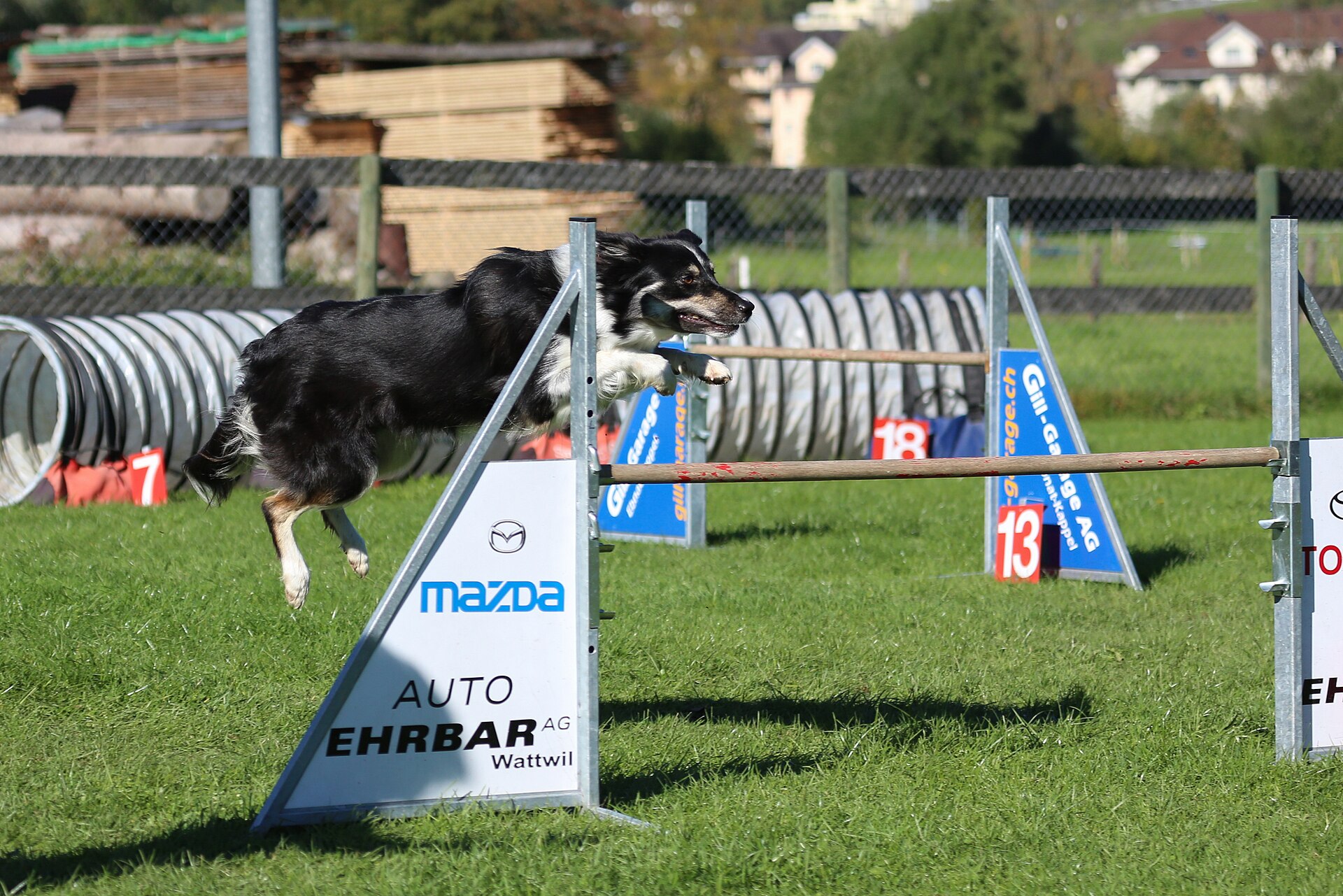
Modern dog sports channel the breed’s speed and responsiveness, but control and safe conditioning matter as much as excitement. Photo: A. Buser/Wikimedia Commons, CC BY-SA 3.0 CH.
Farmers and shepherds in Great Britain developed the Border Collie over generations for working ability. A valuable stockdog could gather scattered animals, bring them toward the handler, hold a group, and respond to direction across difficult ground. The American Border Collie Association describes the breed’s instinct to head livestock and its gathering ability as central to its practical farm value.
The breed’s name points to the border regions where these dogs proved themselves. Their characteristic approach may include a lowered posture and intense gaze, often called “eye,” used to influence the movement of stock. Not every dog works in precisely the same style, and serious livestock training requires maturity, suitable stock, and knowledgeable supervision.
The modern Border Collie is still employed on farms, but the same traits also appear in agility, obedience, flyball, disc sports, scent work, search roles, and countless elaborate backyard games. Their history explains why casual exercise alone may not satisfy them. They were bred to take information, make decisions, and work in partnership.
Owner reality: energy is only half the story
People often ask how many hours of exercise a Border Collie needs. The better question is what kind of day helps this particular dog stay healthy and settled.
Endless high-speed activity can create a fitter dog who expects endless high-speed activity. A better routine usually mixes purposeful movement, sniffing, short training sessions, appropriate play, rest, and ordinary household calm. Puppies, seniors, and dogs with health concerns need plans suited to their bodies rather than a generic internet quota.
Border Collies can also become intensely attached to particular activities. Ball play, light reflections, moving water, or chasing can tip from enthusiasm into fixation in some dogs. Keep games structured, build start-and-stop cues, rotate activities, and watch whether the dog can disengage and recover. If repetitive behaviour is difficult to interrupt or affects daily life, consult a veterinarian or qualified behaviour professional.
Apartment living is not automatically impossible, and acreage is not automatically enough. A bored Border Collie can be bored on 20 acres. What matters is whether the household can provide safe outlets, training, supervision, and a reliable off-switch.
Training a Border Collie without creating a tiny lawyer
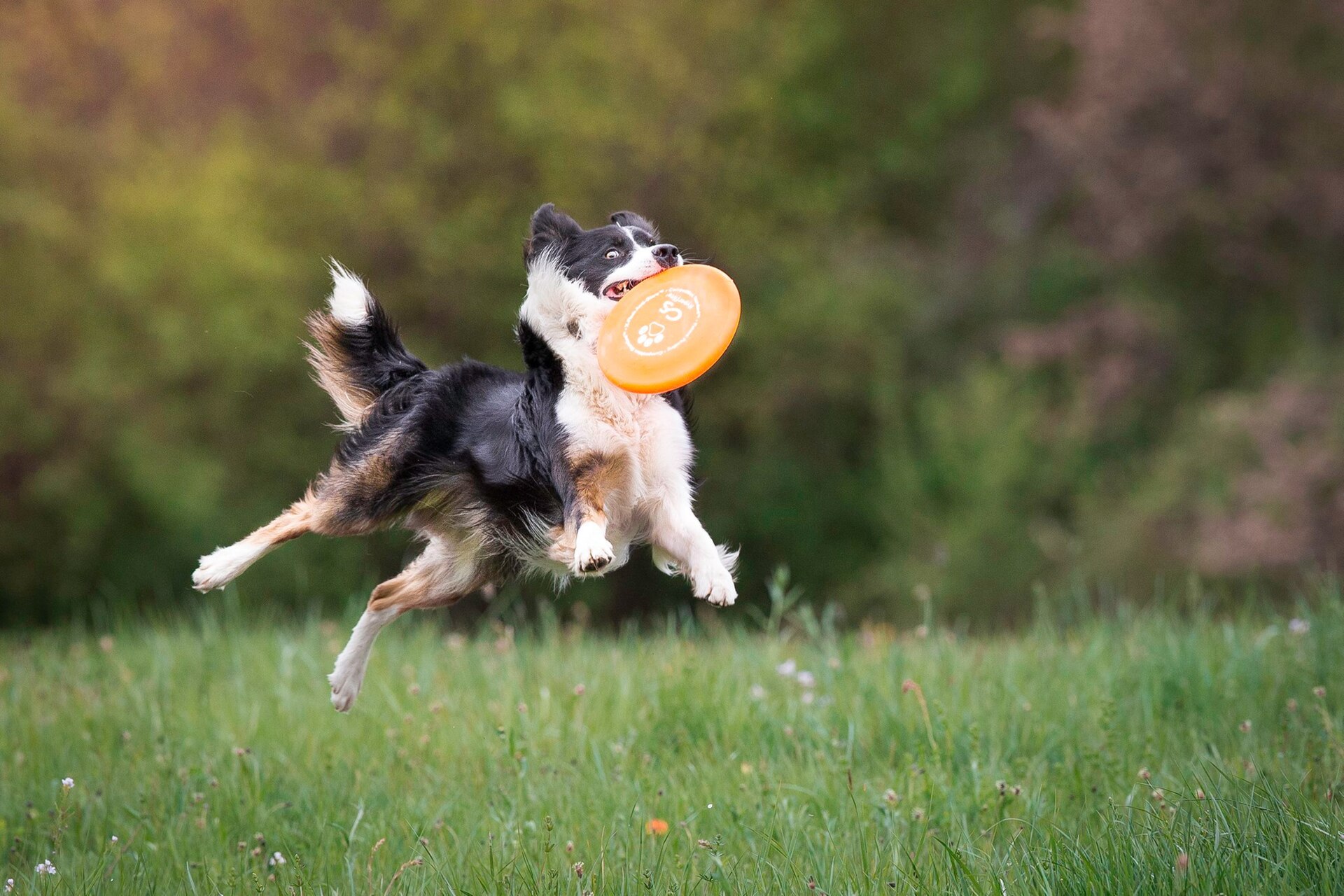
Fast games are a natural fit for many Border Collies. Clear rules, warm-ups, breaks, and the ability to stop are part of the game. Photo: Jean-noelkern/Wikimedia Commons, CC BY-SA 4.0.
Border Collies usually learn quickly, but speed of learning works in both directions. Training should be clear, fair, and consistent. Harsh methods can be especially damaging for a sensitive dog and are unnecessary for building reliable skills.
Useful foundations include:
- name response and a well-rewarded recall
- loose-leash walking around motion and distractions
- leave it, drop it, and safe trading
- a mat settle and comfortable alone-time skills
- waiting at doors, gates, and car exits
- calm greetings instead of jumping or circling
- cooperative handling for brushing, paws, ears, teeth, and veterinary care
- cues to start and finish exciting games
Keep sessions short enough that the dog remains thoughtful. Precision is fun, but daily life also requires flexibility. Reward the Border Collie for doing nothing: lying down while dinner happens, watching a bicycle without chasing, or settling after a walk. Calmness is a trained skill, not a software update that arrives on the third birthday.
For livestock work or serious behaviour concerns, find a qualified professional with relevant experience. A general puppy class and a stockdog field are not interchangeable classrooms.
Coat, grooming, and routine care
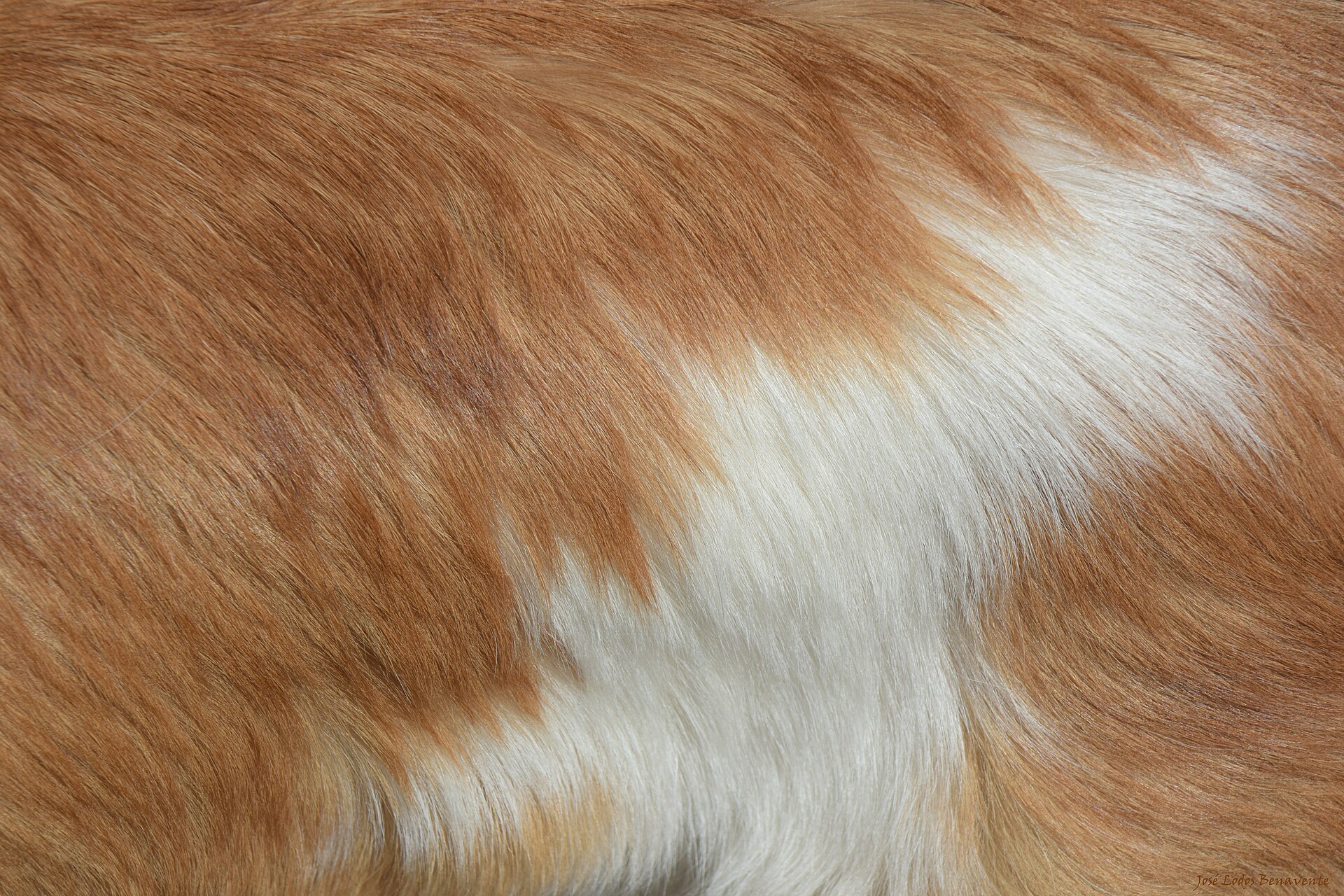
Border Collies can be rough- or smooth-coated and come in far more colours than the familiar black and white. Photo: Joselodos/Wikimedia Commons, CC0.
Border Collies have a weather-resistant double coat. Rough-coated dogs carry more feathering; smooth-coated dogs have shorter hair. Both shed. Brush regularly to remove loose coat and catch tangles, paying attention behind the ears, around the legs, and through longer feathering. Seasonal shedding may call for more frequent brushing.
Bathing depends on the dog’s lifestyle. Mud, farm work, swimming, and the occasional decision to wear a dead leaf collection will change the schedule. Use dog-appropriate products and dry the coat properly. Check ears, keep nails at a comfortable length, and build tooth brushing into the routine when possible.
Food should suit the dog’s age, body condition, health, and workload. A highly active working adult, a growing puppy, and a quiet senior do not have identical needs. Your veterinarian can help with feeding and body-condition decisions.
Responsible breeders should be transparent about health screening relevant to their breeding dogs. Border Collie screening programs commonly address eyes and joints alongside breed-relevant inherited conditions. Screening reduces uncertainty; it does not guarantee that a dog will never become ill. Rescue organizations should also be honest about what is and is not known.
This is general breed education, not veterinary advice. Pain, limping, vision changes, seizures, persistent digestive trouble, unusual fatigue, or sudden behaviour changes deserve veterinary attention.
Border Collie puppies need brains, boundaries, and sleep
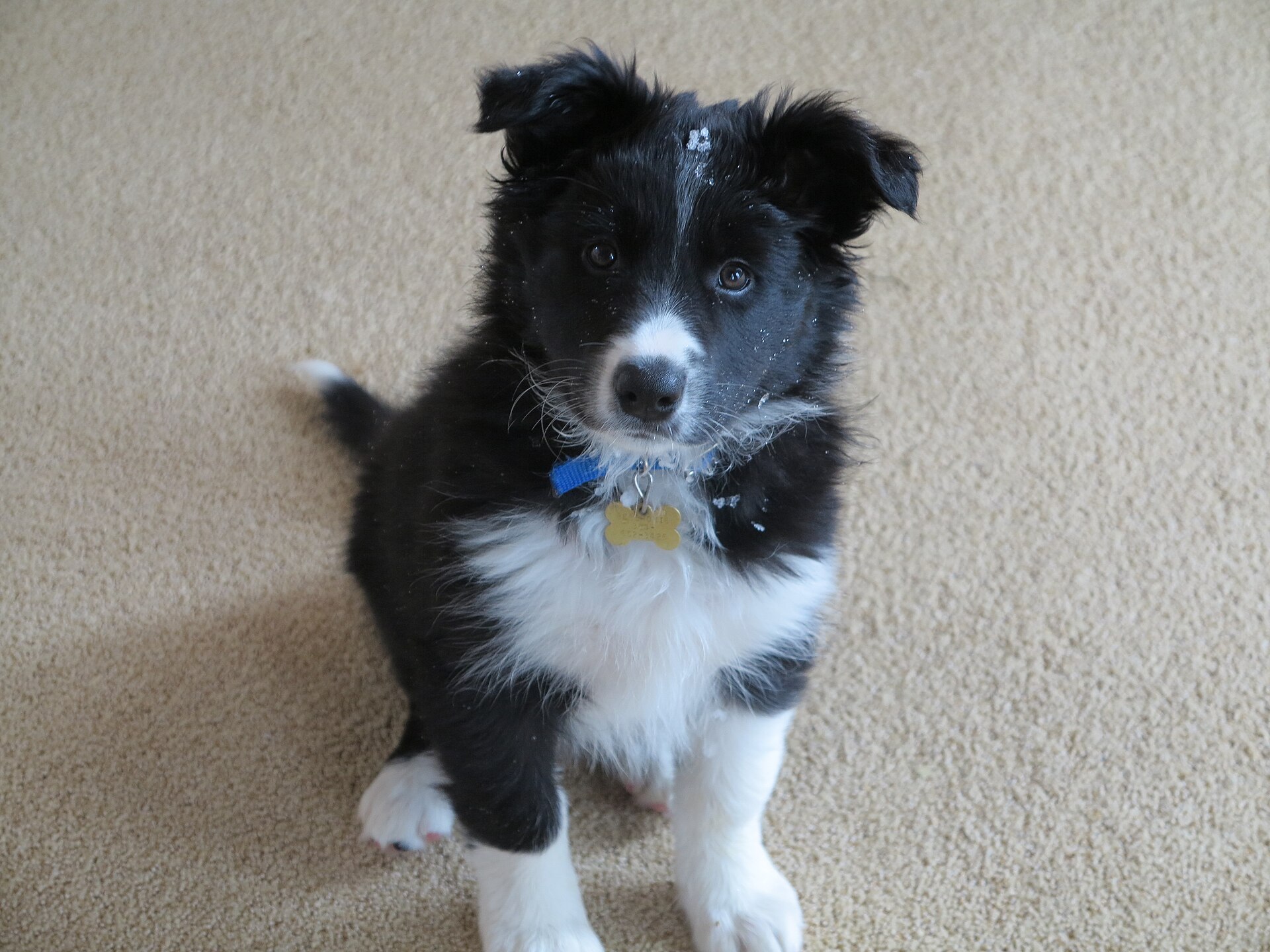
The future workaholic is still a baby. Border Collie puppies need sleep, safe exploration, and age-appropriate learning—not an adult athlete’s schedule. Photo: Jeffrey Shellan/Wikimedia Commons, CC BY 2.0.
A Border Collie puppy may look ready to begin graduate school, but the body and nervous system are still developing. Prioritize sleep, toilet routines, gentle socialization, short training games, safe chewing, and confidence around everyday sights and sounds.
Avoid forced repetitive impact, marathon fetching, or pressure to master everything immediately. Introduce novelty gradually and let the puppy disengage. Teach that crates, pens, mats, and quiet rooms are places to relax rather than punishment zones.
Watch for motion sensitivity early. Reward the puppy for checking in around bikes, joggers, children, and other dogs at a safe distance. Prevent rehearsal of chasing whenever possible. Every behaviour does not need to become a hobby simply because the puppy is talented at it.
Fun Border Collie quirks
Border Collie people tend to recognize a few recurring themes:
- the stare that suggests your performance review has already been filed
- learning the names of toys faster than some relatives learn the dog’s name
- anticipating routines from absurdly small clues
- placing a ball exactly where it will become your problem
- crouching dramatically before an activity with no livestock involved
- noticing when one chair, shoe, or person is out of its usual position
- treating closed doors as suspicious gaps in available information
- switching from elegant athlete to upside-down sofa creature once the work is genuinely done
The breed’s intelligence is impressive, but the best part is often the relationship. A well-matched Border Collie does not merely perform commands; the dog watches, experiments, communicates, and turns ordinary routines into a shared project.
Life with an older Border Collie
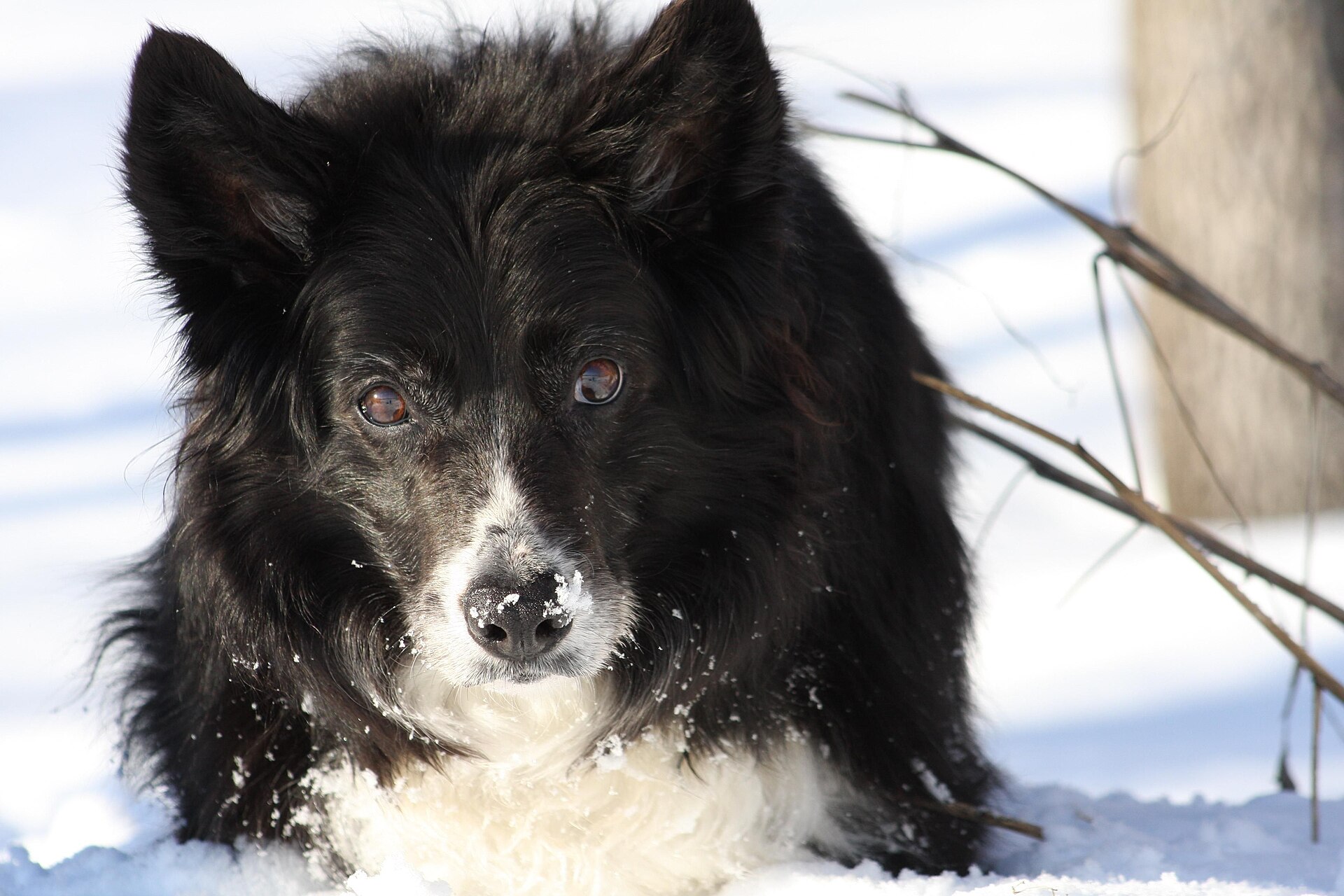
Older Border Collies may keep the same watchful expression even when their exercise and recovery needs change. Photo: Michelle Buntin/Wikimedia Commons, public domain.
Senior Border Collies often remain mentally eager after their bodies begin asking for adjustments. Shorter sniff walks, low-impact training, food searches, familiar tricks, and gentle problem-solving can preserve engagement without demanding adolescent-level athletics.
Do not dismiss slowing down, reluctance to jump, sleep changes, irritability, or reduced interest as “just age.” Pain and sensory changes can alter behaviour. A veterinarian can help separate normal ageing from problems that deserve treatment or management.
The goal is not to keep an older Border Collie exhausted. It is to keep the dog included.
Border Collie FAQ
Are Border Collies good family dogs?
They can be excellent family dogs in active, structured homes, but they are not automatically easy. Supervise interactions with children, prevent chasing and heel-nipping, and provide daily mental and physical outlets.
Are Border Collies easy to train?
Border Collies usually learn quickly and respond well to clear, reward-based training. Their sensitivity, intensity, and ability to learn unwanted patterns just as quickly can make thoughtful handling more important, not less.
How much exercise does a Border Collie need?
There is no honest one-number answer for every dog. Healthy adults generally need substantial daily activity, but the plan should balance movement, mental work, rest, and calm skills. Age, health, temperament, and workload all matter.
Do Border Collies shed?
Yes. Rough- and smooth-coated Border Collies have double coats and shed throughout the year, often more heavily during seasonal changes. Regular brushing helps manage loose coat and tangles.
Can a Border Collie live in an apartment?
Possibly, if the owner can provide enough structured exercise, training, enrichment, quiet recovery, and management around hallway or street triggers. A yard is convenient, but space alone does not meet a working dog’s needs.
Are Border Collies good for first-time owners?
Some committed first-time owners do well with the breed, especially with good professional support. People seeking a forgiving, low-engagement starter dog may find the Border Collie’s intensity and sensitivity overwhelming.
Why do Border Collies stare?
The focused gaze associated with Border Collie stock work helps influence livestock movement. Pet dogs may also stare because they are monitoring people, anticipating a cue, or hoping the ball economy reopens.
Final take
The Border Collie earned its reputation through practical work, not trivia-night intelligence. This is a responsive, athletic herding dog shaped to notice movement, solve problems, and cooperate closely with a handler.
For the right owner, that creates a remarkable partnership: precise, funny, energetic, and deeply connected. For the wrong owner, it can feel like living with an unpaid operations director who has reorganized the children and issued the vacuum a warning.
Choose the Border Collie because you want the work of building that partnership—not because a ranking told you the dog would do the work for you.
Sources and methodology
This editorial breed feature uses live search as an advisory layer and does not claim veterinary, trainer, breeder, or hands-on testing authority. Broad breed history, working purpose, and owner-fit themes were checked against the American Kennel Club breed overview, the American Border Collie Association breed information, and the Royal Kennel Club Border Collie profile. Health guidance is deliberately general; individual care belongs with a veterinarian.