
Dog of the Day: Golden Retriever
Today’s Dog of the Day is the Golden Retriever: friendly, athletic, people-loving, and very much not a low-hair lifestyle choice.
If the Golden Retriever had a job title, it would be “chief emotional support athlete.” This is the dog people picture when they imagine a sunny family companion: soft eyes, feathered tail, tennis ball obsession, and a level of friendliness that makes most strangers feel like they have been promoted to best friend.
But the Golden Retriever is not just a smiling postcard with paws. This is a working sporting breed with energy, brains, shedding, mud enthusiasm, and a deep need to be included. A good Golden can be gentle, funny, trainable, and wildly affectionate. A bored Golden can become a damp golden chaos machine with a sock in its mouth and zero legal remorse.
Golden Retrievers fit many families beautifully, especially homes that want an active, social dog and are ready for daily exercise, training, brushing, and companionship. They are less ideal for people who want a low-shedding, low-maintenance, independent dog that politely decorates the living room.
Quick facts about the Golden Retriever

Golden Retrievers can range from pale cream to rich gold, but the soft expression, feathering, and retriever build should still read clearly.
- Breed group: Sporting / retriever
- Origin: Scotland, developed in the 19th century as a gundog and water retriever
- Typical size: Medium-large to large
- Common weight range: About 55-75 pounds, with males often larger than females
- Typical lifespan: Often around 10-12 years, with individual variation
- Coat: Dense double coat with feathering; shades range from light cream to rich gold
- Shedding: High, especially during seasonal coat changes
- Temperament: Friendly, eager, affectionate, social, playful, and trainable
- Exercise needs: Moderate to high; daily walks, play, training, and mental stimulation matter
- Best fit: Active families, social homes, first-time owners who are ready to train, and people who want a dog involved in daily life
- Biggest owner reality check: Golden Retrievers shed, mouth things, carry things, need attention, and do best when they have jobs for their brain and body
What Golden Retrievers are like
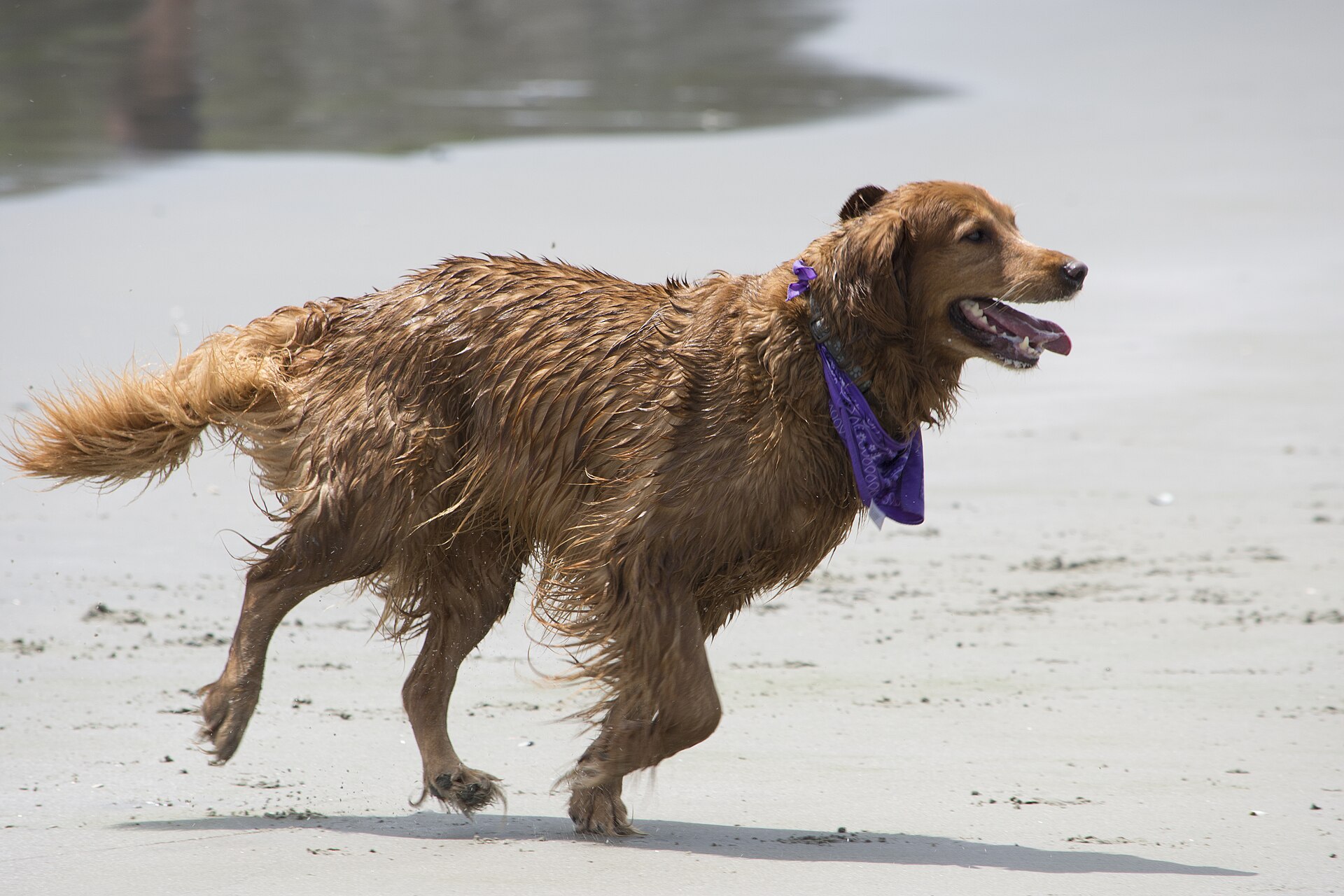
The breed’s sporting background still shows up in movement, play, carrying, water interest, and a real need for daily engagement.
Golden Retrievers are famous for being friendly, and the reputation is mostly earned. A well-bred, well-socialized Golden is often warm with family, polite with visitors, playful with children, and interested in whatever the humans are doing. They are not usually aloof dogs. If you want a dog who values personal space, a Golden may regard that as a clerical error.
Their temperament comes from their working background. Golden Retrievers were developed to retrieve game for hunters, especially in wet, rugged conditions. That history still shows up today in their soft mouths, love of carrying objects, interest in water, trainability, and desire to cooperate with people.
The best Goldens have a lovely balance: sweet but not fragile, playful but not frantic, trainable but not robotic. They tend to respond well to positive, consistent training because they like engagement and feedback. They are also emotionally tuned in. Many Goldens seem to know when the room needs comic relief, a chin on the knee, or a slightly inappropriate attempt to sit on a guest.
That said, “friendly” should not be confused with “automatic.” Golden Retrievers still need socialization, boundaries, leash manners, impulse control, and training. A 70-pound dog who loves everyone can still knock over a toddler, launch into muddy greetings, steal food, or greet guests like a golden wrecking ball made of enthusiasm.
Who a Golden Retriever fits best
Golden Retrievers are a strong fit for homes that want an engaged companion, not a background pet. They are often excellent family dogs when matched with people who can provide structure, exercise, and attention.
They usually fit well with:
- active families who enjoy walks, hikes, fetch, swimming, or outdoor time
- owners who want a social, people-oriented dog
- first-time dog owners who are willing to train consistently
- homes that can handle shedding and grooming
- families with children who understand respectful dog handling
- people interested in obedience, therapy-dog work, scent games, dock diving, retriever games, or casual training hobbies
Goldens may be a poor fit for:
- people who strongly dislike dog hair
- homes where the dog will be alone for long stretches without enough enrichment
- owners who want a low-energy couch ornament
- households that cannot manage a large, social, physical dog
- people who want a natural guard dog
- anyone who thinks a “family dog” means no training required
The Golden Retriever is easy to love, but not maintenance-free. That is the fine print under the golden smile.
Golden Retriever temperament and family life

A good Golden often feels like part companion, part greeter, part household morale officer.
Golden Retrievers are often gentle with children, but supervision still matters. A friendly dog can accidentally bump, jump, mouth, or overwhelm small kids. Teach children not to climb on the dog, pull ears or tails, interrupt meals, or treat the dog like a stuffed animal with rent obligations.
Goldens usually enjoy being part of household routines. They want to know where everyone is, what is happening, whether snacks are involved, and why the laundry basket contains so many portable treasures. Their social nature is one reason they are popular as family dogs, therapy dogs, and service-dog candidates.
They are usually not ideal as serious guard dogs. Many will bark when someone arrives, then offer a toy and a full property tour. That is charming. It is not security.
With other pets, Goldens are often sociable, especially when raised or introduced properly. Their prey drive varies by individual, and their size and enthusiasm can be a lot for cats or tiny dogs. Slow introductions and management are still smart.
The Golden Retriever origin story
The Golden Retriever was developed in Scotland in the 19th century, where hunters wanted a capable retriever that could work over land and water. The breed’s history is strongly tied to the Scottish Highlands and to the need for a dog that could retrieve game birds gently, reliably, and in challenging weather.
That background explains a lot about the modern Golden. The dense coat helped in wet conditions. The retrieving instinct shows up in their love of carrying toys, socks, shoes, towels, sticks, and occasionally things you were fairly sure were not available for checkout. Their trainability comes from generations of working closely with people.
Golden Retrievers eventually moved from hunting fields into family homes, service work, therapy settings, search-and-rescue roles, and obedience sports. Their popularity is not just about looks. It is about that rare combination of beauty, biddability, softness, athleticism, and emotional availability.
The breed’s original purpose still matters. A Golden is not a decorative blond dog. It is a retriever. If you do not give that retriever brain something useful to do, it may invent its own hobbies. The hobbies may involve your footwear.
Owner reality: the good, the messy, and the very hairy
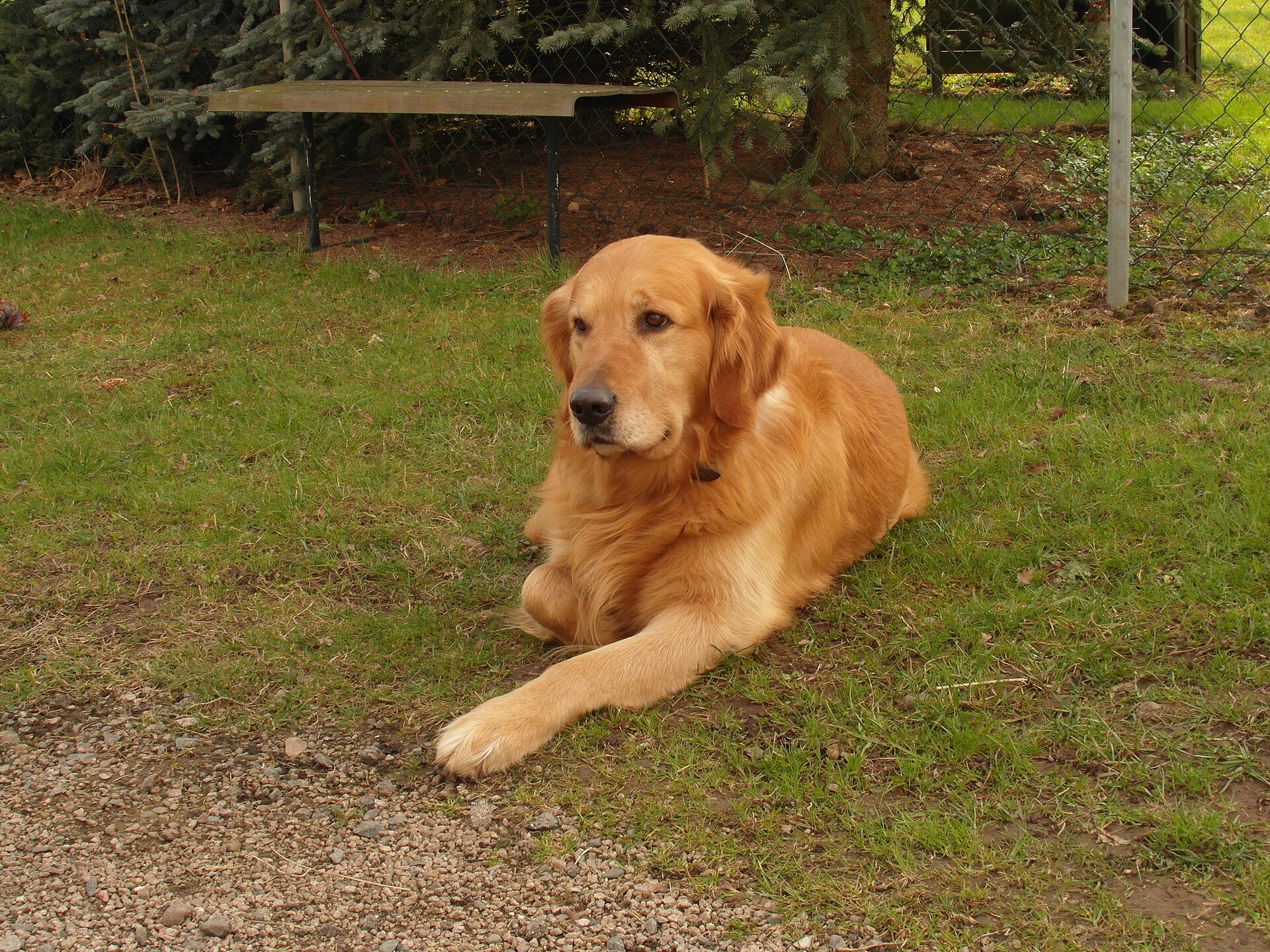
That beautiful coat is part of the appeal — and part of the vacuum-cleaner contract.
The good news: Golden Retrievers are affectionate, fun, trainable, and often deeply connected to their people. They tend to be forgiving dogs, which makes them appealing for newer owners who are learning. They can be goofy without being stupid, gentle without being dull, and athletic without being as intense as some high-drive working breeds.
The messy news: they shed. A lot. Golden hair has a way of becoming part of your home’s geological record. You will find it on clothes, furniture, car seats, stairs, and possibly in food you have not cooked yet. This is not a bug. It is the subscription model.
They can also be mouthy as puppies and adolescents. Retrievers like to hold things. Teach appropriate chewing and carrying early. Give them toys, trade games, and calm handling practice. Do not turn every stolen sock into a thrilling hostage negotiation unless you want a dog who majors in textile crime.
Goldens are also social dogs. Many do not love being left out or ignored for long periods. They can develop nuisance behaviors if under-exercised, under-trained, or emotionally neglected: barking, jumping, chewing, counter-surfing, leash pulling, digging, or general “I have made my own decisions and they are terrible” behavior.
Care and grooming notes
Golden Retrievers have a dense double coat that needs regular brushing. Weekly brushing may be enough during calmer coat periods, but shedding seasons can require more frequent grooming. Pay attention to feathering behind the ears, around the tail, under the belly, and on the legs, where tangles can form.
Bathing depends on lifestyle. A Golden who swims, hikes, rolls in mystery substances, or treats mud like a spiritual calling may need more frequent baths than a city Golden with cleaner habits. Use dog-appropriate products and avoid over-bathing to the point of drying the skin.
Check ears regularly, especially if your Golden swims. Floppy ears and moisture can create problems. Keep nails trimmed, brush teeth if possible, and stay current with routine veterinary care. Goldens can be prone to certain health issues, so responsible breeding, preventive care, weight management, and early veterinary attention matter.
This article is general breed education, not veterinary advice. If your dog has pain, skin issues, ear problems, mobility changes, appetite changes, or unusual behavior, talk to a veterinarian. The internet is useful. It is not a stethoscope.
Exercise and training needs
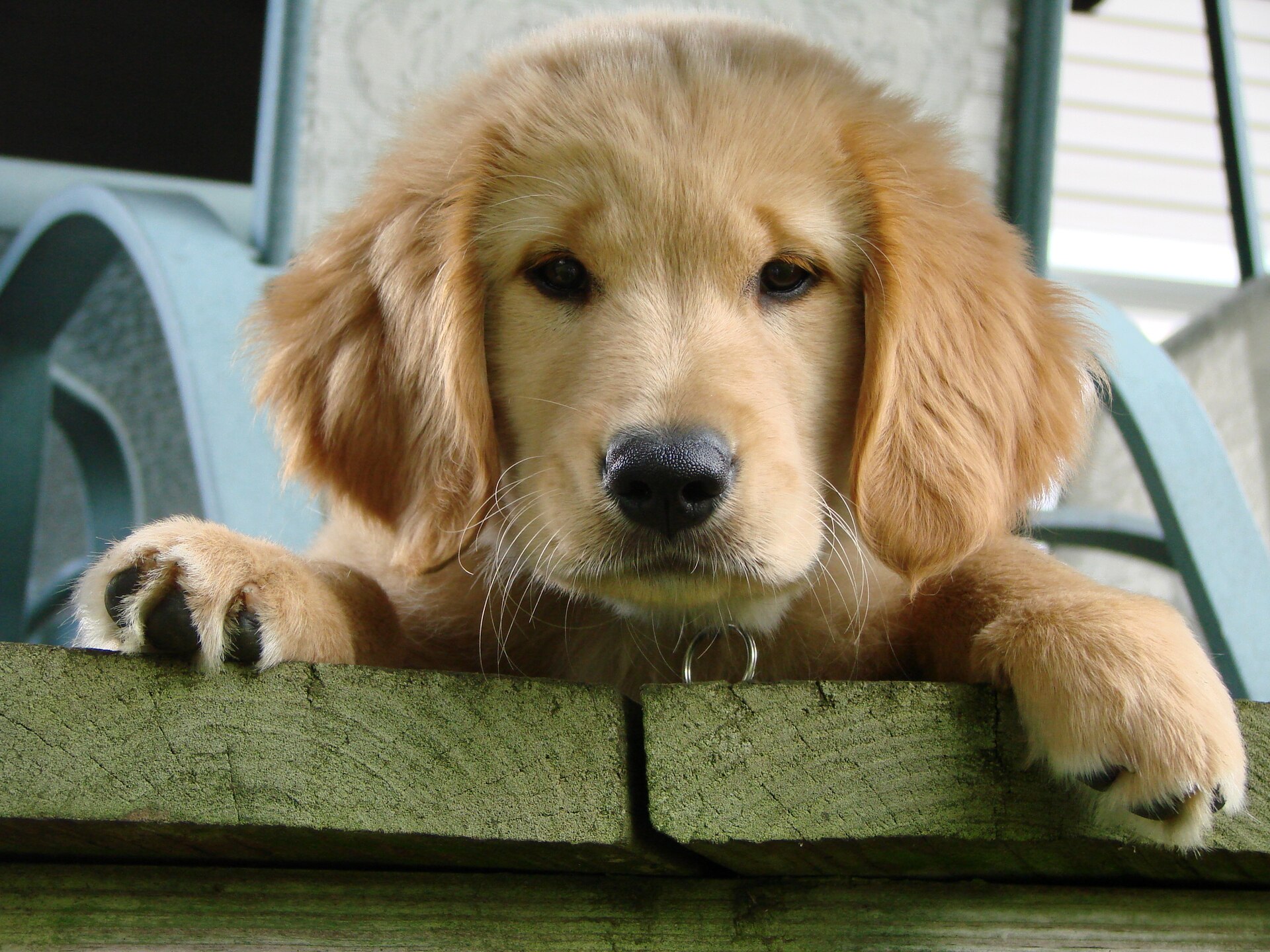
Golden puppies are adorable, social, and teachable — but early manners matter before the cute chaos grows into a 60-plus-pound habit.
Golden Retrievers need daily physical and mental exercise. Many do best with a mix of walks, play, training, sniffing, retrieving games, and calm rest. Fetch can be great, but it should not be the only form of exercise. Mix in leash manners, recall practice, settling skills, puzzle toys, scent games, and polite greeting work.
Training should start early. Goldens are often eager learners, but their friendliness can create its own problems. Teach them not to jump on people, pull toward every stranger, grab items, counter-surf, or assume every human exists to provide affection and snacks.
Useful foundation skills include:
- name recognition and recall
- loose leash walking
- polite greetings
- drop it and leave it
- crate or mat settling
- calm handling for grooming and vet care
- waiting at doors and before meals
- trading stolen items without drama
Golden puppies and adolescents can be especially energetic. Be patient. The beautiful adult Golden in the park may have once been a land shark with eyelashes.
Food, weight, and health basics
Golden Retrievers can be food-motivated, which helps training but can also lead to weight gain. Keep an eye on body condition, portion sizes, treats, and table scraps. Extra weight can stress joints and may worsen mobility problems.
Choose a diet appropriate for your dog’s age, size, health status, and activity level. Puppies, adults, seniors, athletic dogs, and dogs with medical issues can have different needs. Ask your veterinarian if you are unsure, especially for growth, allergies, digestion, weight management, or chronic health concerns.
Like many popular breeds, Goldens can be associated with certain inherited or common health concerns. Responsible breeders should screen breeding dogs appropriately and be willing to discuss health history clearly. Rescue dogs deserve the same thoughtful veterinary care and patience, even when full background is unknown.
The practical owner rule: do not wait for a problem to become dramatic. Golden Retrievers are stoic enough to keep smiling while something is wrong, which is adorable and deeply unhelpful.
Fun quirks Golden Retriever people know
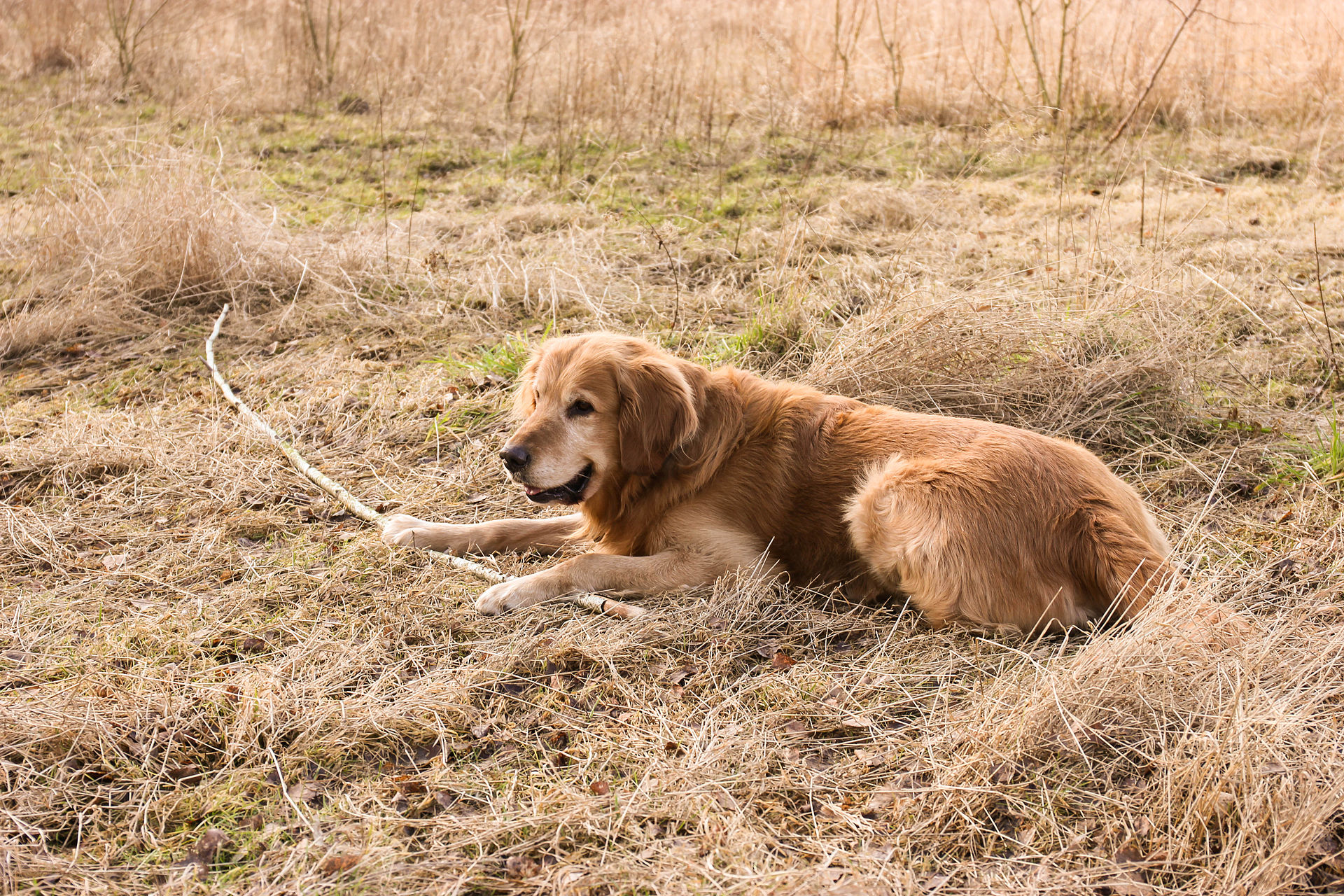
Many Goldens love having something in their mouth. Ideally it is a toy. Realistically, socks remain at risk.
Golden Retrievers often have a few signature habits:
- carrying shoes, socks, towels, toys, or random household objects as emotional support cargo
- greeting people with a toy in their mouth
- leaning into legs like affectionate furniture
- believing puddles are invitations
- developing elite snack-detection radar
- acting personally betrayed by closed doors
- looking saintly while committing minor theft
- turning “just a quick swim” into a full laundry event
They are famous for their “soft mouth,” but that does not mean they never chew. It means the breed was developed to retrieve gently. Puppies still need chew training, and some adults remain enthusiastic carriers of forbidden objects. The line between “retriever instinct” and “sock goblin” can be surprisingly thin.
A simple first-week plan for a new Golden Retriever
If you are bringing home a Golden Retriever, keep the first week calm and structured. Do not invite the entire neighborhood over to meet the puppy or adult dog on day one. Everyone will survive without immediately touching the golden cloud.
Focus on:
- a predictable potty and feeding routine
- short, positive training sessions
- gentle handling practice
- crate, pen, or safe-room comfort
- appropriate chew toys
- calm introductions to family members
- short walks or sniff breaks appropriate for age and health
- early brushing and ear-handling practice
- rewarding quiet settling, not only excitement
For puppies, keep exercise age-appropriate and avoid forcing repetitive high-impact activity. For adult rescues, give them time to decompress before expecting perfect family-dog behavior. A Golden may be friendly, but transition is still transition.
FAQ
Are Golden Retrievers good family dogs?
Yes, Golden Retrievers are often excellent family dogs when properly socialized, trained, and supervised around children. They are usually affectionate and patient, but their size and enthusiasm still require manners and management.
Do Golden Retrievers shed a lot?
Yes. Golden Retrievers have a dense double coat and shed heavily, especially during seasonal coat changes. Regular brushing helps, but it will not make them a low-shedding breed.
Are Golden Retrievers easy to train?
Golden Retrievers are generally trainable and eager to engage with people. They still need consistency, boundaries, and practice, especially for jumping, leash pulling, mouthiness, and polite greetings.
How much exercise does a Golden Retriever need?
Most Golden Retrievers need daily exercise plus mental stimulation. Walks, fetch, swimming, sniffing, training games, and calm settling practice can all help. Needs vary by age, health, and individual energy level.
Are Golden Retrievers good for first-time owners?
They can be a good choice for first-time owners who are prepared for training, grooming, exercise, and daily attention. They are not a good fit for people who want a low-shedding, low-effort dog.
What is the biggest downside of owning a Golden Retriever?
The biggest practical downsides are shedding, exercise needs, social needs, and puppy/adolescent mouthiness. They are wonderful dogs, but they are not maintenance-free.