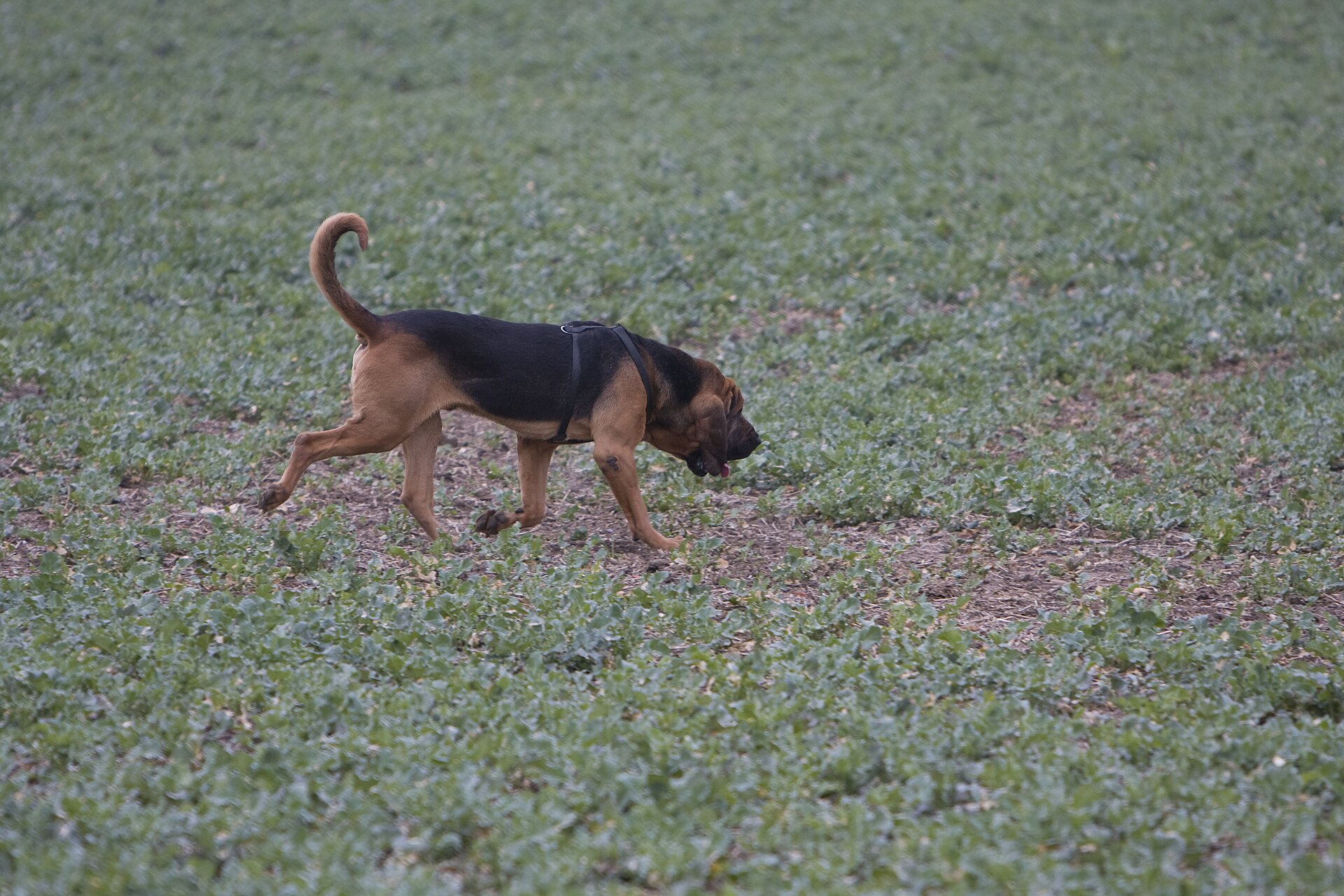
Dogs Life: Bloodhound — A Purpose-Bred Life in Its Prime
I knew the man had crossed the stream before my handler did.
The water had broken his trail into pieces. Men saw brown current, alder roots, and an empty bank. I found wet wool, boot leather, woodsmoke, horse, fear, and the warm human thread that belonged to him alone. It lay thin beneath the cold air. I lowered my head, pulled the line tight, and climbed.
That was my work: to hold one fading scent while the whole world tried to crowd it out.
I was born in southern England in the 1870s, when Bloodhounds still worked deer parks and men were again testing them seriously on human trails. I belonged to a keeper named Elias. He used me to find wounded deer, to prove a stranger's route across fields, and once to bring searchers to a missing child before a wet night turned dangerous.
My life is a historical reconstruction, not the biography of a documented individual. But the work was real. Bloodhounds had been recorded in Britain for centuries. Their ancestors were traditionally linked with the black hounds kept by the monks of Saint-Hubert. They had found game for hunters, followed raiders and thieves as sleuth hounds, and later became man-trailers whose value was patience, accuracy, and the willingness to keep going after a trail had gone cold.
I was not bred to chase what I could see. I was bred to follow what was no longer there.
Born Into an Old Argument With Scent
My first world was a timber kennel, warm milk, sour straw, and the slow breathing of my mother.
There were eight of us. We climbed over one another with ears too large for our heads and skin that seemed borrowed from bigger dogs. The kennel man did not choose among us by color alone. He watched who investigated the boot left by the door. He rolled a scrap of rabbit hide across the yard and noted which nose stayed with it after the others began wrestling. He wanted curiosity that did not collapse when a scent became difficult.
I was not the fastest pup. Speed was never the first question.
I was the one who returned.
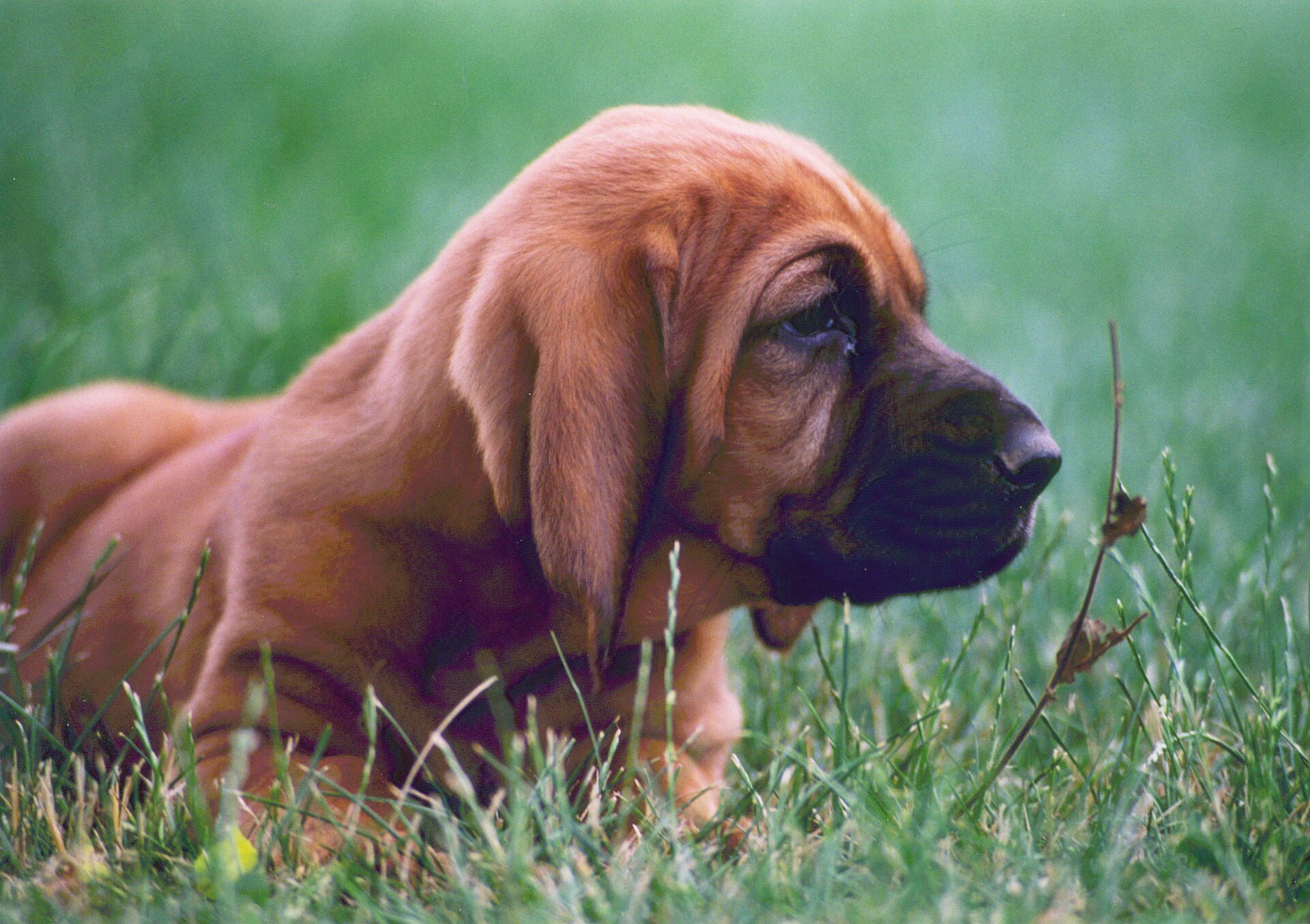
Our kind carried an old reputation. The men spoke of Saint-Hubert's hounds as monks' dogs, though even then the oldest details belonged partly to tradition. They spoke more confidently of Britain, where large, deliberate hounds had long been kept to find deer and boar before the faster pack was released. A hound that could take a leash through woodland and stay on the chosen animal's line saved hunters from casting blindly across hundreds of acres.
That job shaped everything that followed.
A useful hound needed a nose fine enough to separate one trail from many, a mind steady enough not to abandon an old line for a fresh distraction, and a body that could travel for hours with its head low. He needed to work beside a man without waiting for the man to solve the scent. He needed determination, but not fury. He found. Others decided what happened when the trail ended.
The word Bloodhound did not make me bloodthirsty. Explanations of the name vary: it has been connected both to tracking wounded game and to the idea of a "blooded," carefully bred hound. Whatever its origin, my daily life was governed less by blood than by invisible traces.
Elias Taught Me to Choose One Human
Training began with a glove.
Elias let a boy hold it, walk behind the stable, cross a cart track, and hide beside a wall. Then he pressed the glove to my nose. The leather carried horse, tallow, dust, and every hand that had touched it. Beneath them was the boy.
At first I ran on excitement and guessed badly. I followed the last moving person I had seen. Elias stopped. He did not drag me toward the answer. He waited until I put my nose down and worked.
When I found the boy, there was meat, praise, and the boy's laughter. More important, there was completion. A line that had tugged at my mind suddenly ended in a living body. I wanted that ending again.
The trails grew older. Ten minutes. An hour. Half a day. Elias laid them across grass, bare earth, stable yards, shallow water, and lanes used by carts and cattle. He taught me to smell an article belonging to one person and ignore the easier tracks around it. He learned to read me in return.
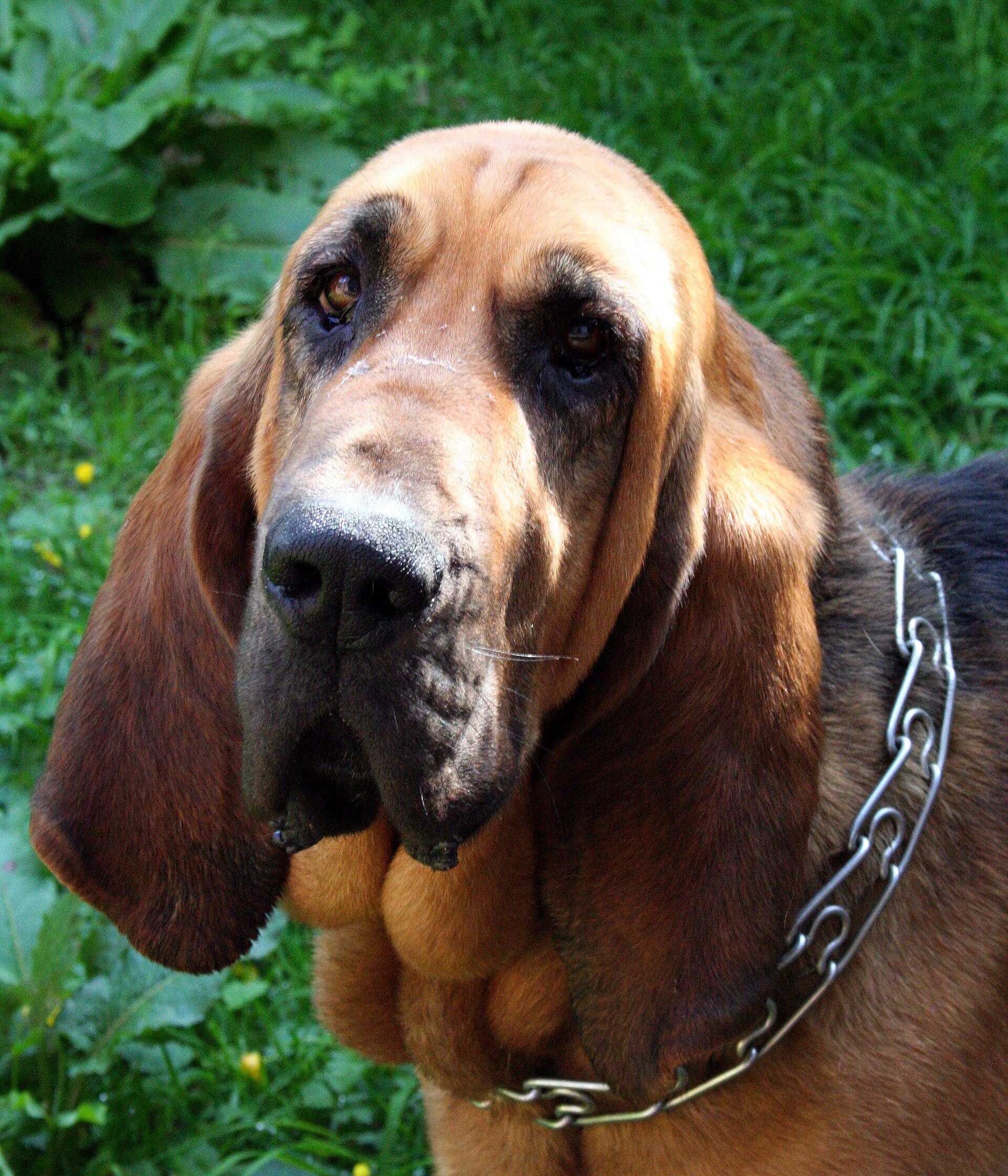
My ears brushed grass and mud. Loose skin folded around my face when my head dropped. My deep muzzle worked close to the ground. People later offered neat explanations for every wrinkle and ear, including the idea that they held scent near the nose. What mattered in practice was the whole animal: a large scenting surface, a head built to work low, long neck and strong shoulders, heavy feet, stamina, and a brain willing to remain with one odor.
Those traits were not ornaments. They set the terms of my day.
My nose made ordinary obedience complicated. A shouted command competed with fox, kitchen ash, a menstruating bitch three fields away, and the boot print I had been asked to follow. Elias never mistook that concentration for stupidity. He used a long tracking line because my job required me to lead. He corrected confusion, not independence. When I cast left and right at a broken trail, he gave me room. When I found it, he followed.
The leash between us was not a chain. It was a sentence we wrote together.
From Deer Line to Human Trail
My first useful work was not dramatic.
A wounded fallow buck had left the herd after an imperfect shot at dusk. Rain came before morning. Elias took me to the place where the animal had last stood and showed me a dark tuft of hair. The park was full of deer scent, fresh and old, crossing in every direction. I had to hold one injured animal's line among them.
I moved slowly. The line passed through bracken, doubled beside an oak, and entered a wet hollow. Twice I lost it. Twice I circled until it returned. We found the buck bedded under thorn.
There is no clean romance in wounded game. The value of finding it was practical and severe: the keeper could end suffering, recover meat, and learn what had happened instead of leaving an animal lost in cover. A hound that distinguished the right deer after rain made the difference between responsible recovery and failure.
That older hunting work prepared Bloodhounds for something humans found even more remarkable: following an individual person.
The principle was the same, but people made harder trails. They walked roads, crossed streams, entered crowds, doubled back, climbed fences, and passed through places layered with other human scent. A deer moved through a world of animals. A man moved through a world made busy by men.
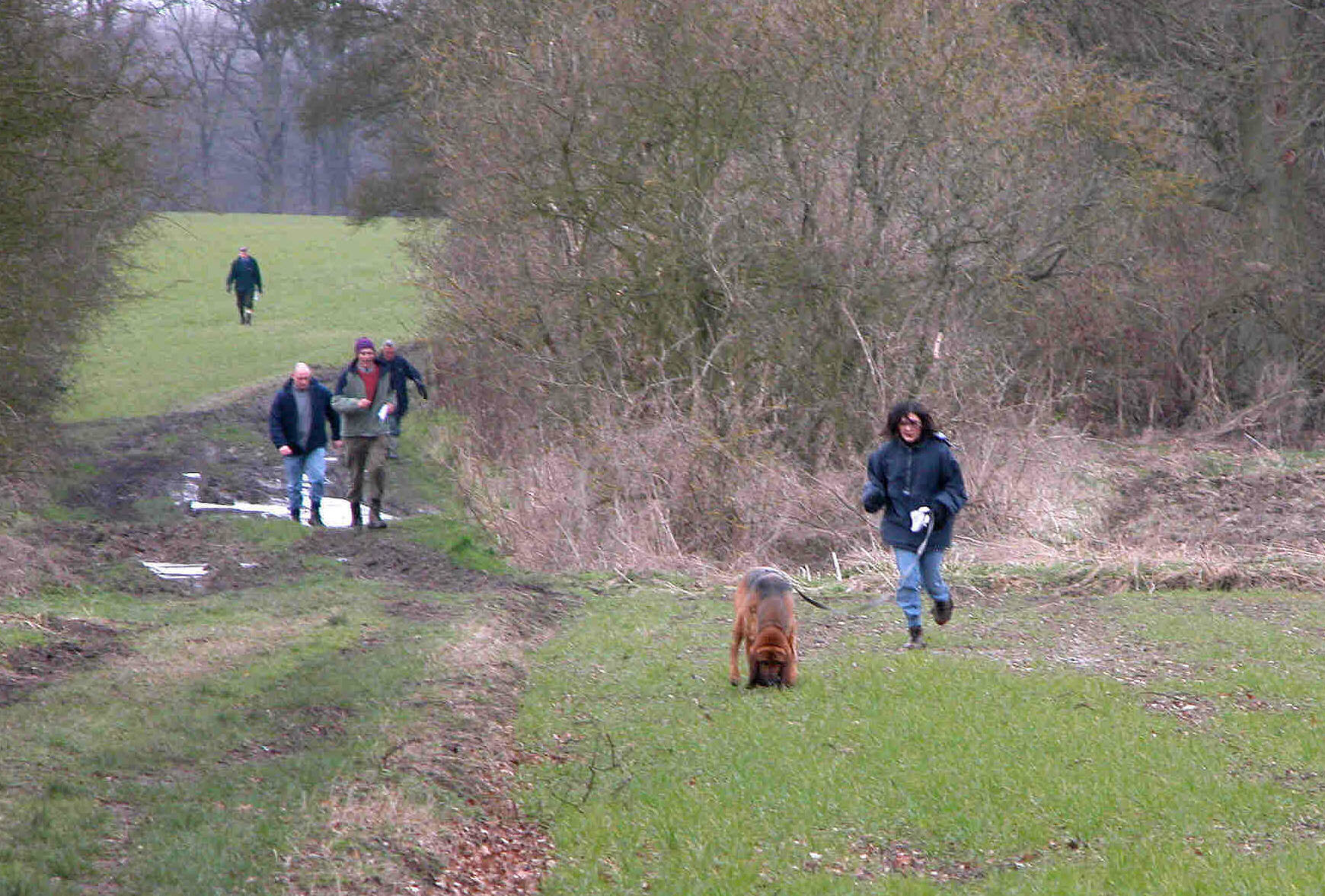
Britain had long called such a dog a sleuth hound. Border records and stories tied these hounds to the pursuit of thieves and raiders. In the seventeenth century, Robert Boyle described a hound following a man's trail for miles and finding him upstairs in a house. By my century, organized trials let handlers lay a human line, allow it to age, and ask a Bloodhound to identify the correct runner at the end.
Elias liked those trials because they tested honesty. There was no wounded deer, no visible quarry, and no pack to carry a weak dog forward. There was only one person's old path and the hound's answer.
My Prime Years
In my best years, work began with stillness.
Elias knelt. I smelled the cap, scarf, or glove. He clipped the line to my harness and said the word. Then the world narrowed.
Scent was not a glowing road. It was broken evidence. A crushed stem held one piece. Damp soil held another. On stone, the line thinned. At gates it pooled where a hand had touched wood. Wind moved fragments sideways. Sun lifted them. Rain pressed some down and washed others away. Livestock cut across everything with hot, blunt smells of hoof and dung.
I learned not to panic when the line vanished. A young hound lunges toward the first answer. A mature one admits uncertainty. I would stop, raise my head, return to the last place that felt true, and cast outward in widening loops. Elias felt the change through the line. He did not point. His trust gave me space to be exact.
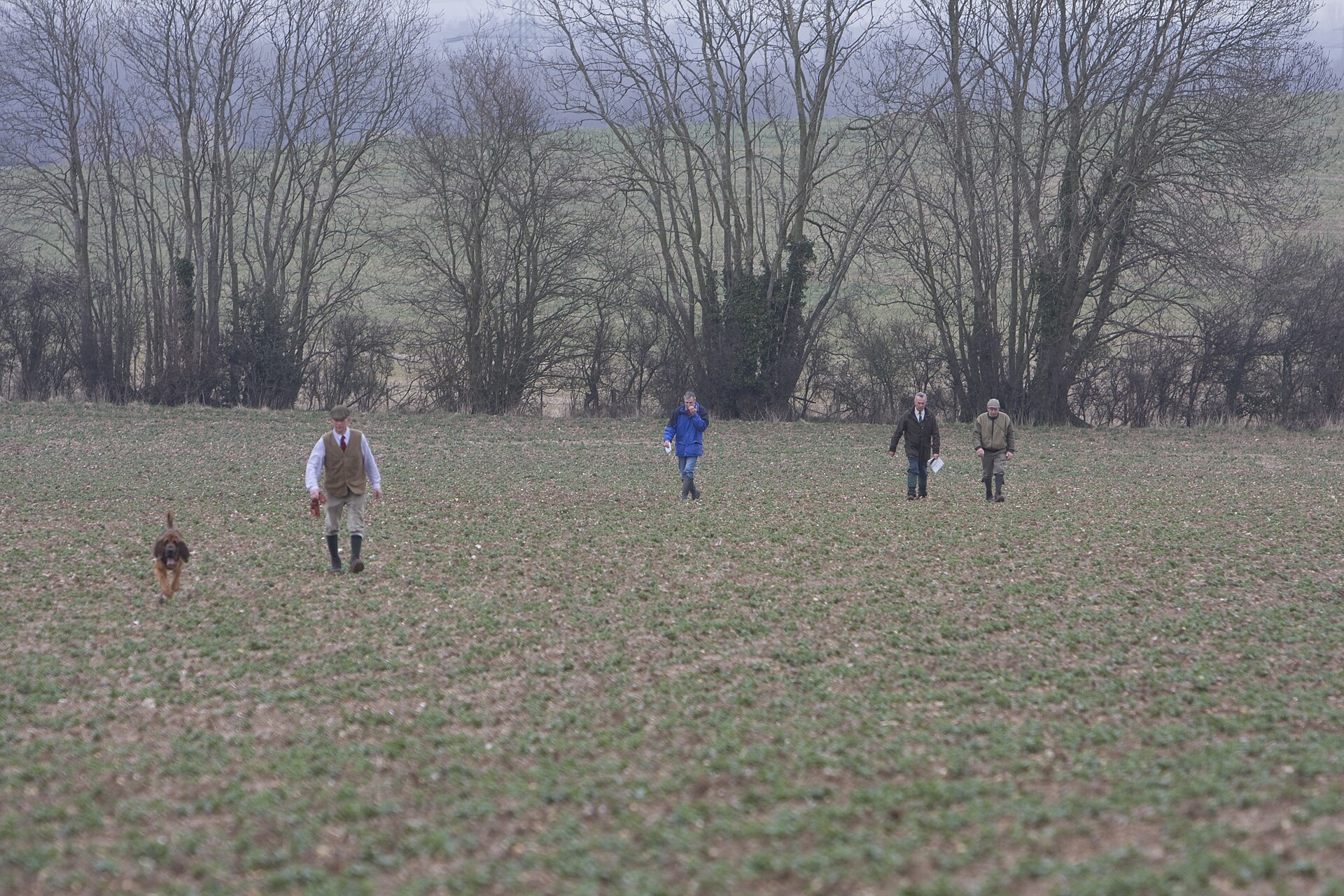
My strength was not simply that I could smell. Every dog smelled more than a man. My value was discrimination and persistence: this person, not every person; this crossing, not the fresher one; this old direction, even when the easier odor led elsewhere.
That patience saved human labor. A search party could spread across miles and still miss a person hidden by hedge, fog, darkness, or terrain. I could turn a dropped scarf into direction. I could tell men which road mattered and which field did not. I made a large country smaller.
I also carried limits. A contaminated scent article could confuse the start. A handler could pull a hound into his own guess. Heat, exhaustion, wind, rain, crowds, and time altered the trail. We were powerful tools, not magic. Good work required a sound hound, a patient handler, and people honest enough to notice uncertainty.
The Boy Beyond the Millstream
The search people remembered began on an October afternoon.
A miller's son had been sent to bring in two cows. The cows returned alone. By evening, men had checked the lane, the sheds, the river path, and the nearest woods. Rain had begun as a mist. His mother gave Elias a wool cap.
It smelled of hair, hearth smoke, flour dust, and the particular salt of the boy.
His trail left the yard under the louder marks of boots from the searchers. At the gate I hesitated because half the village had passed through. Elias brought me back to the cap, then let me choose. The boy's line ran beside the cattle track, left it near a hazel hedge, and dropped toward the millstream.
At the water, the men began calling upstream. I pulled downstream.
The boy had crossed on stones, slipped, climbed out, and walked into coppice where the ground rose sharply. Darkness came early under the trees. The trail was several hours old and cut twice by searchers, but it remained his.
I found him in an abandoned charcoal burner's shelter with one ankle swollen and his clothes wet to the waist. He was frightened enough to throw both arms around my neck.
I did not understand rescue as men understood it. I understood that the line had ended and the missing body was warm.
Elias called once, long and loud. Lanterns answered through the trees.
The value of that night was not a medal. It was a boy carried home before cold and rain did worse. It was his mother's knees giving way in the yard. It was twenty searchers no longer walking in twenty wrong directions.
For all the deer found, thieves followed in old stories, and trial runners identified in fields, this was the work that stayed in Elias's hands when he touched my head.
Partnership Was the Real Instrument
People praised my nose as if I worked alone.
I did not.
Elias kept the line from tangling my legs. He watched my pace, breathing, tail, shoulders, and the small lift of my head when ground scent changed to air. He knew the difference between certainty and excitement. When I overshot a corner, he did not punish me for telling the truth late. When I followed cleanly, he moved without interfering.
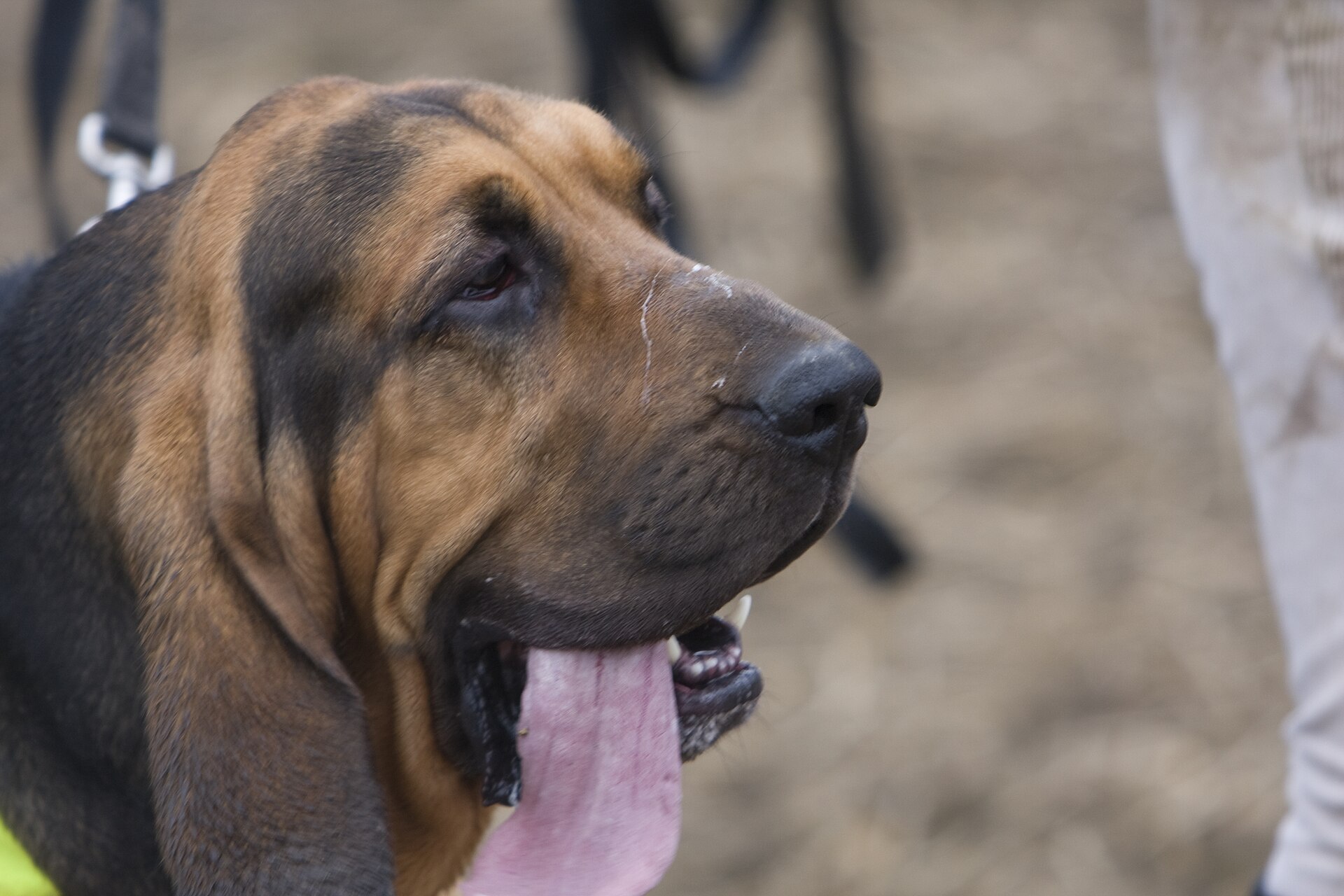
I knew him just as closely. His hand tightened when he expected a turn. His boots slowed near water. Sometimes his expectation traveled down the line and tried to become mine. The better we became, the less he did that. He learned that leading a trailing hound often meant resisting the urge to lead.
That was why temperament mattered in breeding. A Bloodhound needed independence to solve the trail, steadiness to work through confusion, endurance to continue, and enough gentleness to live and travel beside people. Aggression would not improve the nose. Frenzy would waste it. The useful hound was deliberate, persistent, and governable without being emptied of initiative.
We were two imperfect animals joined by leather. My nose reached where his senses could not. His judgment protected the work from my mistakes. Neither half was enough.
What the Work Cost
Purpose gives a dog value. It also makes demands.
My long ears came home wet, thorn-scratched, and lined with field dirt. My heavy body tired after miles of slow pulling. Summer heat shortened useful work. Every strong scent asked for attention, whether Elias wanted it or not. A kennel latch, a garden boundary, or a casual call meant little once a trail took hold.
Humans selected persistence because they needed a hound that would not quit when scent became faint. That same persistence made me difficult when the work was wrong or absent. They selected independence because no man could smell the answer for me. That independence could look like disobedience to anyone who had not learned the job.
These were not flaws added after the breed was made. They were the back side of the virtues.
I worked best because my life gave those traits somewhere honest to go.
Old Age Beside the Kennel Door
Age entered quietly.
First, I slept through the kennel latch. Then I needed longer after a trail. My joints stiffened in cold weather, and Elias stopped asking me to cross the roughest ground. A younger bitch named Nell began taking the long lines.
I disliked her immediately. She rushed corners, tangled the line, and celebrated every answer before proving it. In other words, she was young.
Elias used me to lay her lessons. I walked a trail with him, rested while it aged, and watched her begin from my scent article. Sometimes he brought me along at the finish. She would arrive breathless and proud, and I would smell the whole foolish journey on her.
My work narrowed to short demonstrations, easy recoveries, and waiting by the yard when others went out. The nose remained willing after the body had become cautious. On damp mornings, an old trail could still pull my head toward the gate.
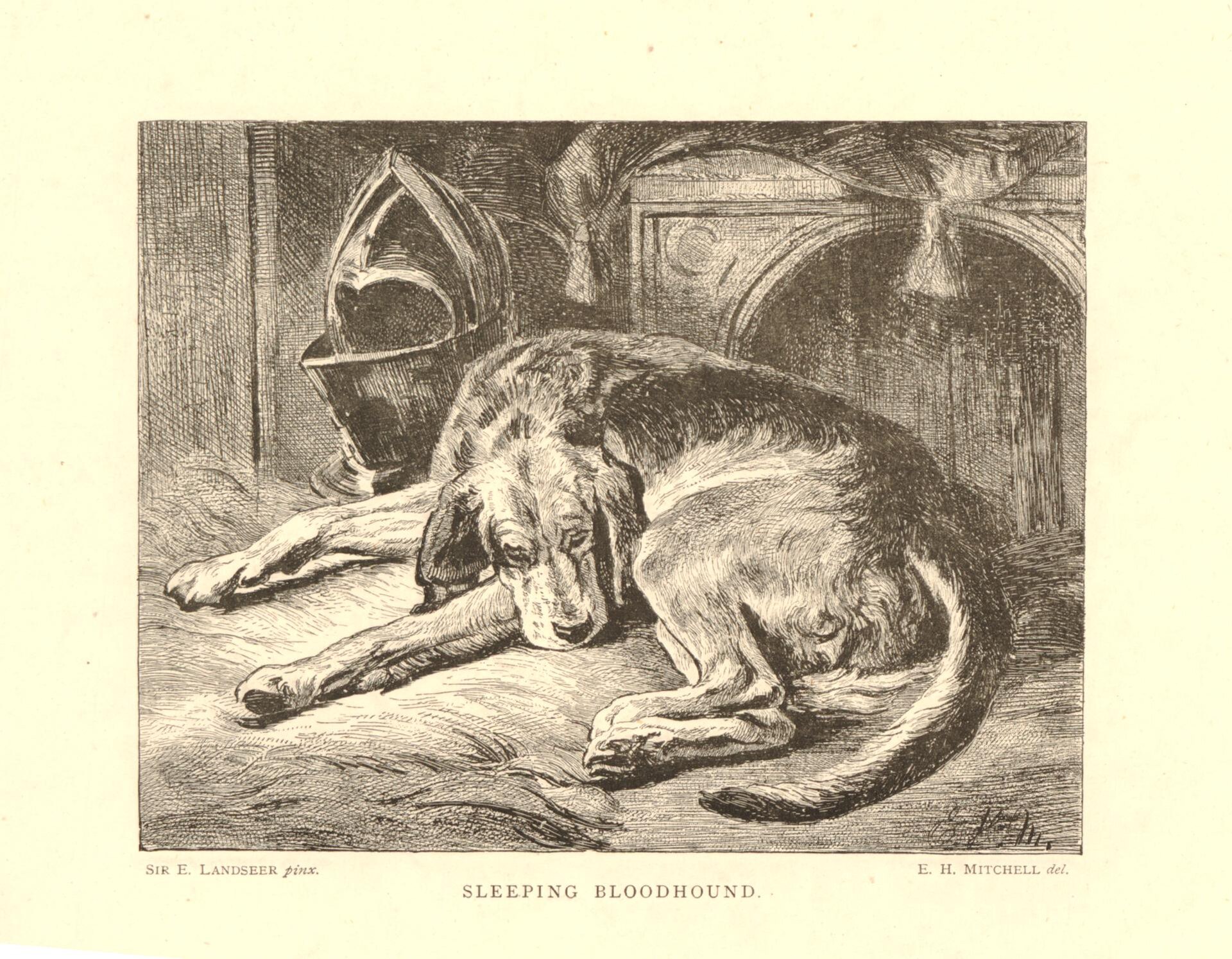
Elias sat beside me more often then. We had never needed many words. His hand rested between my ears, where the skin was warm and thin. Beyond the wall, horses shifted, rain touched slate, and Nell shouted from the kennel because some invisible thing had crossed the lane.
I knew exactly what she felt.
What I Left Behind
I left no machine and no written law.
I left found deer instead of wasted animals. I left searchers with a direction. I left a child home before night became dangerous. I left a handler who understood that a dog could know something a man could not, and that partnership did not require both partners to perceive the same world.
My breed carried older human needs forward. Monks and noble hunters preserved hounds that could follow game. Keepers used them to recover deer. Border officers and searchers turned the same talent toward people. Later police and rescue handlers would make man-trailing our best-known work.
The purpose changed. The central selection did not: choose the hound who can hold one faint truth against a field full of easier lies.
That is the Bloodhound's gift. Not menace. Not myth. Attention without surrender.
When my legs failed, that gift continued in the young dogs who took the line after me. Their ears dragged the same wet grass. Their handlers learned the same humility. Somewhere ahead, a person who could not be seen was still leaving a trail.
And a Bloodhound was being asked to remember it.
Historical Note and Sources
This Dogs Life feature is an editorial reconstruction set in late-nineteenth-century England. The narrator and Elias are fictional composites; the breed history, deer-finding role, man-trailing tradition, and working traits are grounded in published breed-history and scent-work sources. The traditional Saint-Hubert monastery connection is presented as tradition rather than settled genealogy.
Sources consulted include the Bloodhound Club's breed history, the American Kennel Club's Bloodhound history, the FCI Bloodhound breed standard, and PBS Nature's overview of Bloodhound scent work. Image credits and licenses are retained in the article package metadata.