Dogs Life: German Shepherd — A Purpose-Bred Life in Its Prime
I was born in Germany when the old work and the new work stood within earshot of each other.
Beyond our yard, sheep bells moved over cropped fields. At the railway siding, iron wheels struck the rails hard enough to shake dust from the rafters. The shepherd still walked with his crook, but factories were drawing men into towns, and police departments were beginning to ask whether a steady dog could carry a man's reach into darkness.
I did not know any of that as a pup. I knew warm milk, straw, the leather smell of Karl's boots, and the woolly breath of sheep leaning over a hurdle. I knew that when something moved away from the flock, every part of me wanted to put it back.
Men had begun calling dogs like me Deutscher Schäferhund—German Shepherd Dog. The name was honest. We came from regional tending dogs, chosen and combined at the end of the nineteenth century under a new ideal: a useful, intelligent, obedient working dog with sound nerves, endurance, and judgment. Captain Max von Stephanitz and the society he helped found in 1899 did not begin with a decorative shape. Their declared measure was utility.
This is a reconstructed life, not the record of one documented dog. But the work, the places, and the changes that shaped it are real. I was the kind of dog Germany deliberately made when it needed one animal to think beside a shepherd—and soon beside a policeman.
I Was Watched Before I Was Chosen
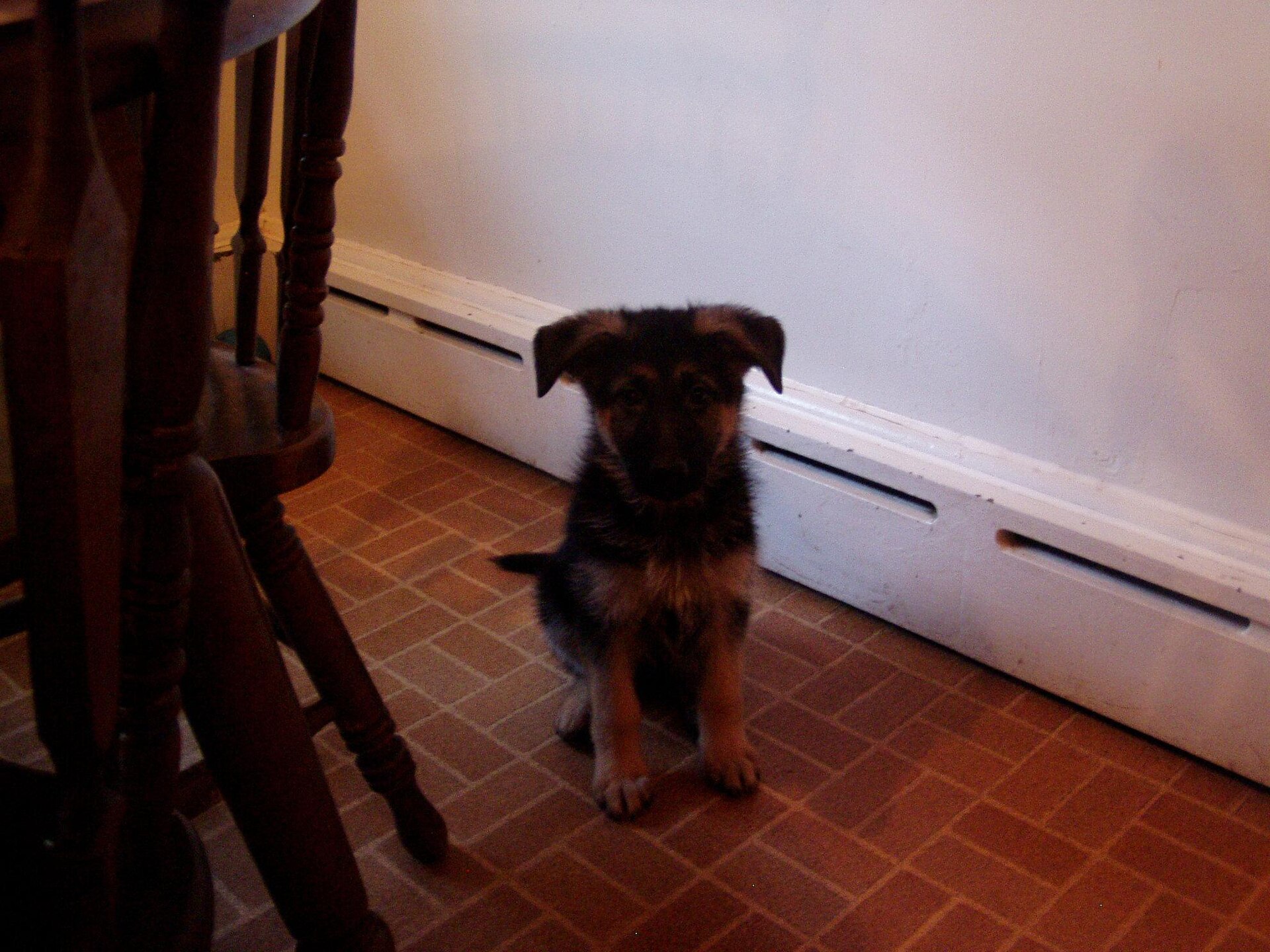
There were five pups in our litter. One chased everything. One startled at the bucket when it fell and took too long to return. I watched.
Karl noticed that.
He was a Schäfer, a working shepherd, not a man given to speeches. He dropped a pan behind us, clapped his hands, rolled a wooden spool across the floor, and let strangers enter the yard. He was not testing whether we felt fear. Every living thing feels fear. He was watching how quickly our minds came back.
That quality—steady recovery—would govern my life. A sheep-tending dog could not lose his head when a ram turned. A police dog could not become wild in a crowd or fold under a sudden noise. Courage without control was dangerous. Obedience without nerve was useless. The dog they wanted had to feel pressure, hold judgment, and remain available to the handler.
My ears were not yet upright, and my paws seemed borrowed from a larger animal. Still, I followed Karl's movement. When he stopped, I stopped. When he stepped toward the gate, I looked there before it opened.
He chose me.
The first deliberate selections behind my breed were visible even then. Attention made training possible. A desire to stay connected to one handler made partnership possible. Suspicion held in reserve—not frantic fear and not indiscriminate aggression—made guarding possible. A body built to trot for hours made flock work possible. None of these traits was valuable alone. The value was in their balance.
The Dogs Behind Me
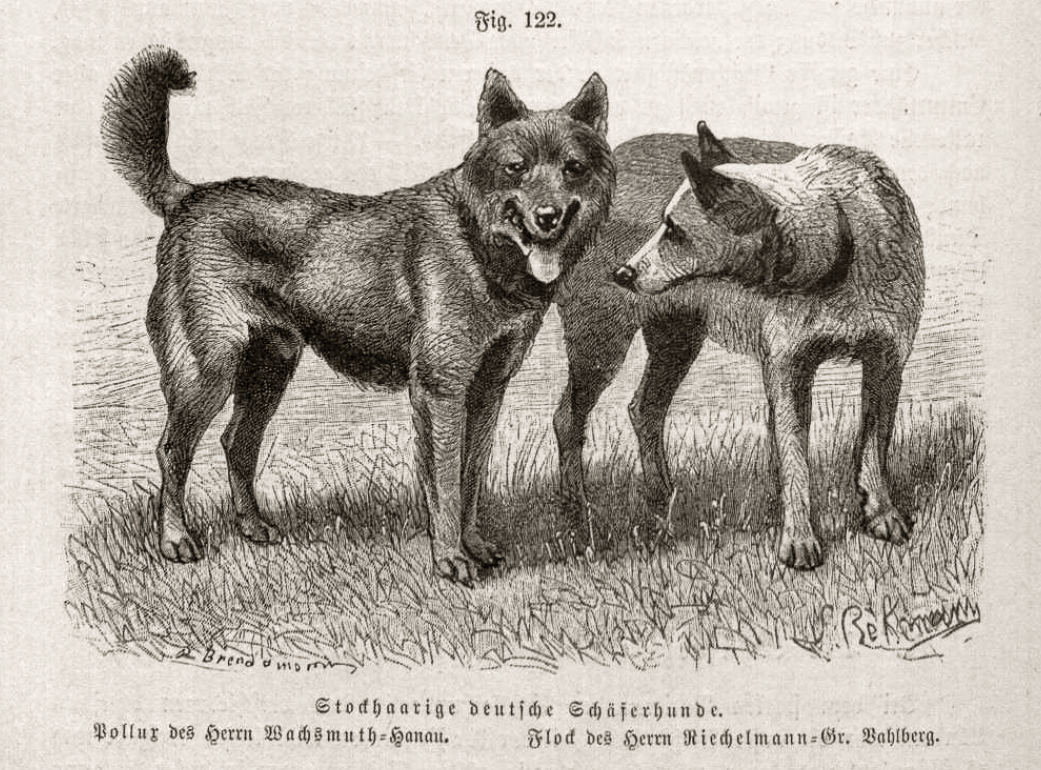
Karl had known many kinds of shepherd dog before my kind acquired one name. In Württemberg, Thuringia, and elsewhere, working dogs differed in coat, build, ear, and manner. Shepherds bred for what survived the day: stamina, responsiveness, weather resistance, courage, and the instinct to keep animals where they belonged.
Then von Stephanitz saw a dog named Hektor Linksrhein at a show in 1899, bought him, and renamed him Horand von Grafrath. Horand became the first dog registered by the new Verein für Deutsche Schäferhunde. He was not the first German sheepdog. He became the organizing point for a breed assembled from useful regional stock.
The aim mattered more than a single ancestor. The new standard sought a dog whose structure served sustained work and whose mind could be directed without being emptied of initiative. Breeders favored a powerful nose, quick learning, loyalty to a handler, willingness to obey, confidence under stress, and enough judgment to act when commands could not cover every instant.
That inheritance did not make me wise at birth. It made me ready to learn.
I Learned the Boundary
German sheep tending was not always the wide gathering work associated with British hill dogs. Our flocks often grazed unfenced strips near crops, roads, and village edges. My task was to patrol an invisible wall.
Karl walked ahead or beside the flock. I traveled the long edge at a ground-eating trot, turning any sheep that pressed toward rye or beet. A bite could damage an animal. Barking and rushing could spill the whole flock. I learned to carry pressure with position: appear at the shoulder, hold the line, ease away when the sheep yielded.
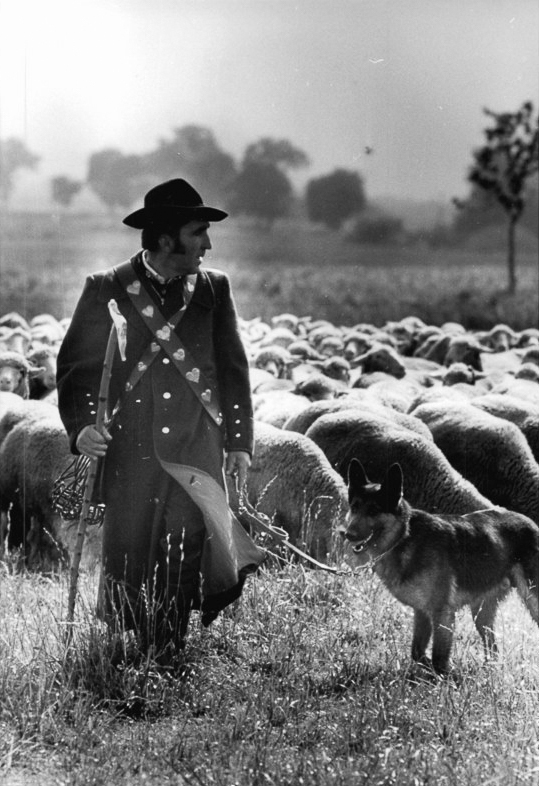
At first, every movement felt urgent. I chased a ewe too far and opened a gap behind me. Karl's command stopped me. I returned, hot with effort and confusion. He put me back on the line.
Again.
Training made my instincts useful. I learned a recall that ended the chase, a down that could arrest my body at speed, a send that put me where Karl needed me, and a quiet watch that asked for no movement at all. Obedience was not humiliation. It was the language that let two species do one job.
My build changed the shape of each day. The dense double coat kept rain from my skin. My nose told me where a lamb had passed through weeds. Upright ears caught Karl's voice over bells and wind. My long, efficient trot let me cover the same boundary repeatedly without spending all my strength in bursts.
Most important was judgment. When a lamb slipped away, I moved. When a ewe merely looked at the crop, I held. If I treated every possibility as an emergency, I created emergencies.
What I Was Worth to One Shepherd
People sometimes speak of working dogs as though our value was sentimental. Karl cared for me, and I cared for him, but affection did not explain why I ate from his household.
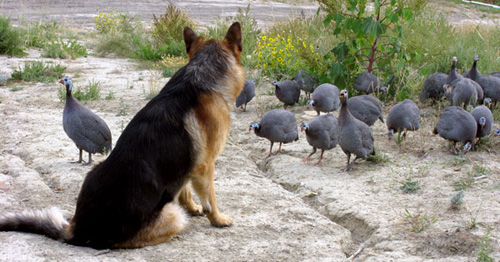
I protected crops from trespassing sheep. I kept the flock together beside roads. I found strays before dusk. I held animals away from danger while Karl opened gates. I watched the wagon when he went into a building. At lambing time, I helped move reluctant ewes without exhausting the man who had already worked through the night.
One dog saved hours of human walking and reduced the need for extra hands. I turned Karl's voice into movement fifty paces away. I made an unfenced grazing system more manageable. When money was thin, that was not a charming contribution. It was economic survival.
The work also tied me to him with unusual closeness. I studied his shoulders, his breathing, and the direction of his eyes. He knew the angle of my ears and the difference between my warning for a stranger and my attention to stock. We did not need to pretend we were the same creature. Our success came from being different in complementary ways.
The Day My Work Changed
As I entered my prime, fewer sheep passed our road. More carts came from the station. Karl's brother Emil wore a municipal police coat, and he visited to watch me work.
Police and military organizations in Germany and beyond were already experimenting with shepherd dogs. A dog bred to patrol a flock boundary could patrol a yard. A nose used to finding a lost sheep could follow human scent. Steadiness near livestock and village traffic could become steadiness in crowds. Handler focus could become service obedience.
Emil did not turn me into a different animal. He redirected what was already there.
He taught me to search dark sheds, follow a laid track, return with an object, guard on command, and release when told. The release mattered as much as the hold. A service dog that could not be called off was not disciplined power; he was a liability.
My sheep work continued, but some nights I went with Emil. My presence made a lone officer less alone. My nose searched where lamplight failed. My ears heard movement behind timber walls. Once, I followed the crushed grass and boot scent of a missing child beyond the last houses. We found him cold and crying near a drainage ditch. Emil carried him home. I walked beside them.
No medal was needed. The value was the child returning through his own doorway.
My Prime Was Controlled Power
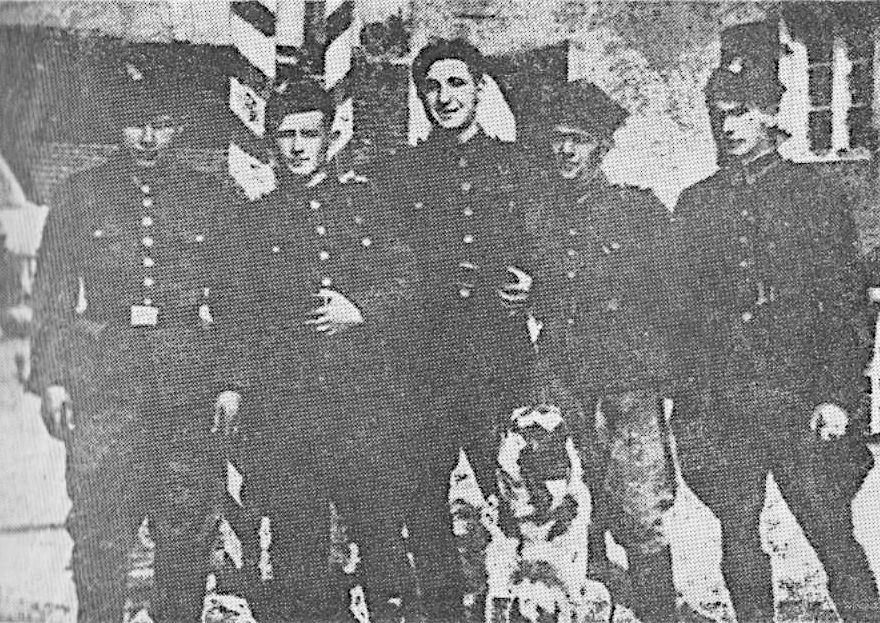
In my strongest years, people noticed my teeth first. Karl noticed my restraint.
The deliberate work behind my breed had given me power, but power was never the whole assignment. I had to move from action to stillness without argument. I had to distinguish ordinary human confusion from threat. I had to work away from my handler and remain answerable to him.
That mixture—nerve, obedience, and judgment—made the German Shepherd unusually adaptable. As traditional shepherding contracted, the breed's usefulness did not disappear. It widened into police work, military messenger and sentry duties, search, guarding, and later many forms of assistance and rescue.
Not every dog could do every job, and not every breeding decision served the original ideal equally well. But in my time, the working question remained plain: could the dog perform, recover, think, and remain under control?
My days carried both worlds. In the morning I trotted a living boundary beside sheep. At night I lay under Emil's desk, apparently asleep, counting footsteps in the corridor.
The Cost of Being Ready
Readiness has a weight.
I slept lightly. I watched doors. If Karl and Emil argued, I tracked both men until their voices settled. The same sensitivity that let me notice a ewe testing the boundary meant that disorder entered me quickly.
Good handling gave that vigilance somewhere to go. Work, clear commands, rest, and familiar partnership kept it from becoming noise. Confused handling would have made a confused dog. Harshness might have produced fear or reckless defense. Indulgence without structure would have left all my drive loose in the world.
Purpose-bred traits are not decorations. They shape what a dog notices, what he repeats, and what he finds satisfying. I was happiest after useful effort, when Karl cleaned mud from my paws and the flock breathed quietly behind hurdles. I did not need constant excitement. I needed a job I understood.
When My Legs Slowed
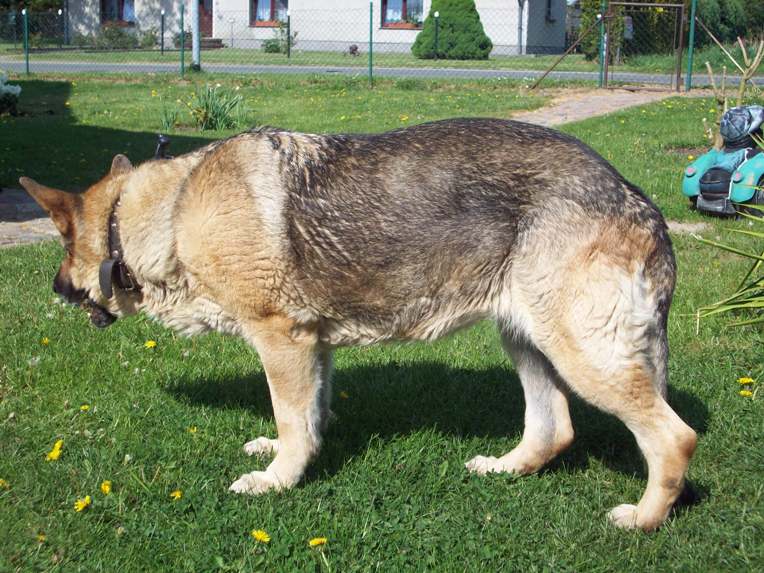
Age announced itself in small betrayals. I rose more slowly on cold mornings. My turn at the field edge widened. I heard Karl's low command only when the wind favored me.
A younger dog began taking the far boundary. I disliked him for three days. On the fourth, I corrected his foolish rush at a ewe. On the fifth, he watched me.
Karl still took me on shorter rounds. Emil still let me inspect the station yard, though we both knew the inspection was mostly for my dignity. My work became memory carried in the body: where to stand, when to wait, how little force a good dog needed.

The breed outlived the exact world that made it. Later German Shepherds served in wars, police units, border patrols, search teams, guide work, and family homes. Their fame brought admiration and careless breeding alike. Shape sometimes competed with function. Reputation sometimes hid the demanding mind underneath.
But the original lesson remained in dogs who could still work: usefulness came from balance.
What I Left Behind
I did not create the German Shepherd. Men with pedigrees, standards, ambitions, and arguments did that. Shepherds doing older work supplied the raw truth those men could not invent.
My part was smaller. I kept sheep from grain. I found what was lost. I made two men's reach longer. I stood where darkness made a person hesitate. I obeyed when obedience protected others, and I acted when waiting would have failed them.
Karl buried me above the grazing strip where I had worn a path into the earth. By then the railway sounded louder than the bells.
If you want to understand why my breed was created, do not begin with the outline of my back or the color of my coat. Begin with the work. Begin with a shepherd responsible for living animals across open ground. Begin with a policeman entering a black yard alone. Begin with the need for courage that could be stopped, intelligence that could cooperate, and loyalty that did more than follow.
I was bred to stand at the edge—of flock, field, road, and danger—and make that edge hold.
That was my life.
Historical Note
The narrator is fictional, but the framework is grounded in breed history. The German Shepherd Dog was standardized in Germany beginning in 1899 under Max von Stephanitz and the Verein für Deutsche Schäferhunde, drawing from regional sheep-tending dogs. Horand von Grafrath was the society's first registered dog. Utility, trainability, nerve, endurance, and working structure were central to the early ideal. As industrialization reduced some traditional shepherding work, the breed expanded rapidly into police, military, tracking, guarding, and other service roles.
The story combines historically characteristic tasks into one representative life. It should be read as evidence-based narrative reconstruction, not as a biography of a documented individual.