Easy Enrichment Ideas for Smart Dogs
Easy enrichment for a smart dog does not require an expensive puzzle collection. Start with food searches, sniff walks, short training games, toy rotation, supervised shredding, hide-and-seek, and simple household obstacle courses. Pick one or two activities, keep sessions short, and stop while your dog is still enjoying the game.
The best enrichment lets a dog use normal behaviors—sniffing, searching, chewing, carrying, solving and learning—without turning your house into a canine escape room you now have to manage full-time.
Start with the easiest win: make food a search
Instead of serving every meal in a bowl, use part of your dog's measured daily food for a low-pressure search. Scatter kibble across a clean room, toss pieces into grass, or hide small portions in easy-to-find places while your dog waits nearby.
Begin where the food is visible. Once your dog understands the game, make hiding spots slightly harder. Searching should look curious and successful, not frantic. Count all treats and food toward the dog's normal daily intake, and ask your veterinarian about dietary changes if your dog has a medical condition or prescribed diet.
Turn the daily walk into a sniffari
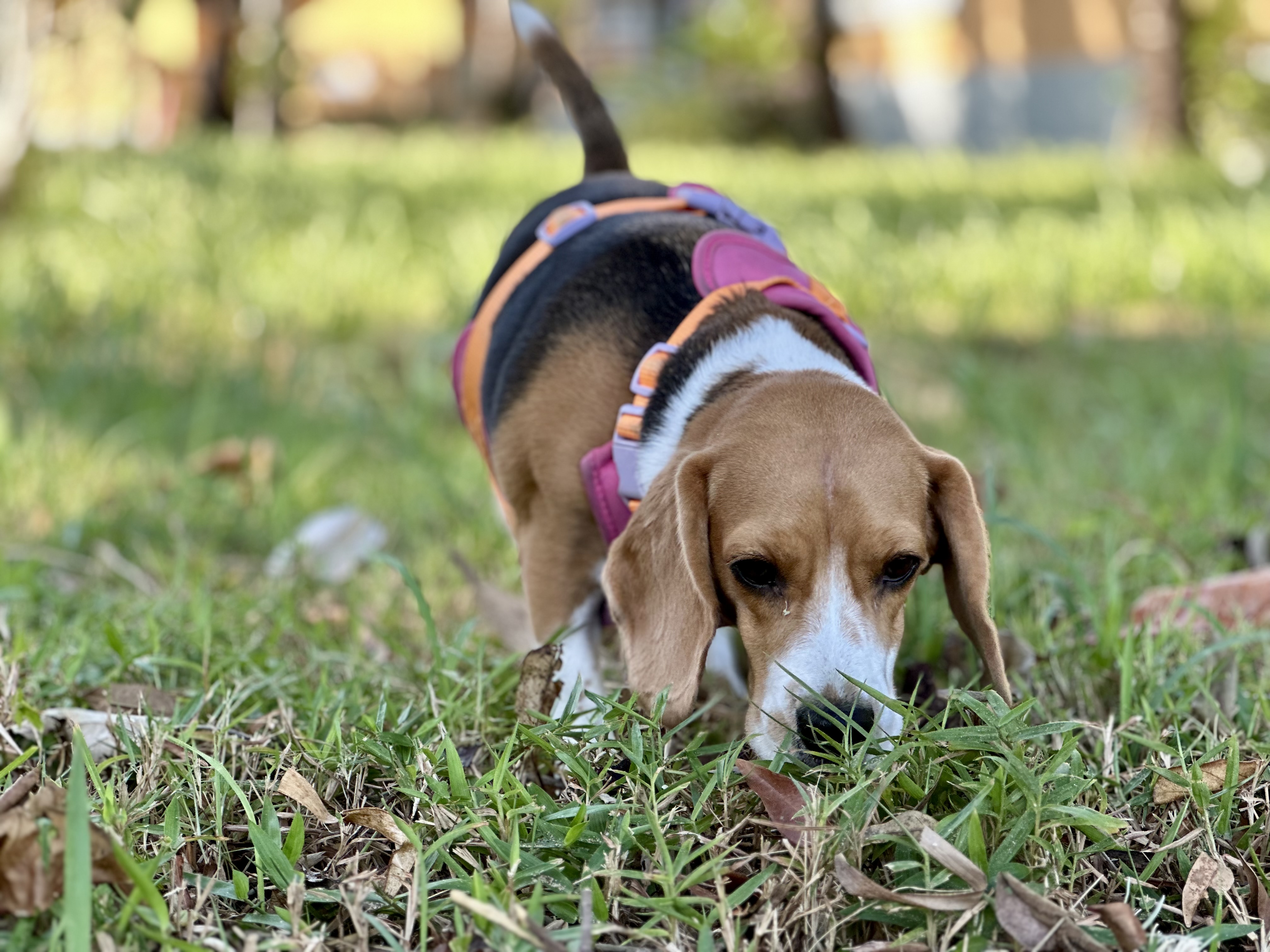
A sniff walk is not about distance or pace. Choose a safe route, loosen the schedule, and let your dog investigate appropriate smells. Ten attentive minutes can offer more novelty than marching the same block while everyone stares straight ahead.
Use a comfortable leash setup and prevent access to garbage, toxic plants, wildlife, traffic, and anything your dog may swallow. Dogs that are fearful, reactive, or likely to bolt need a route and equipment suited to them; a qualified reward-based professional can help if ordinary walks feel unsafe.
Teach one tiny skill at a time
Smart dogs often enjoy figuring out how to earn a reward. Try touch, spin, paws-up on a low stable object, find a named toy, go to a mat, or put toys in a basket. A three-minute lesson can be enough.
Keep criteria clear and reward small steps. If the dog guesses wildly, barks, scratches, or walks away, make the task easier. Enrichment is supposed to add choice and interest, not become an unpaid performance review.
Good practical skills include:
- touching a hand with the nose
- waiting while a toy is placed
- searching for one visible treat
- carrying a soft toy to a basket
- settling on a mat for a few seconds
- choosing between two named toys
Rotate toys instead of buying more
Leave a few safe favorites available and store the rest. Swap them every several days so familiar objects regain some novelty. You can also change how a toy appears: hide it under a towel, place it in an open box, or use it for a short retrieve game.
Inspect toys frequently. Remove anything with loose pieces, sharp edges, exposed stuffing, damaged batteries, or a size that could be swallowed. Supervise new toys until you know how your dog uses them.
Use a towel roll or muffin-tin puzzle
For a towel roll, sprinkle a few pieces of food on a flat towel and roll it loosely. Let your dog unroll it with their nose. For a muffin tin, put food in several cups and cover some with appropriately sized balls or safe toys.
Make the first attempt obvious. Do not tie towels, use fabric your dog may eat, or leave a homemade puzzle unattended. Skip this idea for dogs that shred and swallow cloth, guard food, or become intensely frustrated.
Slow down a meal safely
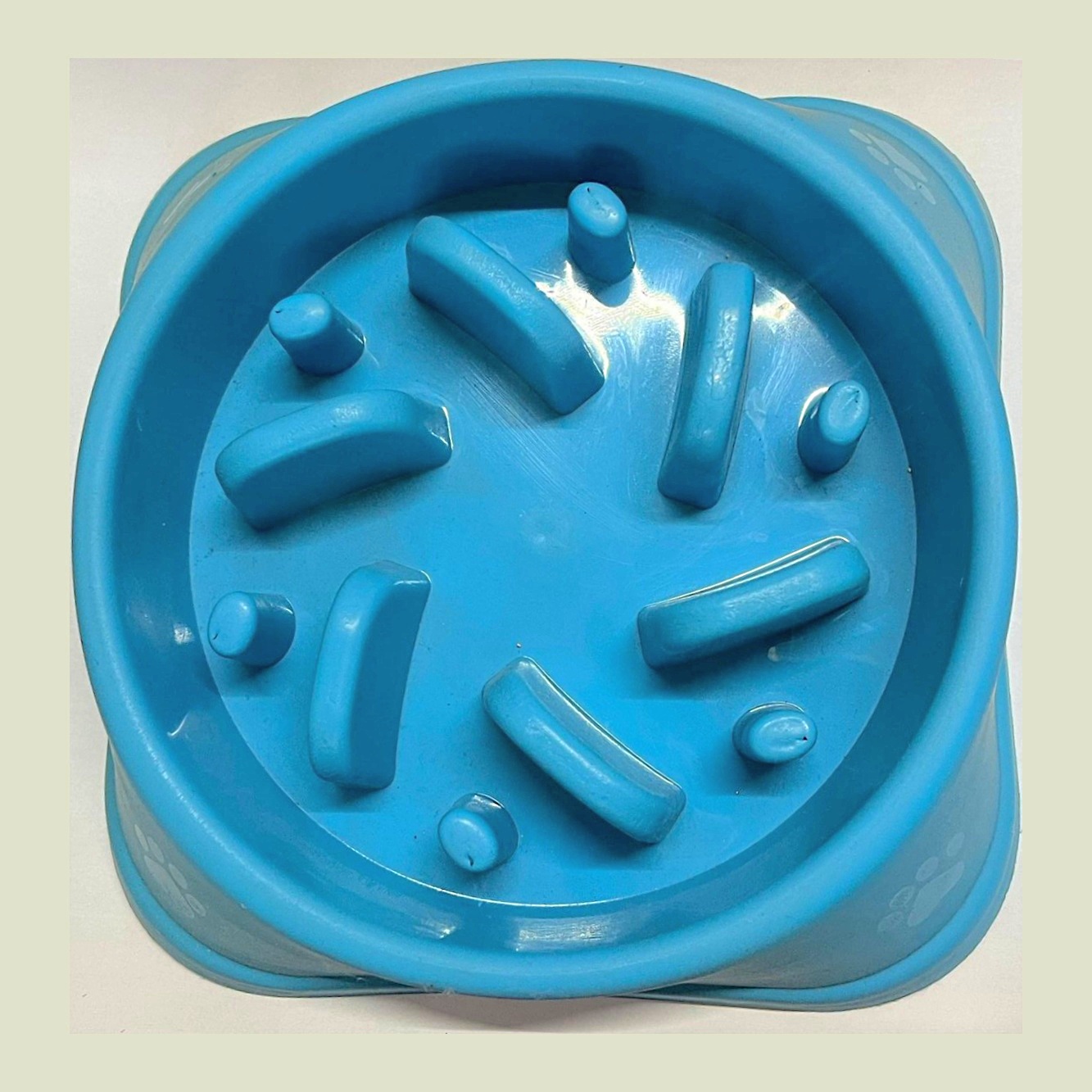
A suitable slow feeder, snuffle mat, or food-dispensing toy can stretch a meal and give the dog a simple problem to solve. Choose one made for your dog's size and eating style, follow the manufacturer's directions, and wash it thoroughly.
The goal is comfortable engagement, not making the dog battle for dinner. Stop if you see hard biting, frantic pawing, guarding, vomiting, or attempts to eat the feeder. Dogs with swallowing problems, dental pain, flat-faced anatomy, or other health concerns may need veterinary guidance about feeding tools.
Play hide-and-seek
Have one person gently hold the dog while another hides somewhere easy and calls once. Reward the dog when they find the person. Solo owners can hide a favorite toy or a few pieces of food while the dog waits behind a gate or on a mat.
Keep doors, stairs, balconies, storage spaces, and children's hiding places safe. Avoid creating a frantic chase through slippery rooms. Calm searching is the point.
Build a household obstacle course
Arrange a path around chairs, over a broom handle placed flat on the floor, past an open cardboard box, and onto a nonslip mat. Lead your dog through slowly and reward exploration. Let them opt out.
Keep everything low, stable, spacious, and nonslip. Do not ask puppies, seniors, or dogs with pain or mobility concerns to jump, twist sharply, or balance on unstable furniture. This is a confidence game, not discount agility equipment.
Offer supervised shredding or a box search
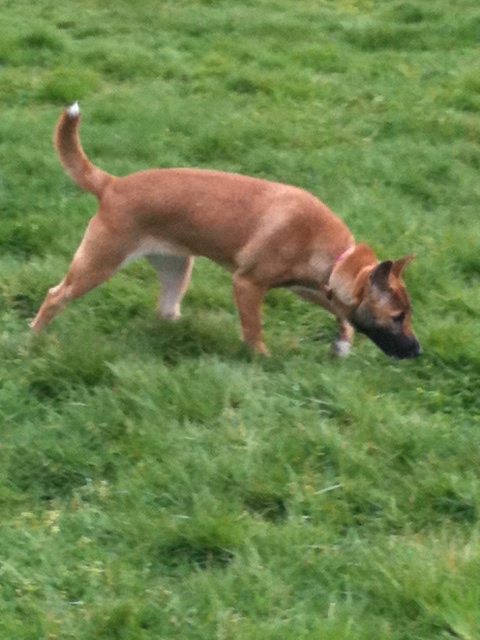
Some dogs love tearing paper or investigating boxes. Place food in an open, clean cardboard box with loosely crumpled plain paper. Supervise from start to finish and remove tape, staples, labels, plastic, foam, strings, and food residue.
This is not suitable for dogs that eat cardboard or paper, guard found objects, or become overaroused. For them, use a reusable food toy or a simple visible search instead.
Let your dog choose the game
Choice is enrichment too. Present two toys and use the one your dog approaches. On a safe walk, occasionally let the dog choose between two routes. During training, notice whether they prefer sniffing, tugging, food searches, carrying, or quiet observation.
Do not confuse intelligence with a need for constant difficulty. Smart dogs also benefit from predictable routines, sleep, chewing, calm companionship, and time with nothing scheduled. A dog who can settle is not bored by definition.
A simple seven-day enrichment rotation
You do not need seven brand-new projects. Repeat useful games and vary one detail.
- Monday: scatter part of breakfast in a room
- Tuesday: take a slow sniff-focused walk
- Wednesday: teach one tiny trick for three minutes
- Thursday: rotate two stored toys back into use
- Friday: play an easy hide-and-seek game
- Saturday: set up a low household obstacle path
- Sunday: offer a supervised box search or a suitable food toy
Pair active games with water and quiet recovery. If enrichment seems to make your dog more frantic, shorten it, lower the difficulty, and choose calmer scent work or chewing.
How to tell whether enrichment is working
The activity fits when your dog can engage, solve manageable problems, pause, and finish without distress. Signs that it is too hard include frantic grabbing, repeated barking, hard biting at equipment, avoidance, guarding, or an inability to disengage.
Sudden restlessness, destructive behavior, appetite changes, repetitive behavior, or inability to settle can have causes beyond boredom. A veterinarian should assess abrupt or concerning changes. A qualified reward-based trainer or behavior professional can help tailor activities when fear, reactivity, resource guarding, or compulsive-looking behavior is involved.
Frequently asked questions
How much enrichment does a smart dog need?
There is no universal number. Start with one or two short activities alongside suitable exercise, rest, social contact, and ordinary training. Watch the individual dog rather than trying to fill every waking minute.
Can enrichment replace exercise?
No. Mental work complements age- and health-appropriate physical activity; it does not replace movement, outdoor access, sleep, or veterinary care.
What is the cheapest dog enrichment idea?
Using part of a normal meal for a supervised scatter search is usually the simplest. A sniff-focused walk and a three-minute training game also require little or no special equipment.
Why does my dog finish puzzles immediately?
Fast completion is not failure. Rotate the activity, change the hiding location, or teach a different skill instead of endlessly increasing difficulty. The goal is useful engagement, not defeating the dog.
Smart dogs do not need a cruise director. They need safe chances to use their brains, clear boundaries, and permission to rest when the game is over.