
Golden Retriever vs Labrador: Which Family Dog Fits Better?
Golden Retrievers and Labrador Retrievers are both excellent family dogs, so the honest answer is not “one is better.” It is which kind of good problem you want to live with.
Choose a Golden Retriever if you want a softer, more emotionally tuned-in family companion and you do not mind extra brushing, feathered coat cleanup, and a dog who may carry the household’s feelings like an unpaid therapist.
Choose a Labrador Retriever if you want a sturdier, more athletic, food-motivated family dog with a shorter coat, higher bounce, and a deep personal relationship with mud, water, and unattended sandwiches.
For many homes, the deciding factors are energy style, coat care, kid chaos tolerance, training consistency, and how much dog enthusiasm the family can realistically manage. Both breeds are friendly retrievers with working-dog roots. Neither is a self-installing family appliance.
Quick answer: Golden Retriever vs Labrador for families
If your household wants the calmest-feeling choice between the two, a well-bred, well-raised Golden Retriever often has the edge. Goldens are commonly gentle, affectionate, and eager to stay close to their people. They can be a lovely fit for families who want a social dog with a softer presence indoors.
If your household is active, outdoorsy, and wants a more rugged go-anywhere companion, a Labrador Retriever often fits better. Labs are typically cheerful, athletic, resilient, and ready to join whatever is happening. They are also famous for being food-driven, which can make training easier and counter-surfing more theatrical.
A simple family-fit split:
- Best for calmer family life: Golden Retriever
- Best for active outdoor families: Labrador Retriever
- Lower grooming burden: Labrador Retriever
- More coat maintenance: Golden Retriever
- Often more emotionally sensitive: Golden Retriever
- Often more physically boisterous: Labrador Retriever
- Great with kids when trained and supervised: both
- Needs daily exercise and training: both
The wrong choice is not Golden vs Lab. The wrong choice is assuming either breed will raise itself because it came with a friendly face.
Where the breeds are most similar
Golden Retrievers and Labrador Retrievers are both retrievers from sporting-dog backgrounds. That matters. These are not decorative dogs that were bred to sit politely while humans arrange throw pillows. They were developed to work with people, retrieve game, handle outdoor conditions, and stay engaged.
That shared history gives both breeds many of the traits families love:
- people-oriented temperament
- strong trainability
- playful energy
- affectionate family attachment
- interest in carrying, fetching, and retrieving
- generally social outlook when well bred and socialized
- medium-large size with real physical strength
- daily exercise needs
- moderate to heavy shedding
Both can be wonderful with children, but “good with kids” is not a magic spell. A friendly 70-pound dog can still knock over a toddler, steal a snack, mouth hands, jump on guests, or turn the hallway into a demolition derby with better branding.
Families should plan on teaching polite greetings, leash manners, drop it, leave it, recall, calm settling, and respectful child-dog rules. Kids should not climb on dogs, grab ears or tails, bother dogs while eating, or corner them when they want space.
Temperament: soft Goldens, bouncy Labs

Golden Retrievers are often described as gentle, affectionate, eager to please, and people-focused. Many Goldens have a softer emotional style. They may be highly responsive to tone, household mood, and close human contact. That can make them feel deeply connected and intuitive.
The flip side is that some Goldens can be sensitive. Harsh handling, chaotic routines, or inconsistent expectations may affect them. They usually do best with warm, clear, reward-based training and a household that enjoys a dog who wants to be involved.
Labrador Retrievers are often more exuberant and physical. A Lab may greet life like someone just announced recess forever. They are typically friendly, outgoing, and resilient, but that energy can arrive as jumping, pulling, mouthiness, toy obsession, or a tail that clears coffee tables like a low-budget wrecking ball.
Labs can be excellent family dogs for homes that like activity and structure. They often respond beautifully to food rewards and games. The family just needs to train the enthusiasm before the enthusiasm starts making executive decisions.
Energy and exercise: both need real outlets

Neither breed is truly low-energy. Goldens may feel a little softer indoors, but they still need daily movement, training, sniffing, play, and mental work. Labs often need a bit more rugged activity and can be especially happy with swimming, retrieving games, hiking, and outdoor adventures.
A typical family routine for either breed should include:
- daily walks with sniffing time
- short training sessions
- fetch or retrieving games in moderation
- puzzle feeders or scent games
- calm practice on a mat or bed
- age-appropriate exercise for puppies
- rest, because overtired retrievers become idiots with fur
Puppies and adolescents of both breeds can be intense. Many families picture the steady adult Golden or mellow older Lab and forget the middle stage where the dog has adult size, puppy judgment, and the emotional regulation of a shopping cart with a rocket attached.
If your family is mostly sedentary, either breed can be too much unless you intentionally build exercise and training into the day. If your family is active and wants a dog involved in hikes, beach days, camping, parks, and yard games, both breeds can fit well, with the Lab usually leaning more athletic and the Golden often leaning more companion-soft.
Grooming and shedding: the coat is not a small detail

Labradors have short, dense double coats. That does not mean they do not shed. They shed plenty. The hair is just shorter, sharper, and somehow legally entitled to every car seat you own.
Golden Retrievers have longer double coats with feathering on the legs, tail, chest, and belly. They usually need more brushing, more detangling, and more cleanup around mud, burrs, wet weather, and seasonal shedding.
For busy families, this difference matters:
- Choose a Lab if you want easier coat maintenance and do not mind short hair everywhere.
- Choose a Golden if you like the longer golden look and can commit to brushing several times a week.
- Choose neither if you want a low-shedding dog. That is not what this aisle sells.
Both breeds need nail trims, dental care, ear checks, and routine bathing as needed. Labs who swim often need extra ear attention. Goldens may need more coat management to prevent mats behind ears, under legs, and around feathering.
Training: eager learners with different motivations

Goldens and Labs are both highly trainable. That is one reason they are popular as family dogs, service dogs, therapy dogs, hunting companions, sport dogs, and all-purpose household shadows.
Goldens often work for connection, praise, food, toys, and the general joy of doing something with their person. Labs often work for food, toys, movement, water, food, carrying objects, food, and also food. This is useful. It is also why your Lab may look at a closed pantry like a constitutional challenge.
Important foundation skills for both breeds:
- responding to their name
- coming when called
- walking on a loose leash
- greeting without jumping
- drop it and leave it
- settling on a mat
- waiting at doors and gates
- calm behavior around children and guests
- cooperative grooming and handling
Use positive, consistent training. Avoid harsh corrections, intimidation, or punishment-heavy methods. These breeds are social and responsive; you do not need to turn training into a courtroom drama. Reward what you want, prevent rehearsals of what you do not want, and keep sessions short enough that the dog can win.
Kids and family life: both can be great, with supervision
A well-bred, well-socialized Golden Retriever or Labrador Retriever can be a terrific child-friendly dog. Both breeds tend to be affectionate, tolerant, and playful. But no breed removes the need for supervision.
Goldens may fit families with younger children if the household wants a slightly softer, gentler presence and can manage the coat. Labs may fit families with older children or more active homes where a bouncy, athletic dog is part of the fun.
The child-dog rules are the same either way:
- no climbing, riding, hugging, or cornering the dog
- no bothering the dog while eating or sleeping
- no taking toys or chews from the dog
- no rough teasing or chase games that overstimulate everyone
- give the dog a safe resting place children respect
- reward the dog for calm behavior around kids
- separate when either the child or dog is getting too excited
A dog does not have to be aggressive to be unsafe. Size, speed, teeth, toys, food, and excitement can create problems. Good family dogs are made with management, training, and realistic adults. Mostly adults. Sometimes one adult and a very ambitious baby gate.
Health and lifespan: similar responsibilities
Both Golden Retrievers and Labrador Retrievers are medium-large breeds with real health responsibilities. Individual dogs vary, and responsible breeding matters.
Common concerns families should discuss with breeders or veterinarians may include hip and elbow issues, eye conditions, allergies or skin problems, ear problems, weight management, and breed-associated inherited conditions. Golden Retrievers are also widely discussed for cancer risk, while Labradors are often strongly associated with weight gain and food motivation.
This article is general breed education, not veterinary advice. If you are choosing a puppy, ask breeders about health testing, temperament, socialization, and the parents’ history. If you are adopting, ask the rescue or shelter what they know about behavior, medical needs, and energy level. For any sudden limping, pain, skin changes, ear odor, appetite change, behavior shift, or exercise intolerance, talk to a veterinarian.
Which breed is easier for first-time owners?
Both can work for first-time owners who are ready to train. A Golden Retriever may feel easier for a first-time family that wants a gentle, people-focused dog and can handle grooming. A Labrador may feel easier for a first-time family that wants a resilient, food-motivated dog and can provide enough exercise.
The real first-time owner question is not “which breed is easy?” It is:
- Can you handle a strong medium-large dog on leash?
- Can someone exercise the dog every day?
- Can the family stay consistent with rules?
- Can you afford food, vet care, grooming supplies, training, and gear?
- Can you supervise children properly?
- Can you survive shedding without writing a manifesto?
If yes, either breed can be a good first family dog. If no, consider a lower-energy adult dog, a smaller breed, or postponing until the household routine can support a dog properly.
When a Golden Retriever fits better
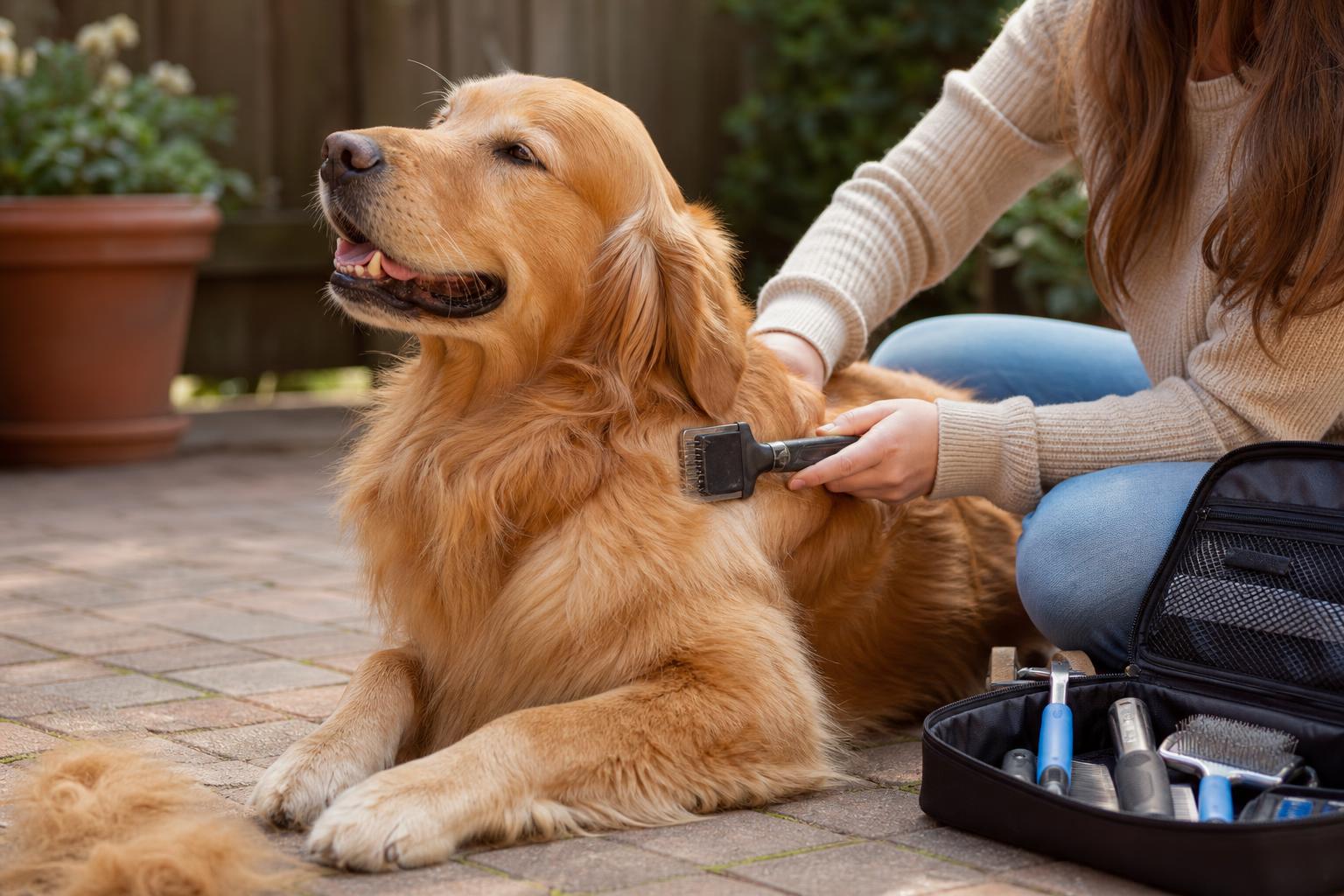
A Golden Retriever may be the better fit if your family wants:
- a gentle, affectionate companion
- a dog that often feels emotionally tuned-in
- a softer indoor presence after exercise
- a classic family-dog temperament
- a dog that enjoys training, play, and closeness
- a breed known for warmth with people
- a dog whose coat you are willing to maintain
Goldens are not perfect angels sprinkled with obedience dust. They can jump, mouth, bark, chew, shed, steal socks, and develop anxiety or behavior problems when under-trained or under-exercised. But for families who want a loving, social, trainable dog and do not mind grooming, they are one of the great options.
When a Labrador Retriever fits better

A Labrador Retriever may be the better fit if your family wants:
- an athletic, outdoorsy companion
- a shorter coat with simpler grooming
- a dog who loves games, fetch, water, and action
- a sturdy family dog for active routines
- strong food motivation for training
- a resilient personality that often handles busy households well
- a dog who wants to participate in everything
Labs are not low-maintenance just because their coat is shorter. They need training, exercise, weight control, and impulse control. A bored Lab can turn household management into performance art. But in active homes, they can be joyful, loyal, hilarious companions.
Side-by-side family fit comparison
Golden Retriever: softer, more coat care, affectionate, trainable, often gentle, may be more emotionally sensitive, great for families who want a close companion and can handle grooming.
Labrador Retriever: more athletic and bouncy, easier coat care but still sheds, food-motivated, rugged, social, great for active families who want a sturdy dog for outdoor life and daily games.
Both: friendly, trainable, medium-large, child-friendly with supervision, not low-shedding, not low-energy, and not a substitute for adult responsibility.
Final verdict: which family dog fits better?
For a calmer, softer family companion, choose the Golden Retriever. For a more active, rugged, lower-grooming family companion, choose the Labrador Retriever.
If you are still split, meet well-bred adult dogs of both breeds, not just puppies. Puppies are terrible data. Every puppy says, “I am perfect and will never become a 70-pound chaos intern.” Adult dogs tell the truth.
The best family dog is not the breed that wins on paper. It is the dog whose needs match your real household: time, energy, grooming tolerance, training consistency, children, space, budget, and patience. Golden or Lab, the family has to hold up its end of the leash.
FAQ
Is a Golden Retriever or Labrador better with kids?
Both can be excellent with kids when well bred, socialized, trained, and supervised. Goldens may feel gentler and softer in many homes, while Labs may be more bouncy and physical. Either breed can overwhelm small children without training and management.
Which is calmer, a Golden Retriever or a Labrador?
Many families find adult Golden Retrievers slightly calmer or softer indoors, but individual dogs vary. Labs are often more exuberant and athletic. Puppies and adolescents of both breeds can be energetic and mouthy.
Which sheds more, Golden Retriever or Labrador?
Both shed. Golden Retrievers usually require more brushing because of their longer feathered coat. Labradors have shorter coats, but they still shed heavily enough to make your vacuum question its career choices.
Are Golden Retrievers easier to train than Labradors?
Both are very trainable. Goldens are often eager and people-focused. Labs are often highly food-motivated and game-oriented. The easier dog is usually the one whose motivation your family uses consistently.
Which breed is better for apartments?
Neither breed is automatically an apartment dog, but either can live in an apartment if the family provides daily exercise, training, potty routines, and mental enrichment. A calmer adult Golden may be easier in a quieter apartment; an active Lab needs serious outlets.
Is a Labrador lower maintenance than a Golden Retriever?
A Lab is usually lower maintenance for grooming because the coat is shorter. But Labs still need exercise, training, weight control, shedding cleanup, ear checks, and routine care. Lower grooming does not mean low maintenance.
Should a first-time family get a Golden Retriever or Labrador?
Either can work for a prepared first-time family. Choose a Golden if you want softer companionship and can handle grooming. Choose a Lab if you want a more athletic dog and can manage enthusiasm, food motivation, and daily exercise.
Internal Dogthread links to build around this article
This article supports Dogthread’s breed and family-dog cluster. Natural related articles include Dog of the Day: Golden Retriever, Dog of the Day: Labrador Retriever, Best Dogs for Families, Puppy Training Schedule, Dog Body Language Guide, What to Buy Before Bringing a Puppy Home, and upcoming breed-history comparisons.