How to Stop Dogs Jumping on Guests Without Killing Their Joy
You do not need to make your dog less friendly to stop them jumping on guests. Keep the enthusiasm; change how they earn access to people. Prevent surprise launches with a gate, leash, or distance, then reward four paws on the floor. If the dog jumps, the greeting pauses. When the paws come down, attention returns.
That simple rule works because the dog still gets what they wanted—a hello—but only through a safer behavior. The hard part is consistency. Every person who pets a jumping dog pays the dog for jumping, even while saying “off.”
Why dogs jump on visitors
Jumping is usually not defiance or a bid for household leadership. Many dogs jump because it works. A face, hands, voice, and eye contact suddenly move toward them. Excited humans often laugh, push, pet, or talk, and all of those can be rewarding.
Arrivals also stack several exciting events together: a doorbell, footsteps, a door opening, a familiar scent, and a new person entering the dog's space. A dog who can sit beautifully in the kitchen may be too aroused to perform the same skill at the doorway.
The training goal is therefore not “stop being excited.” It is:
- prevent the dog from rehearsing the leap
- teach a greeting behavior the dog can perform while excited
- make human attention arrive when paws are down
- practise at an easier intensity before trying a real party
Pick one greeting rule
The clearest starting rule is four paws on the floor earns greetings. It allows a dog to wag, wiggle, sniff, and be sociable without requiring a perfect sit.
A sit can also work, especially for a large or powerful dog, but it may be harder for a highly excited dog to hold. Some dogs sit, pop up, sit again, and become frustrated because the criterion keeps changing. Four paws down is often easier for guests to recognize and reward.
For very busy entrances, teach a separate go to mat behavior. The mat is not punishment or permanent exile. It creates enough distance for the guest to enter safely. Once the dog is calmer, you can release them for a controlled hello.
Choose the rule before the visitor arrives. “Sometimes sit, sometimes down, sometimes stop, sometimes Grandma wrestles with you” is not a training plan. It is a committee.
Set up the doorway before anyone knocks
Management protects guests and stops the dog from practising the exact behavior you want to reduce. Before a planned visit:
- Put small, high-value treats near the entrance but out of the dog's reach.
- Give the dog a toilet break and a short sniffing walk or play session.
- Fit a comfortable leash or harness before the door opens.
- Use a baby gate, exercise pen, closed interior door, or several feet of distance.
- Tell the guest the greeting rule in one sentence.
Try: “Please ignore her while she jumps; say hello when all four paws are down.” Clear instructions beat asking a guest to improvise while wearing a dog as a scarf.
Do not rely on holding the collar of a frantic dog beside the open door. That can increase frustration and puts hands close to the dog's neck. Use enough distance and a secure barrier to keep everybody comfortable.
Teach four paws on the floor without guests
Start where the dog can succeed.
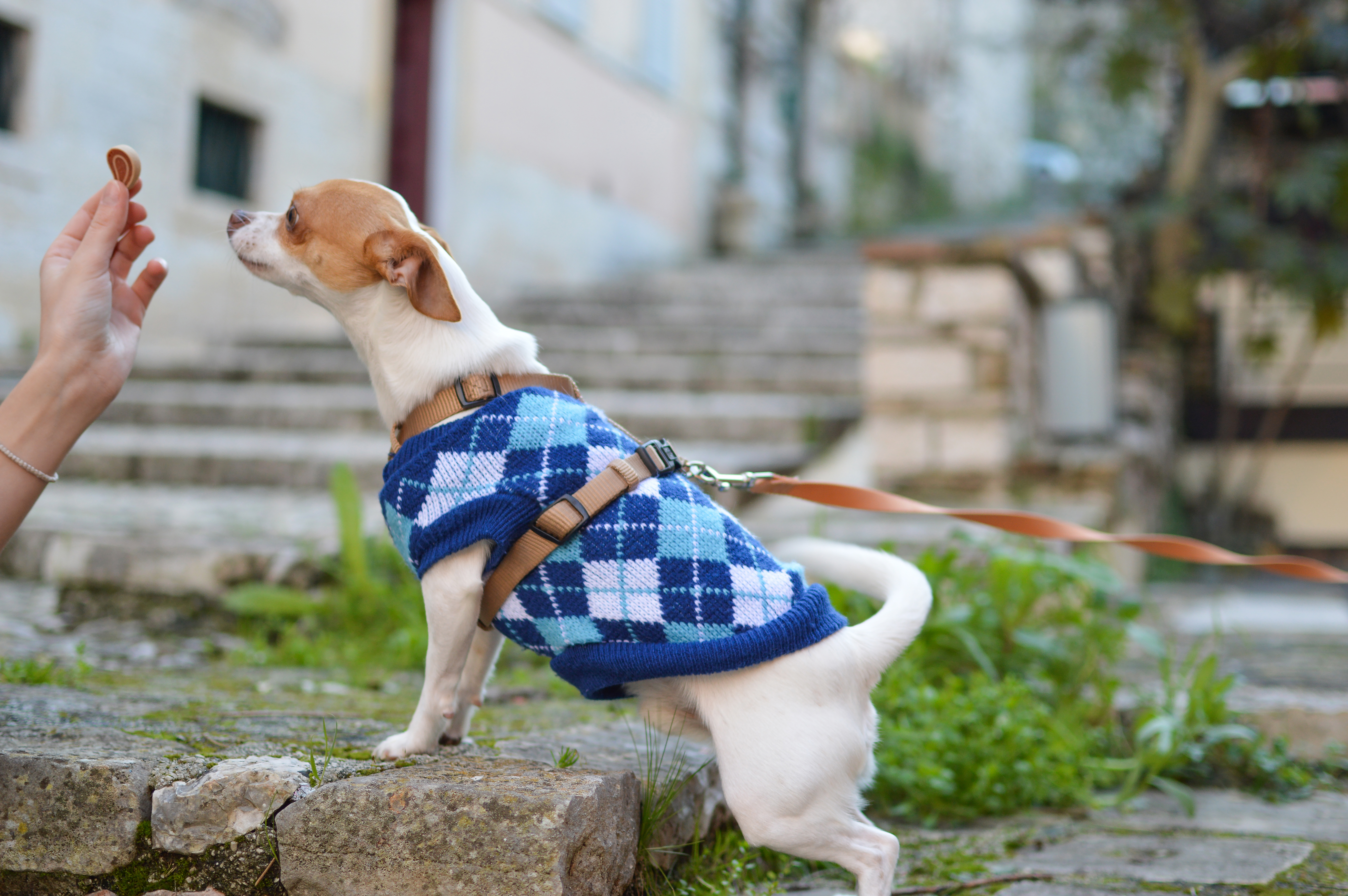
Stand near your dog with several tiny treats. If all four paws are down, mark the moment with “yes” or a click and place a treat on the floor. Feeding low helps keep the dog's nose and weight down. Pause. Mark and reward again while the paws remain grounded.
Next, add mild greeting energy:
- Step away.
- Return calmly.
- If the dog keeps four paws down, mark and reward.
- If the dog jumps, quietly step back out of reach.
- Return as soon as the paws are down.
The dog learns two clean consequences: paws up makes the person farther away; paws down makes the person approach.
Keep sessions short—often one or two minutes is enough. Stop while the dog is succeeding. Several tiny practices during the week are more useful than one exhausting doorway showdown.
Rehearse with a helper
Once your dog understands the game with household members, recruit one calm helper. This is a training rehearsal, not a social visit disguised as an exam.
Begin outside or with the helper already several steps from the door. Keep the dog on leash with slack in it. The helper approaches only while the dog's paws are down. If the dog jumps or surges, the helper stops or steps away. The instant the dog regains four paws, mark, reward low, and let the helper approach again.
At first, the reward may be only one second of petting. Then call the dog away, feed a treat, and reset. Short greetings prevent excitement from climbing until the dog loses control.
Progress one difficulty at a time:
- familiar helper before unfamiliar guest
- quiet knock before a loud doorbell
- one visitor before several
- daylight practice before a chaotic evening arrival
- more distance before less distance
If the dog fails repeatedly, make the next repetition easier. Training is not improved by proving that the current setup is too hard six times in a row.
What the guest should do
Guests do not need to become dog trainers. They need a simple script:
- turn slightly sideways rather than leaning over the dog
- keep hands and voice quiet while paws are up
- avoid eye contact during a jump
- greet when all paws are down
- stop attention again if jumping restarts
- toss a treat to the floor if directed
For some dogs, petting is so exciting that food on the floor is the better first reward. After several calm seconds, the guest can briefly stroke the dog's chest or shoulder rather than reaching over the head.
Avoid kneeing the dog, stepping on paws, shouting, leash jerks, or holding the front feet. These methods can cause pain, fear, conflict, or even more arousal. They also fail to show the dog what to do instead.
Use a treat scatter when excitement is high
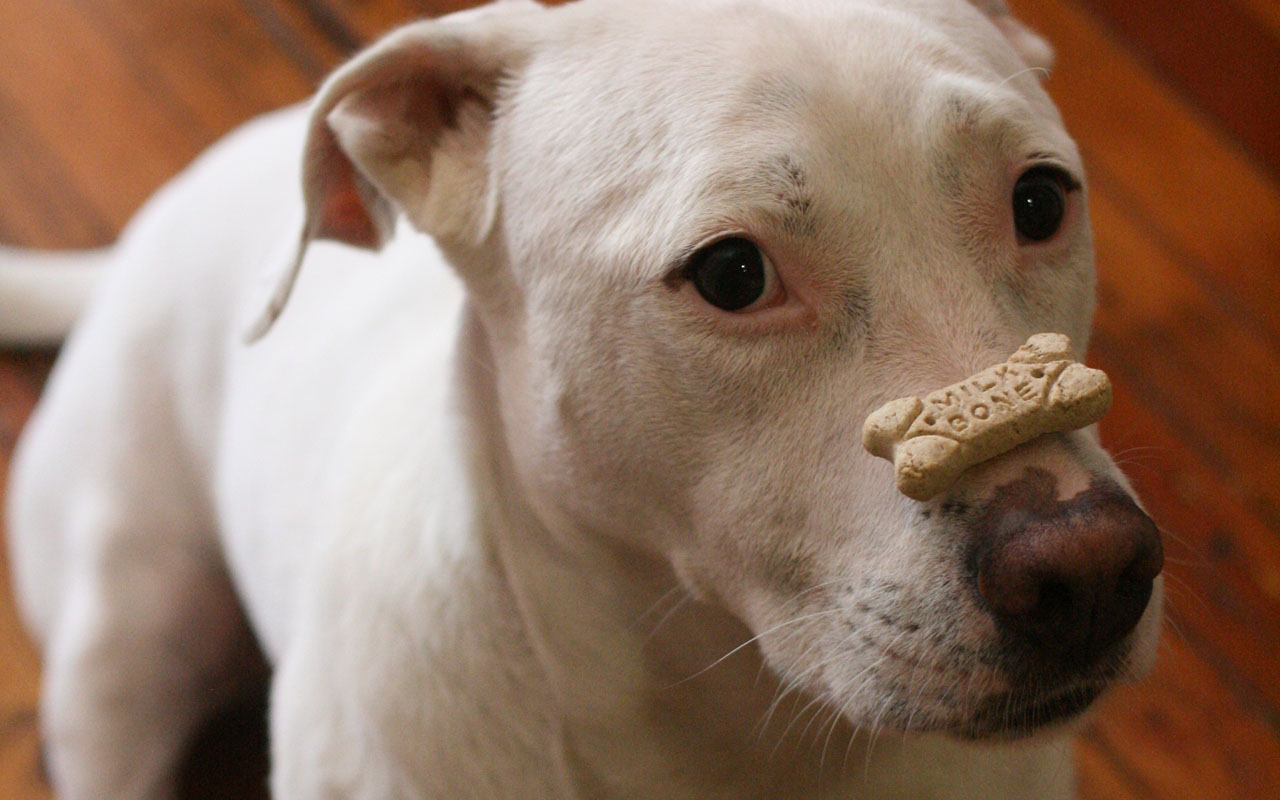
A small scatter of treats on the floor can interrupt the upward pattern and turn the dog's nose downward. Use it before the dog launches, not as a payment immediately after paws hit a guest.
For example:
- The door opens while the dog is behind a gate.
- The guest enters and sits down.
- You scatter three to five tiny treats away from the guest.
- The dog searches, sniffs, and begins to settle.
- You release the dog for a brief greeting when their body is looser.
Sniffing is not magic, but it can lower the temperature of the moment and buy time for better choices. Count treats as part of the dog's daily food intake, especially during frequent practice.
Keep the joy by rewarding more than stillness
Calm does not have to mean dull. A friendly dog can earn access to the things they love:
- a cheerful hello
- a tossed toy
- permission to carry a favorite toy to the door
- a brief sniff of the visitor
- a treat hunt
- praise and petting
Some dogs greet more successfully with something in their mouth. If carrying a toy is safe for that dog and does not create guarding, invite them to fetch it before the door opens.
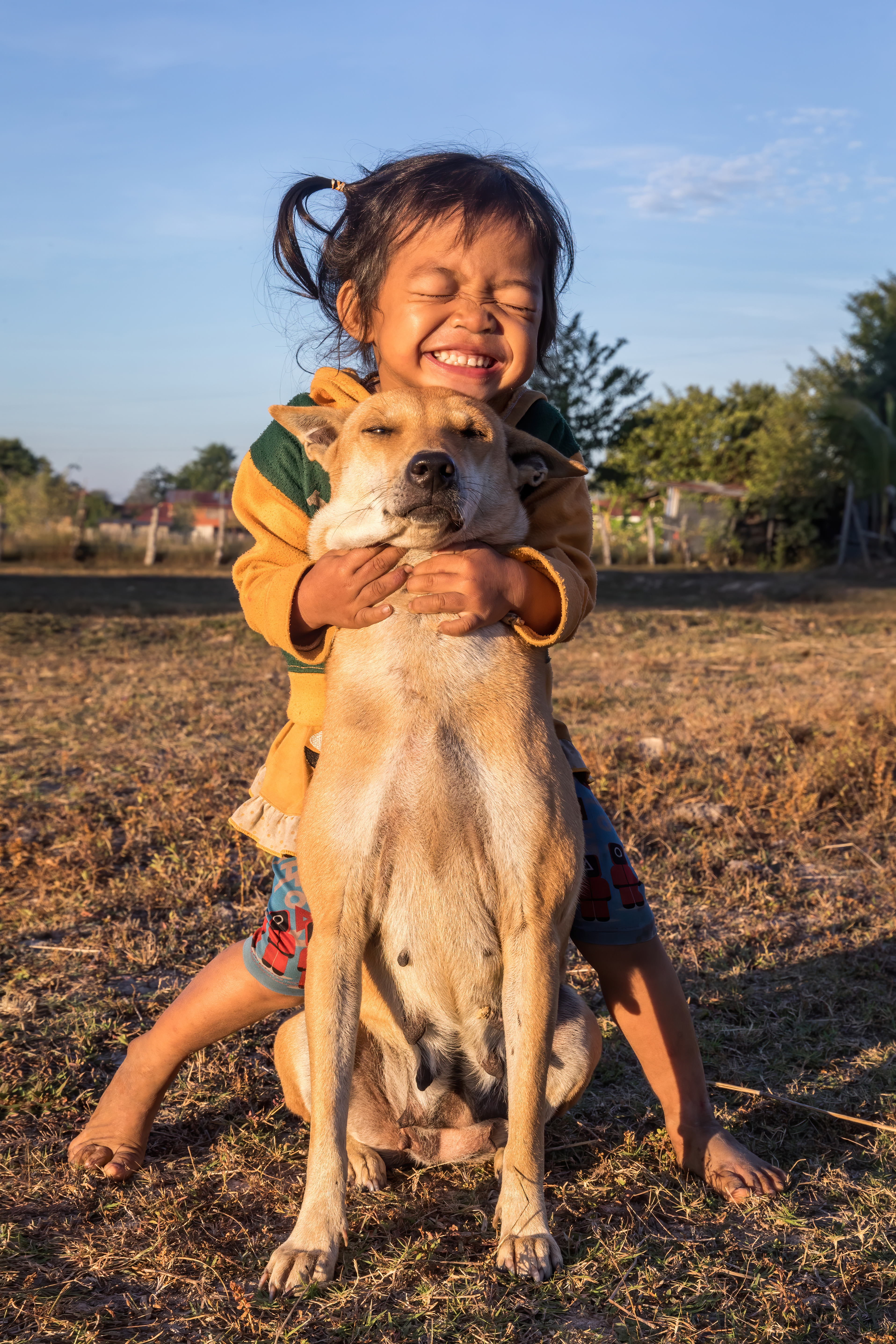
Release energy after the greeting too. Once everyone is inside, take the dog into the yard for a toy game, offer a food puzzle, or let the guest join a short walk. You are not suppressing personality. You are putting a handrail around it.
Common mistakes that keep jumping alive
Everyone uses different rules
One person requests a sit, another pets during a jump, and a third shouts “down,” which the dog knows as lying on the floor. Agree on one rule and one guest script.
Attention arrives during the jump
Talking, touching, pushing, or laughing can reinforce jumping. Make the consequence boring and immediate: attention disappears, then returns when paws are down.
Training begins with the hardest visitor
Children, people carrying bags, loud friends, and guests who adore rough greetings are advanced difficulty. Rehearse with a calm adult helper first.
The leash stays tight
A tight leash can add frustration and opposition pressure. Use barriers and distance so the leash can remain a safety line rather than a towing cable.
The dog is released too soon
Opening the gate while the dog is barking, lunging, or repeatedly jumping may reward the whole sequence. Wait for a brief achievable moment—perhaps one second of four paws down—then release or reward.
Owners expect the sit to solve everything
A sit is useful only if the dog can perform it in that context. Practise the underlying greeting routine, not just the cue.
A practical two-week practice plan
Days 1–3: Build the basic rule
Practise four paws down with household members in several rooms. Complete three to five short sessions a day. Reward low and step away from jumps.
Days 4–6: Add arrival movements
Pick up keys, walk through an interior door, put on a coat, or knock softly on a wall. Add only enough excitement for the dog to remain successful.
Days 7–10: Add one helper
Run five to ten controlled approaches. Keep greetings short. Use a gate or distance if the dog becomes too excited.
Days 11–14: Vary the picture
Change the helper's coat, entry door, time of day, or approach speed one variable at a time. Practise a calm release from a mat or gate.
Real progress may look like fewer jumps, faster recovery, or the dog choosing four paws down without a cue. It does not have to look perfect after fourteen days.
When management should be the main plan
Training does not require every visitor to interact with your dog. Use a separate room, gate, pen, or crate the dog already finds comfortable when:
- a guest is frail, very young, afraid of dogs, or unsteady
- the dog is large enough to injure someone accidentally
- the event will be crowded or chaotic
- the dog cannot eat, respond, or settle around arrivals
- you cannot supervise closely
Give the dog water, comfortable bedding, and a safe activity. Separation can be thoughtful management, not failure.
Seek help from a qualified reward-based trainer or veterinary behavior professional if jumping is accompanied by growling, snapping, guarding the doorway, panic, or an inability to recover. Sudden behavior change, pain sensitivity, or unusual agitation also warrants a veterinary conversation.
Frequently asked questions
Should I ignore my dog when they jump?
Remove attention briefly, but pair that with active teaching. Reward four paws down, use distance or a barrier, and arrange practice the dog can succeed at. Ignoring alone can leave the dog guessing.
Is it better to teach sit or four paws on the floor?
Four paws down is usually the simplest greeting rule. A sit provides more control but can be harder during high excitement. Choose the behavior your dog can repeat reliably and your guests can recognize.
Why does turning away sometimes make jumping worse?
Jumping can briefly intensify when it stops working, or the dog may simply circle and jump at your back. Step fully out of reach or use a gate instead of spinning in place. Reward the first grounded moment.
How long does it take to stop a dog jumping on guests?
There is no honest fixed timeline. Frequency of practice, reinforcement history, arousal level, age, and guest consistency all matter. Look for gradual improvement over repeated staged greetings, not a deadline.
What if guests keep encouraging the jumping?
Use a gate or leash and delay access. Explain the rule before entry. If a guest will not follow it, the dog does not greet that person. Consistency is kinder than letting the dog rehearse confusion.
Can I still let my dog jump up on cue?
Possibly, if the cue and release are very clear and the dog reliably keeps paws down at other times. For households with children, older adults, or mobility concerns, a no-jumping rule is usually simpler and safer.
Methodology and update note
This guide is a source-informed editorial synthesis of humane, reward-based greeting principles and current search questions. It does not represent an in-person assessment or claim veterinary or professional trainer credentials. Individual dogs differ, and safety management should take priority when a dog could knock someone over or shows fear or aggression.
The core method is evergreen: prevent rehearsal, reward the behavior you want, and raise difficulty gradually. Dogthread should review this page periodically for changes in professional behavior guidance and update its supporting internal links as the calm-greetings cluster grows.