How to Teach a Puppy Their Name Without Confusing Them
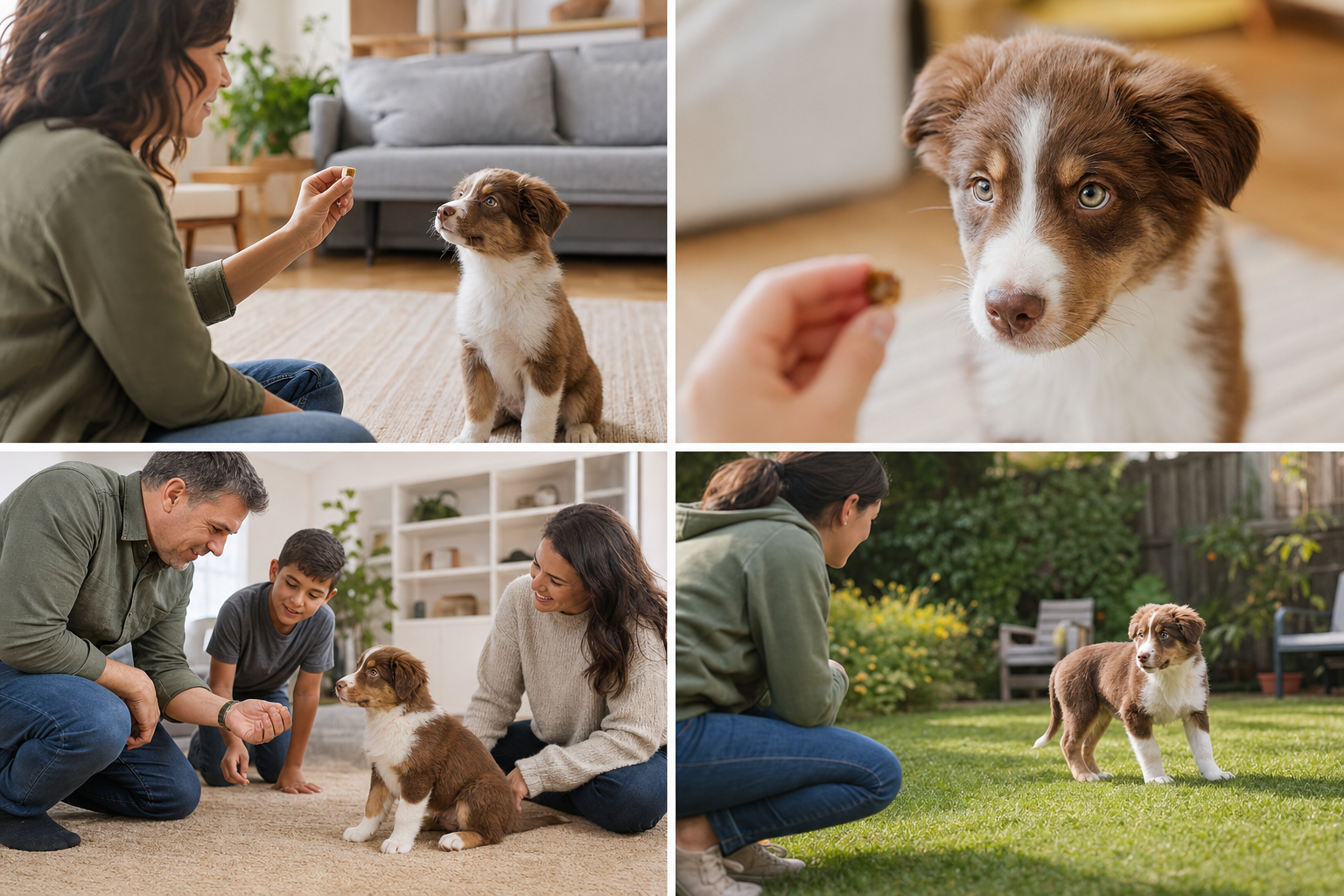
A puppy learns their name fastest when the name means one simple thing: “look at my person, something good might happen.” Say the name once, reward the puppy for turning toward you, keep sessions short, and avoid using the name as background noise, a warning, or a substitute for every cue you wish they already knew.
Quick answer: To teach a puppy their name without confusing them, pick one everyday name, have everyone use the same pronunciation, say it once in a cheerful voice, mark the moment your puppy looks at you, then reward. Practice for 30 to 60 seconds at a time in quiet places before adding distractions. Do not repeat the name five times, use it for scolding, or attach it to too many different commands.
This is name recognition, not obedience magic. Your puppy is not ignoring your full legal request; they are learning which sounds matter in a very loud human world.
What your puppy’s name should mean
Your puppy’s name should mean “pay attention to me,” not “stop that,” “come here,” “sit,” “drop the sock,” and “why are you chewing the baseboard like a tiny contractor with a grudge?”
That distinction matters. If the name predicts rewards and calm attention, your puppy will want to respond. If the name predicts nagging, grabbing, or punishment, the puppy may tune it out or avoid you.
A clean name response looks like this:
- You say the puppy’s name once.
- The puppy turns their head or eyes toward you.
- You mark that moment with “yes” or a clicker.
- You reward with a small treat, praise, toy, or gentle interaction.
At first, looking at you is enough. Do not wait for a sit, a perfect recall, or a dramatic movie-scene sprint across the kitchen. Build the meaning before you raise the bar.
Start in the easiest room in the house
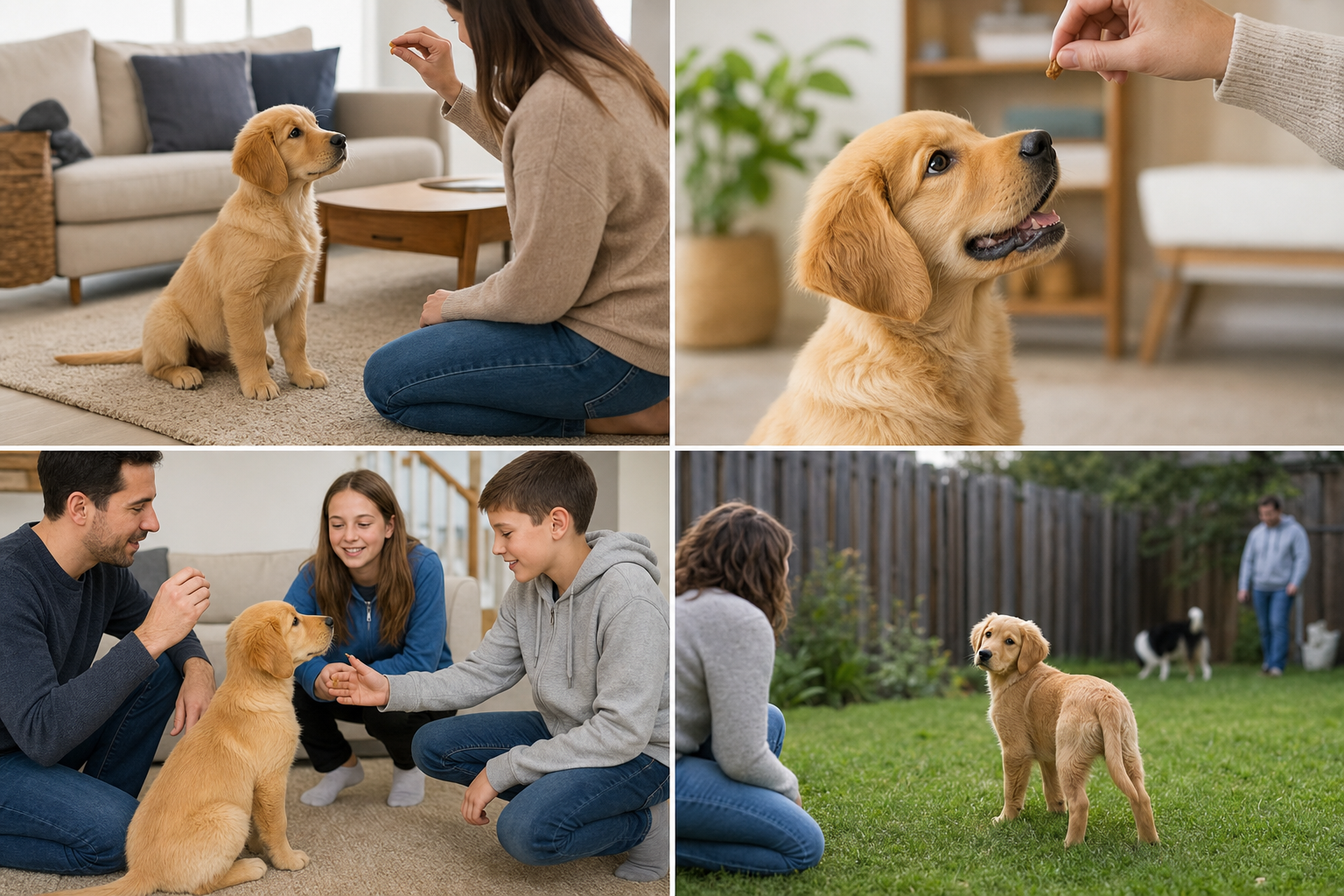
Begin somewhere boring: a quiet kitchen, hallway, living room, or puppy pen. Boring is useful. Boring is where puppies can afford to have a brain.
Try this tiny session:
- Put five to eight small treats in your hand.
- Stand or sit near your puppy.
- Say the puppy’s name once in a happy, normal voice.
- The instant they glance toward you, say “yes” and give a treat.
- Pause for a few seconds, then repeat.
- Stop before your puppy wanders off or gets frantic.
Two or three tiny sessions per day will beat one long session that turns into a hostage negotiation. Puppies learn well in little pieces.
If your puppy does not look at you, make the setup easier. Move closer, reduce distractions, use a better treat, or make a soft kissy noise after the name just once. Reward any turn toward you. The goal is not to prove the puppy knows it. The goal is to help them win enough times that knowing it becomes obvious.
Have everyone use the same name

One of the fastest ways to confuse a puppy is to give them six names in the first week: Bella, Bells, Belly, Baby Shark, Princess Chaos, and “NO, NOT THAT.” Nicknames can come later. Early on, make the signal clean.
For the first couple of weeks, ask everyone in the household to use:
- the same name
- the same cheerful tone
- one repetition at a time
- the same reward pattern
Children should practice with adult help, especially if the puppy gets jumpy or mouthy. The puppy’s name should not become a squealed sound effect during chase games. That teaches the puppy that the name means “run faster, the tiny humans are activated.”
If you have a multi-dog home, train each dog separately at first. Say one dog’s name, reward that dog for checking in, and avoid turning every practice into a group treat stampede.
Do not repeat the name until it turns into wallpaper
The classic mistake is saying the name over and over:
“Cooper. Cooper. Cooper. Cooper. COOPER.”
By the fourth Cooper, the puppy has learned that the first three Coopers were optional. That is not stubbornness. That is math.
Say the name once. If your puppy does not respond, pause and reset. Make the next repetition easier instead of louder. Move closer, lower distractions, or use a treat your puppy cares about. You are teaching a signal, not filing a noise complaint.
Keep the name positive
Do not use the puppy’s name before punishment or frustration. “Milo, no!” may feel natural, but it teaches the name as a warning label. You can still interrupt unwanted behavior; just separate the name from the correction.
Instead of:
- “Milo, no!”
- “Milo, stop it!”
- “Milo, get over here right now!”
Try:
- “Uh-uh,” then redirect to a toy.
- “This way,” then guide calmly.
- “Trade,” then offer a treat for the stolen sock.
- “Puppy, puppy,” if you need an emergency cheerful recall before the name is solid.
The name should stay clean. If your puppy hears their name and thinks, “Good things happen when I check in,” you are building the foundation for recall, leash attention, training cues, and easier everyday handling.
Add distractions slowly
Once your puppy responds reliably indoors, practice in slightly harder places. Do not jump from the living room to the dog park. That is like teaching someone arithmetic and immediately throwing them into tax law.
A simple progression:
- Quiet room
- Different room
- Hallway or entryway
- Backyard or patio
- Front yard from a safe distance
- Quiet sidewalk
- Mild distractions at a distance
In each new place, lower your expectations. Use better rewards. Stand closer. Reward faster. New environments are not proof that your puppy forgot everything; they are proof that puppies do not generalize well until you practice in different contexts.
If your puppy is not fully vaccinated, follow your veterinarian’s guidance about safe outings and socialization. You can still practice name response from your porch, car, carried position, stroller, fenced yard, or other low-risk setups depending on your vet’s advice and local disease risk.
Use the name before cues, not instead of cues
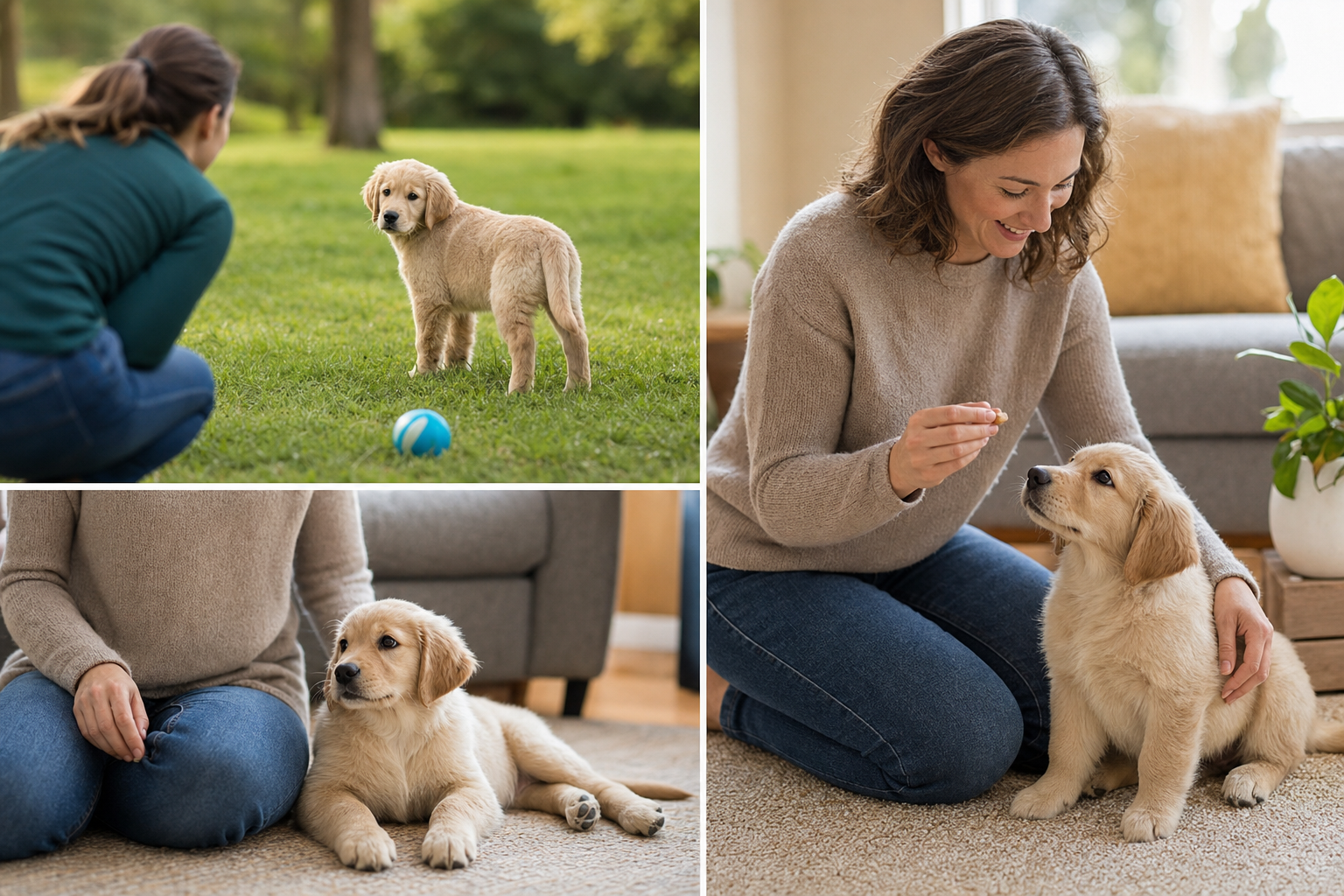
Your puppy’s name gets attention. The next word tells them what to do.
Better pattern:
- “Luna.” Puppy looks. “Come.” Reward.
- “Luna.” Puppy looks. “Sit.” Reward.
- “Luna.” Puppy looks. “Touch.” Reward.
Confusing pattern:
- “Luna” means come sometimes.
- “Luna” means stop chewing sometimes.
- “Luna” means sit sometimes.
- “Luna” means you are in trouble sometimes.
That messy version forces the puppy to guess. Most puppies guess wrong with confidence. It is part of their brand.
Once the name response is strong, you will not need to use the name before every cue. In fact, overusing it can weaken it. Save the name for moments when you genuinely want your puppy’s attention.
Practice the “name game” for one week
Here is a simple seven-day plan.
Days 1 and 2: Pair the name with rewards
In a quiet room, say the name once, mark any glance toward you, and reward. Do 5 to 8 repetitions per session, two or three times daily.
Days 3 and 4: Change positions
Practice while standing, sitting, moving a few steps away, or facing slightly sideways. Reward every check-in. Keep it easy.
Day 5: Add mild household distractions
Try when a toy is nearby, another person is in the room, or your puppy is sniffing calmly. Do not practice when your puppy is mid-zoomies, overtired, or already chewing something forbidden.
Day 6: Try a new safe location
Move to a different room, yard, balcony, porch, or quiet outdoor space. Use better treats and reward fast.
Day 7: Use the name before one familiar cue
Say the name, wait for eye contact or a head turn, then ask for a cue your puppy already knows, such as “come,” “sit,” or “touch.” Reward the whole sequence.
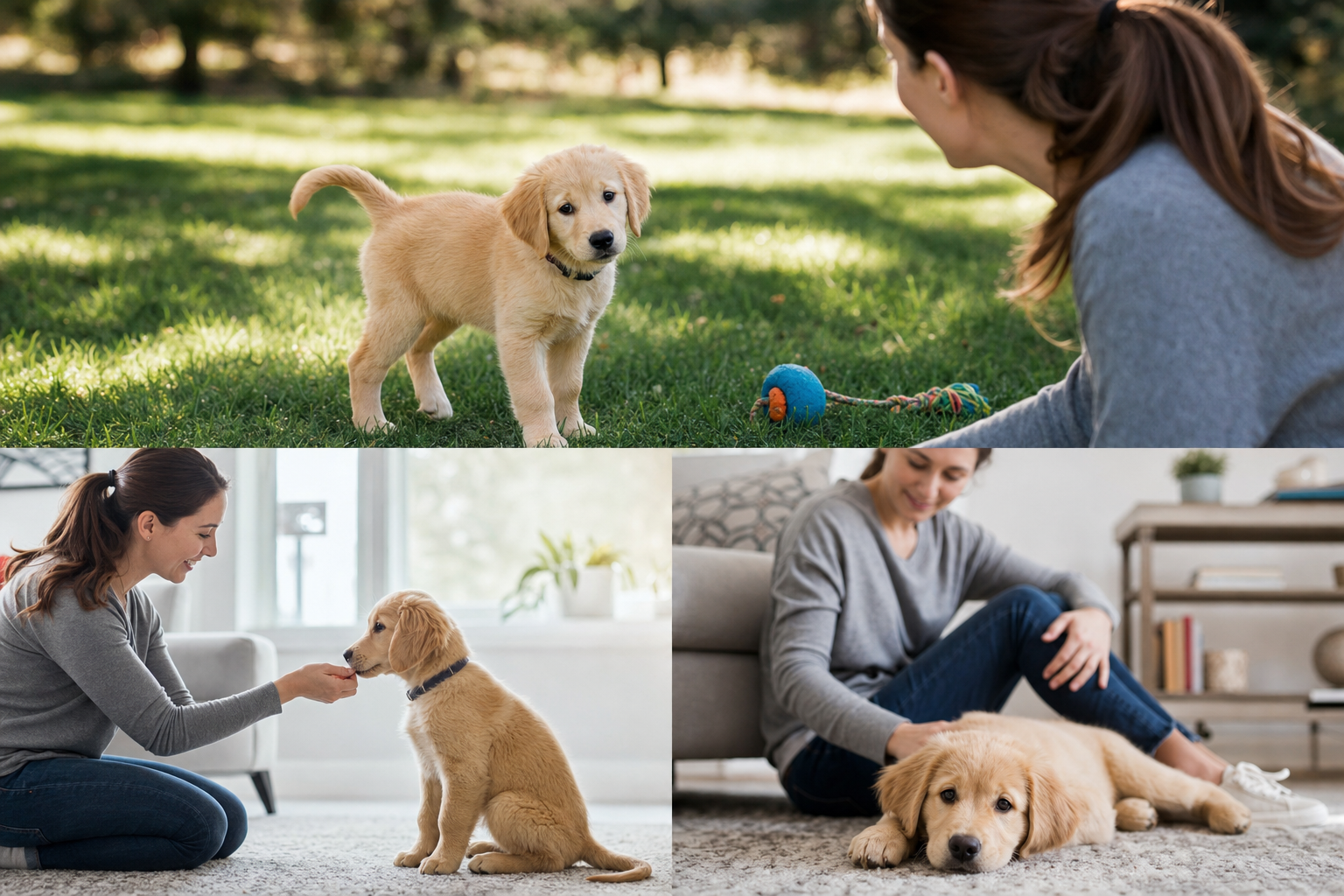
End while your puppy is still interested. That is the secret sauce. Owners love to squeeze in “just one more” repetition. Puppies hear “welcome to overtime, tiny employee.” Quit while you are ahead.
What if your puppy only responds when you have treats?
That is normal at the beginning. Treats are not a bribe when used correctly; they are a paycheck during training. The trick is to reward the behavior after it happens, then gradually vary the reward as the behavior gets stronger.
Once your puppy responds well, mix in:
- praise
- a tossed toy
- a chance to go outside
- a short game
- access to you
- a treat sometimes, not every time
Do not remove food rewards too early. A puppy who has known their name for three days is not ready for a performance-based compensation restructuring. Keep paying the dog.
Common mistakes that confuse puppies
The name-training problems are usually human-made. Rude but true.
Using too many nicknames too soon
Pick one name for training. Save the goofy nicknames for later when the real name is solid.
Saying the name when you are angry
If the name predicts trouble, your puppy may stop turning toward you. Use neutral interrupters and redirects instead.
Practicing when the puppy is exhausted
Overtired puppies are not students. They are gremlins with paws. Give them a nap.
Training around too much distraction
If your puppy cannot respond, the environment is probably too hard. Make the setup easier.
Rewarding too late
Mark the head turn or eye contact immediately. If you reward five seconds later, your puppy may think they were paid for sniffing the table leg.
Expecting recall before name recognition
A name is not a recall cue by itself. Teach “come” separately, then use the name to get attention before the recall cue.
When to get help
Most puppies learn their name quickly with consistent positive practice. Consider help from a qualified positive-reinforcement trainer if your puppy seems extremely fearful, shuts down during training, guards food or objects, reacts intensely to people or dogs, or cannot settle enough for short practice.
Talk to your veterinarian if you suspect hearing issues, vision problems, pain, illness, or sudden behavior changes. Training cannot fix a medical problem by pretending harder.
The bottom line
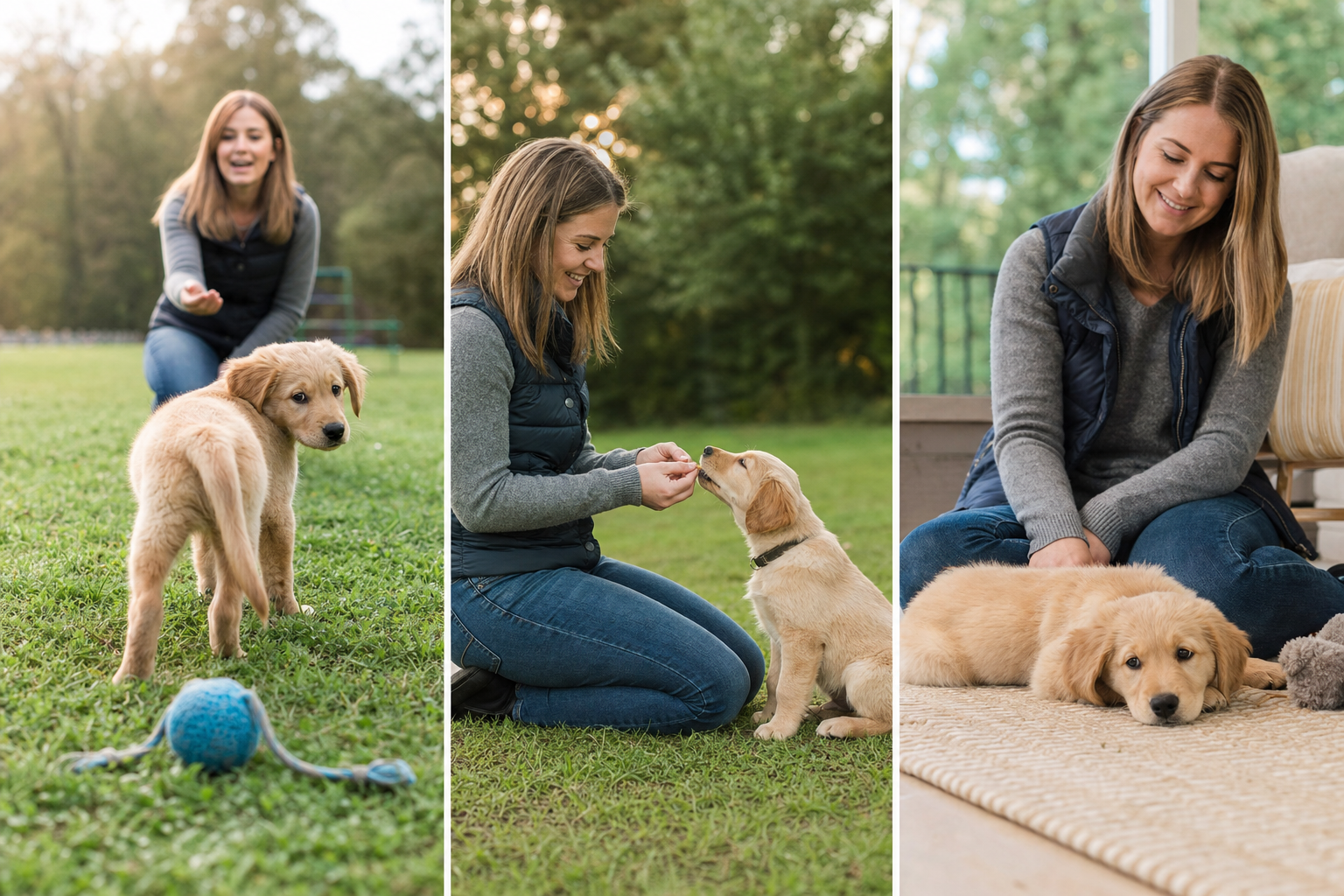
Teaching a puppy their name is not about drilling them until they obey a sound. It is about making that sound clear, consistent, and worth responding to.
Use one name. Say it once. Reward attention. Keep it positive. Practice in easy places before hard ones. Do not turn the name into a scolding tool or a universal remote for every behavior.
Do that for a week, and your puppy should start treating their name like a useful signal instead of random human background music.
FAQ
How long does it take a puppy to learn their name?
Many puppies begin responding within a few days, but reliable name recognition usually takes consistent practice across different rooms, people, and mild distractions. Keep training short and positive.
Should I use treats every time I say my puppy’s name?
Use treats often while teaching the name. Once your puppy responds reliably, you can vary rewards with praise, play, life rewards, and occasional treats. Do not fade rewards before the behavior is dependable.
Is it bad to use nicknames for a puppy?
Nicknames are fine later, but early training is clearer if everyone uses one main name. Once your puppy reliably responds to the real name, nicknames are less likely to cause confusion.
What if my puppy ignores their name outside?
That usually means the environment is too distracting or the reward is not strong enough. Move farther from distractions, use better treats, and practice in easier outdoor settings before expecting a response in busy places.
Should a puppy’s name mean “come”?
No. The name should mean “pay attention.” Teach “come” as its own cue. A clean pattern is: say the name, wait for attention, then say “come,” and reward the puppy for coming to you.