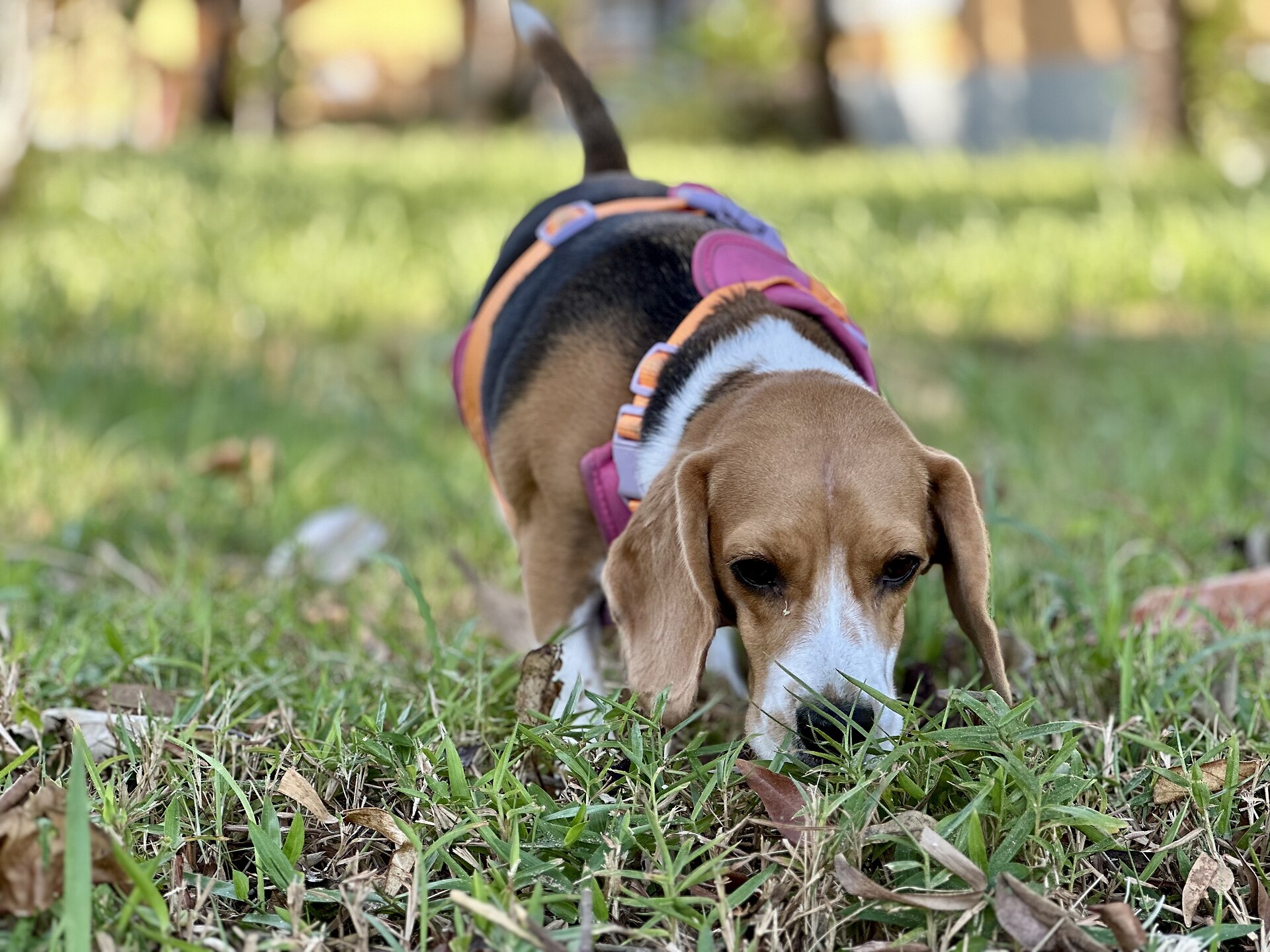
Why Beagles Follow Their Nose Everywhere
Beagles follow their nose everywhere because they were bred to find and follow the scent of rabbits and hares, often over long distances and with limited direction from a handler. For generations, the useful Beagle was the one that noticed a trail, stayed with it, and kept working even when the person behind the pack could not see the quarry.
That old job is still running in the modern Beagle. A smell on the sidewalk can become more important than your walking pace, your recall cue, or your opinion about the shrub they have been examining for three full minutes. It is not proof that your Beagle is unintelligent or deliberately rude. It means you are living with a scent hound whose strongest sense was deliberately sharpened by selective breeding.
The short answer
Beagles are scent hounds. Their original work required them to:
- detect faint ground scent left by rabbit or hare
- sort one trail from all the other smells in a field
- follow that trail with persistence
- work at a pace hunters could follow on foot
- make decisions without waiting for constant human instructions
- use their voice to help people follow the hunt
Those traits explain why a pet Beagle may zigzag across a walk, bury its nose in grass, pull toward food, investigate where another dog has been, or seem to lose its hearing when an especially good scent appears. The nose is not a side feature. It is the center of the breed's working history.
Beagles were built for scent work
The Beagle developed in Britain as a small pack hound used mainly to pursue rabbit and hare. The exact ancestry of the modern breed is complicated, but the working goal is clear: produce a compact dog with the nose, stamina, voice, and determination to keep a trail moving.
American Kennel Club breed history describes small pack hounds hunting rabbit and hare in England long before the modern Beagle was standardized. The Beagle was sometimes called a “foothound” because hunters could follow the pack without needing a horse. That rewarded steady scent work more than a quick burst of speed.
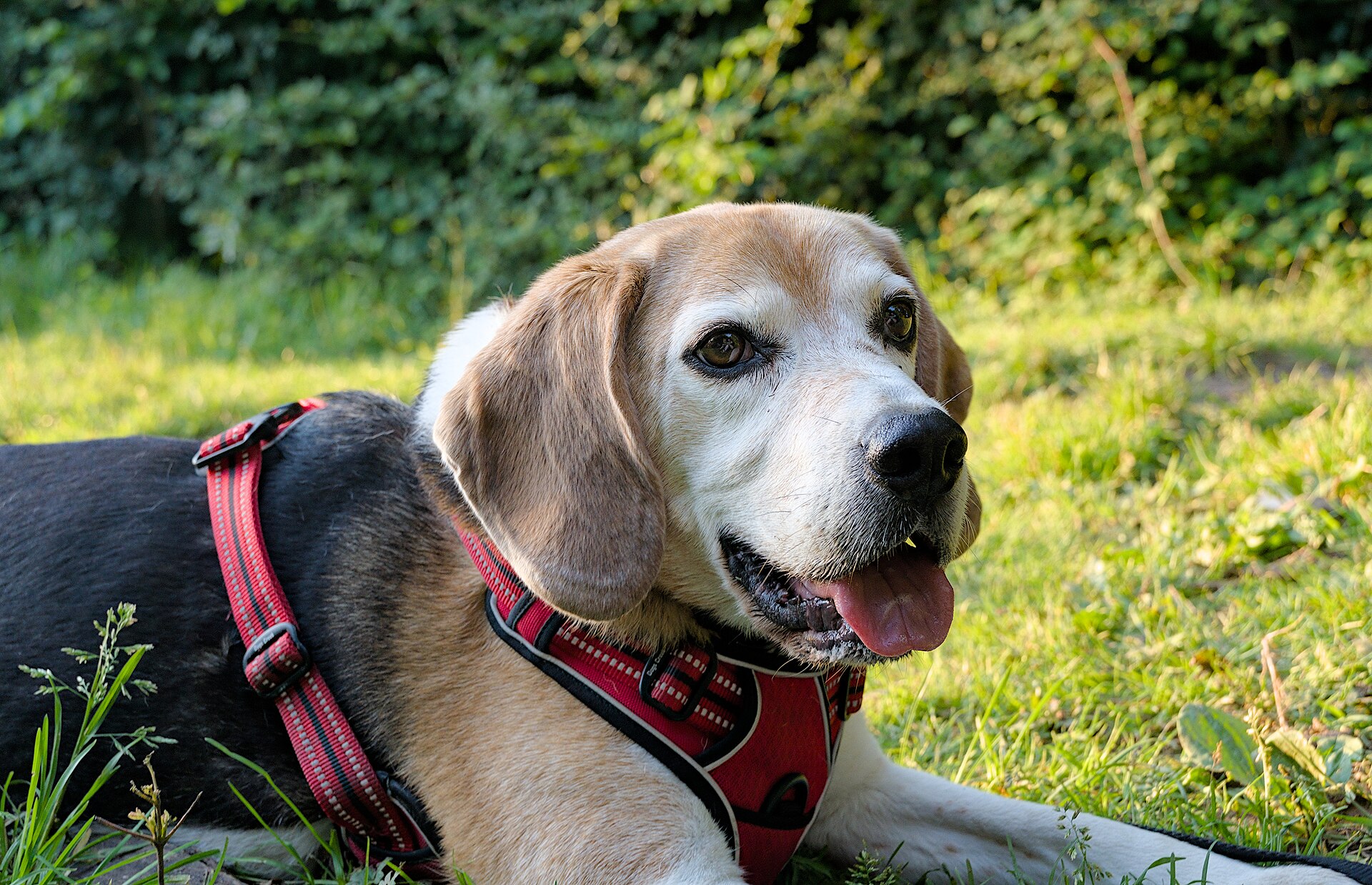
Picture the job from the dog's level. The rabbit is usually out of sight. The ground is full of competing smells from animals, people, plants, mud, and food. The hound must find the relevant trail and keep checking it as wind, moisture, terrain, and movement change the scent picture. A dog that constantly stopped to ask the handler what to do next was less useful than one willing to solve the trail independently.
Modern Beagles also perform detection work because a powerful nose in a manageable body is useful well beyond hunting. But the everyday pet version is familiar enough: open a snack bag two rooms away and suddenly the household has acquired a very motivated investigator.
What happens when a Beagle catches a scent
When a Beagle drops its head and starts following a scent, the dog is gathering information. Odor can show where another dog walked, what animal crossed the yard, whether food was dropped, or what changed since the last visit. A patch of ordinary-looking grass may hold a detailed story that humans simply cannot detect.
You may see the Beagle:
- sweep its nose from side to side
- double back after losing part of the trail
- slow down at a strong scent spot
- suddenly turn toward a hedge or driveway
- pull harder as the trail becomes more interesting
- ignore a familiar cue that works perfectly in the kitchen
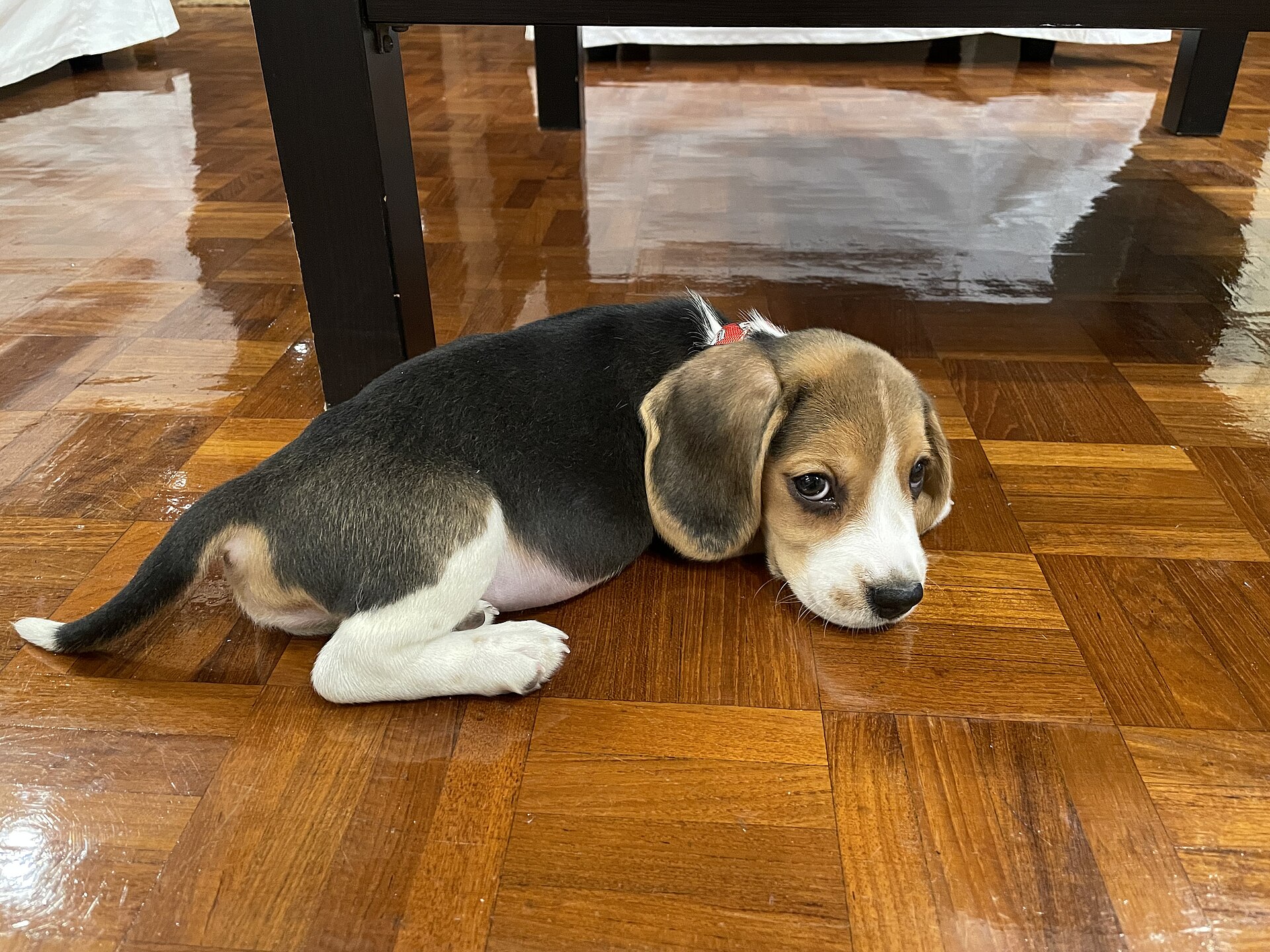
The cue has not necessarily been forgotten. The difficulty has changed. “Come” from six feet away in a quiet room is not the same task as “come away from fresh rabbit scent in an open field.” Dogs do not automatically apply a skill equally in every environment. Beagles make that lesson painfully clear and occasionally tow their owners through a hedge to underline the point.
Is your Beagle stubborn, distracted, or just being a Beagle?
Sometimes a Beagle is undertrained. Sometimes the reward being offered is weak. Sometimes the environment is simply more exciting than the handler. Breed history adds another piece: Beagles were selected to stay with scent and work independently, so disengaging from a trail can be genuinely difficult.
Calling the dog stubborn may describe how the moment feels, but it does not tell you what to do. A more useful question is: what is competing with me right now?
If the answer is scent, improve the setup instead of repeating the cue louder. Add distance from the smell, use a leash or long line, offer a reward that matters in that environment, and practice easier repetitions. Reward any voluntary glance back at you. Those small check-ins are the foundation of control around bigger distractions.
This is also why punishment can make the problem worse. If returning to you ends the fun or brings an angry response, the dog has less reason to return promptly next time. Build a history in which coming back is safe and worthwhile.
Safe management matters more than optimism
A scent-driven dog can travel surprisingly far while following a trail. Beagles should not be given off-leash freedom near roads, wildlife, livestock, or unfenced areas merely because their recall was good yesterday. Individual reliability varies, but management should account for the breed's tendency to follow odor beyond the point where the owner feels comfortable.
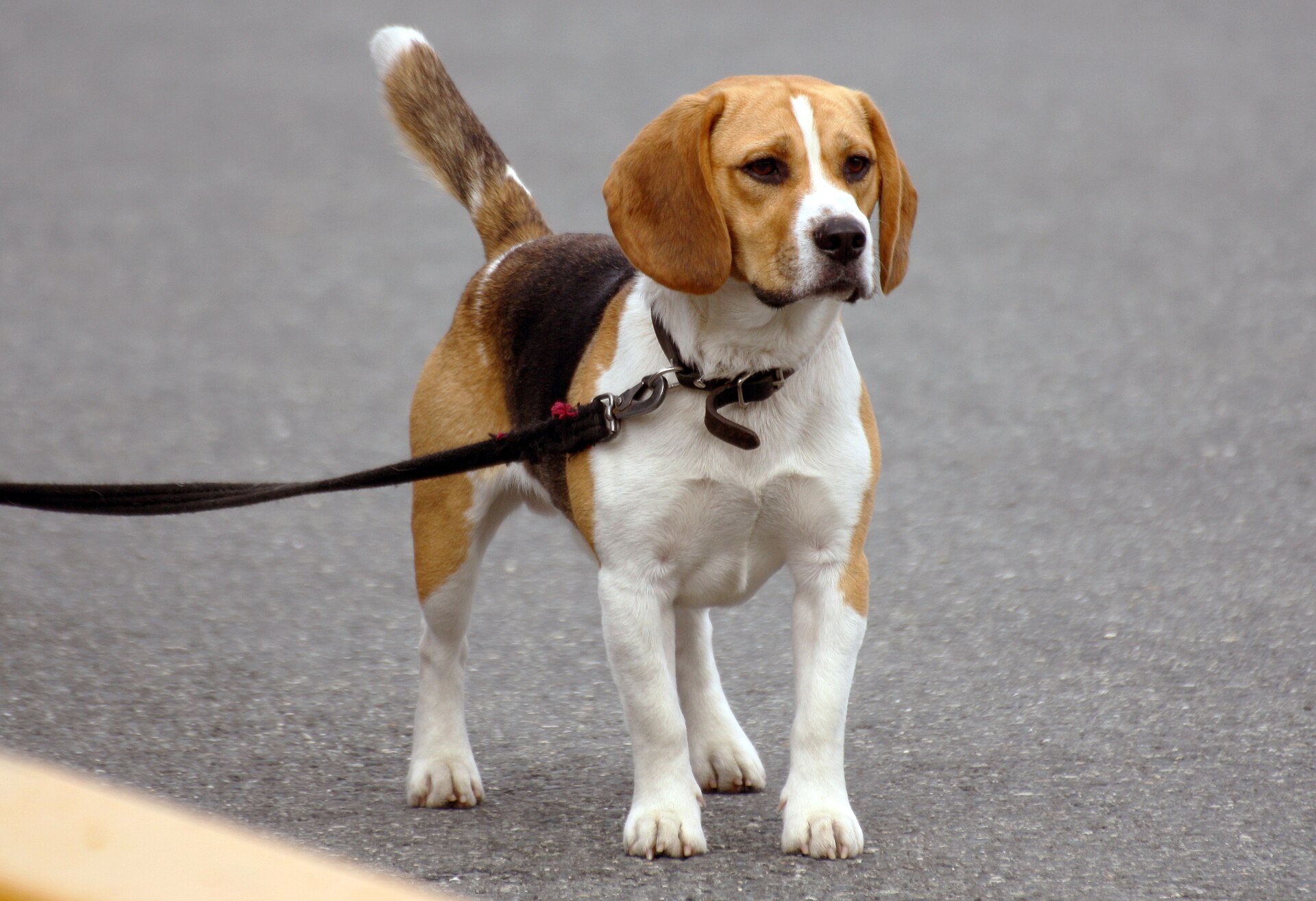
Practical safeguards include:
- use a well-fitted collar or harness and a secure leash on routine walks
- use a long line for recall practice in open areas rather than testing the dog loose
- check gates and fences for gaps, loose boards, and digging points
- keep identification tags and microchip contact details current
- store food, garbage, and unsafe household items where the dog cannot nose into them
- supervise outdoor sniffing where toxic plants, discarded food, wildlife, or traffic may be present
A long line should be handled in open space where it is less likely to wrap around people, dogs, or obstacles. Avoid attaching a long line to equipment that does not fit securely, and do not use it beside traffic. If you are unsure about the setup, a qualified reward-based trainer can help you practice safely.
For step-by-step recall work, use Dogthread's recall training guide. If the main problem is being dragged from smell to smell, why dogs pull on leash explains how to rebuild the walk without turning every outing into a wrestling match.
Let your Beagle sniff without surrendering the whole walk
Sniffing is not wasted walk time. It is mental activity and a normal way for dogs to investigate their environment. The goal is not to stop a Beagle from using its nose. The goal is to put the behavior inside a routine that is safe and livable.
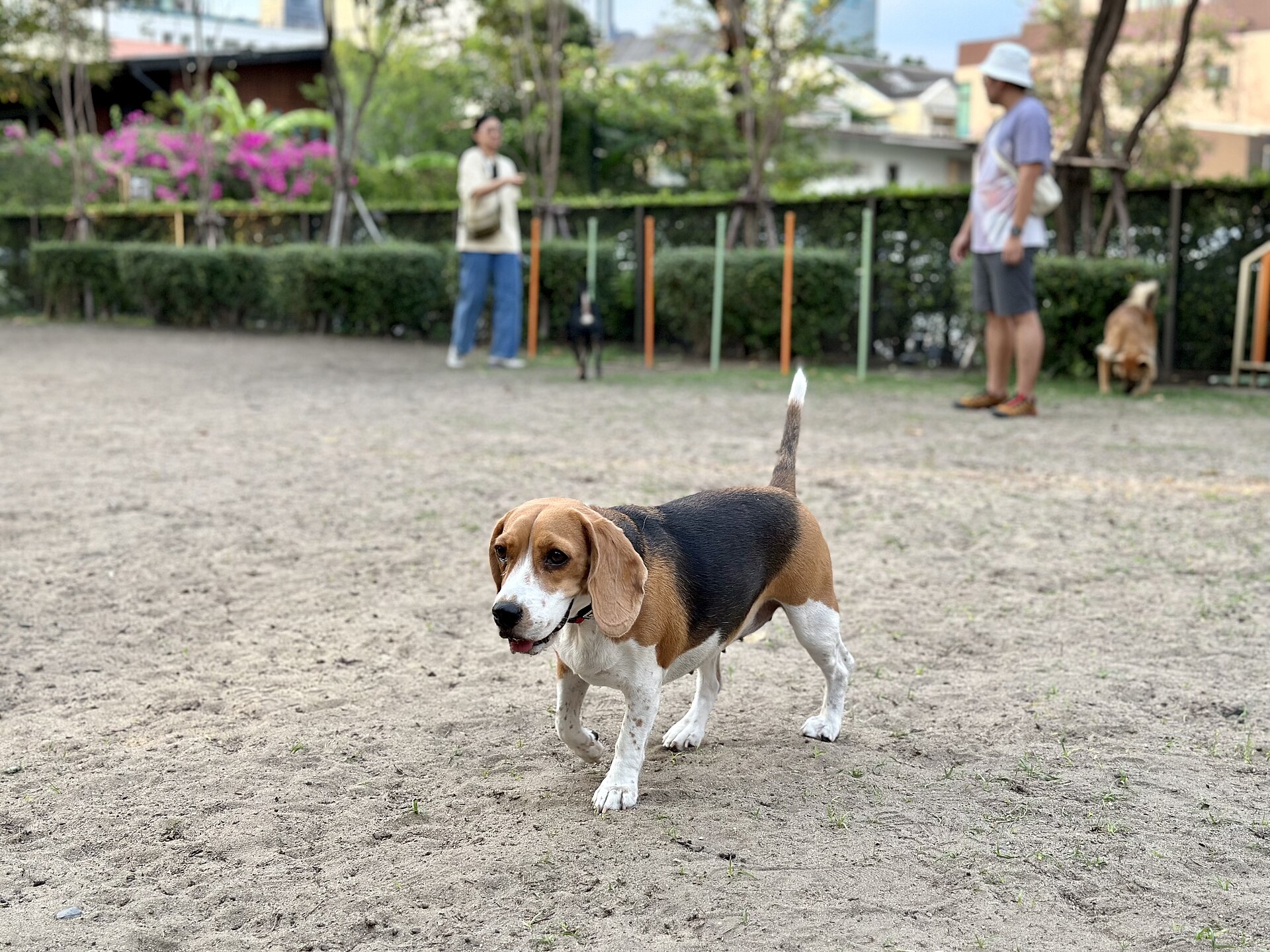
Try dividing the walk into short sections. Ask for a few steps of loose-leash walking, then release the dog with a consistent cue such as “go sniff.” After a reasonable pause, use a cheerful cue to move on and reward the dog for coming with you. Over time, access to sniffing can become part of the reward for walking politely.
Other useful habits include:
- reward check-ins before asking for them
- carry higher-value food in distracting places
- change direction before the leash becomes fully tight
- allow longer sniff sessions in safe, low-traffic areas
- keep training repetitions short enough that the dog can succeed
- practice the same skills in several locations, not only at home
The best walk for a Beagle is rarely a military march. It is a conversation: move together, investigate, reconnect, and move again.
Give the nose a legal job at home
Scent games turn the Beagle's strongest instinct into something you can enjoy together. They do not need to be elaborate or expensive.
Start with one of these:
- Toss a few pieces of kibble into a small patch of clean grass and say “find it.”
- Hide a treat under one of three open cardboard boxes and let the dog search.
- Place food along a short, easy trail through one room.
- Hide a favorite toy nearby, then gradually increase the distance.
- Save part of a meal for a snuffle mat or supervised food-search game.
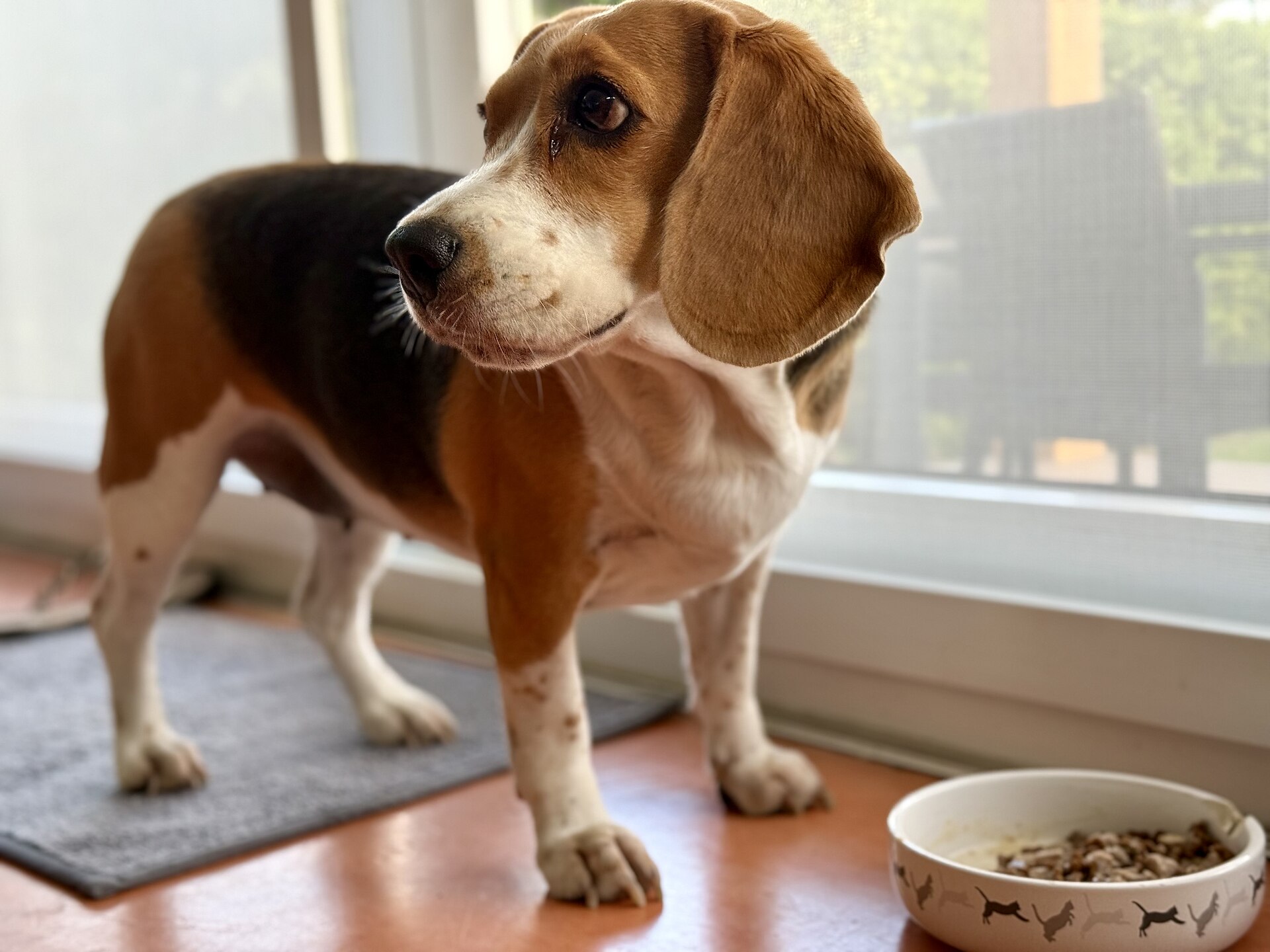
Keep early searches easy. The point is to teach the game, not prove that you can outsmart a Beagle with a cardboard box. Use food from the dog's normal daily allowance when possible, especially if weight is a concern. Stop if the dog becomes frustrated or starts chewing and swallowing the search materials.
Formal nose work, tracking, and scent-based dog sports can provide more structure. You do not need competition goals to benefit; learning how scent searches are built can make daily enrichment more satisfying for both dog and owner.
Train recall for the dog in front of you
Beagles can learn a strong recall, but the training needs to respect the size of the distraction. Start indoors, then move to a fenced yard or quiet area, then add distance and scent gradually while the dog remains safely attached to a line.
Use excellent rewards. Call once, help the dog succeed, and pay well when it arrives. Occasionally reward the recall and release the dog to sniff again. That teaches the Beagle that returning does not always make the interesting world disappear.
Avoid using your recall cue for something the dog consistently dislikes unless you can reward generously afterward. Do not chase a loose Beagle unless immediate safety requires it; chasing may turn the situation into a game. Instead, move away, sound inviting, scatter food if appropriate, or use a practiced emergency cue.
No recall is a magic force field. Even a well-trained dog can make a bad decision around wildlife, traffic, or an unusually fresh trail. Secure spaces and leashes remain sensible tools, not admissions of failure.
When sniffing may need a closer look
Frequent sniffing is normal for a Beagle. A sudden change deserves more attention. Contact a veterinarian if new sniffing or nose-focused behavior comes with signs such as repeated sneezing, nasal discharge, bleeding, pawing at the face, noisy breathing, reduced appetite, obvious distress, or a sudden inability to settle.
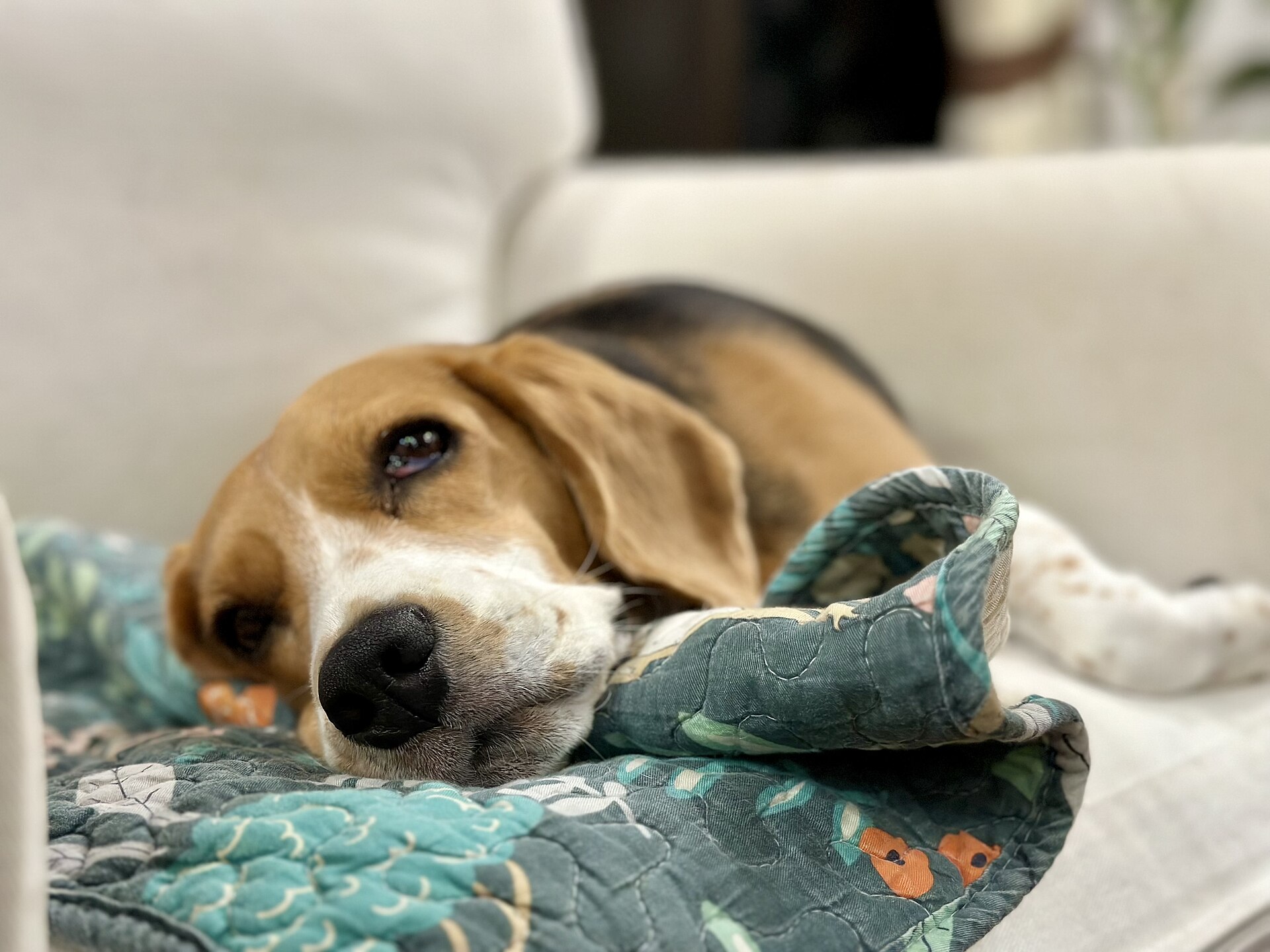
Frantic searching can also occur when food is accessible, another animal is nearby, or the dog is under-stimulated. Look at the whole situation before deciding it is “just the breed.” If the behavior is new, intense, or creating a safety problem, professional guidance is more useful than guessing.
The owner takeaway
Beagles follow their nose because people spent generations rewarding exactly that behavior. Their scent drive, persistence, voice, and independent problem-solving made them useful rabbit and hare hounds. Those same traits now show up on neighborhood walks, in backyards, under kitchen tables, and anywhere somebody dropped half a sandwich.
You do not need to defeat the nose. Manage it around real hazards, train with rewards strong enough to compete, and give it safe work through sniff walks and scent games. Once the instinct has a place in the routine, living with a Beagle becomes less of an argument and more of a partnership.
For more context on what your dog is communicating during those nose-led moments, see Dogthread's dog body language guide.
FAQ
Why is a Beagle's sense of smell so strong?
Beagles have the scenting equipment common to dogs plus generations of selection for tracking rabbit and hare. Breeders favored dogs that could detect, sort, and persist with ground scent, so scent-driven behavior became central to the breed.
Why does my Beagle ignore me when sniffing?
An interesting scent can compete strongly for attention, especially outdoors. Your Beagle may understand the cue but lack enough practice around that level of distraction. Use a leash or long line, increase distance from the scent, reward check-ins, and build the behavior gradually.
Can Beagles ever be trusted off leash?
Some individual Beagles develop excellent recall, but no dog is perfectly reliable. Because a Beagle may follow scent beyond sight or toward a hazard, off-leash time is safest in a securely fenced area. Use a long line for practice in unsecured spaces.
Should I stop my Beagle from sniffing on walks?
No. Sniffing is normal and mentally engaging. Give it structure by alternating loose-leash movement with permission to sniff in safe places. Interrupt or redirect when the dog is approaching traffic, unsafe food, wildlife, or another hazard.
How can I satisfy a Beagle's nose at home?
Use simple “find it” games, hidden treats, cardboard-box searches, snuffle mats, short food trails, or formal scent-work classes. Keep searches easy at first, supervise the materials, and count food rewards as part of the dog's daily intake.
Do Beagles have the best nose of any dog?
Beagles are excellent scent hounds, but claims that one breed has the single “best” nose are difficult to prove and depend on the task. What is clear is that Beagles were bred specifically for persistent scent tracking and remain highly capable scent workers.