How Long Can a Dog Stay in a Crate?
Most healthy, crate-trained adult dogs should spend no more than about four to five hours at a time in a crate during the day. Puppies need much shorter stretches—often one to three hours depending on age—and dogs with medical, mobility, digestive, or urinary issues may need even more frequent breaks. An adult dog who comfortably sleeps overnight in a crate is a different situation, but nighttime sleep does not make all-day crating reasonable.
The right limit is the shortest one set by your dog's bladder, body, training, and emotional comfort. A crate is a rest space and management tool, not storage for a dog while life happens elsewhere.
Crate time by age and situation
Use these ranges as conservative planning guides, not endurance goals:
- Young puppies, roughly 8–10 weeks: about 30–60 minutes while awake, with frequent toilet trips. Some may sleep longer, but they still need close supervision and nighttime breaks.
- Puppies around 3–4 months: often one to three hours during the day, depending on recent water, meals, activity, and individual bladder control.
- Puppies under 6 months: Humane World for Animals advises no more than three to four hours at a time. Many puppies need breaks sooner.
- Healthy, crate-trained adult dogs: aim for four hours or less when practical; about four to five hours is a reasonable daytime upper limit for many adults.
- Senior dogs or dogs with health needs: often shorter than healthy adults. Arthritis, medications, diarrhea, urinary problems, diabetes, anxiety, and cognitive changes can all reduce comfortable crate time.
- Overnight: a healthy adult who is relaxed, fully crate-trained, and able to sleep through the night may stay crated for the normal sleep period. Puppies and some senior dogs still need nighttime toilet breaks.
The popular “one hour per month of age, plus one” puppy rule can be a rough bladder estimate, but it is not a promise and should not be treated as a target. A three-month-old puppy who technically might hold it for four hours may still become uncomfortable, frightened, or have an accident much sooner.
Daytime crating and overnight sleep are not the same
A dog sleeping quietly at night is resting during a natural low-activity period. Daytime crating competes with movement, toilet needs, social contact, sniffing, play, and training. That is why “my dog sleeps eight hours in the crate” does not mean the dog should also spend eight working-day hours locked inside it.
Count the whole day. A dog crated overnight, again during a full workday, and then for errands may spend most of 24 hours confined even if each individual stretch sounds defensible. The crate should be one small part of the day, with generous time outside it for exercise, enrichment, meals, training, affection, and ordinary dog behavior.
If your schedule regularly requires more than four or five daytime hours, arrange a dog walker, pet sitter, trusted neighbor, daycare, or a safe larger confinement area with an appropriate toilet plan. The answer is usually a better setup, not a tougher bladder.
What makes a crate session too long?
Age matters, but it is only one variable. Shorten the session when your dog:
- has recently eaten or had a large drink
- has not toileted immediately before crating
- is new to the crate or has not built up duration gradually
- is recovering from illness, surgery, or digestive upset
- takes medication that increases thirst or urination
- is very young, elderly, or has limited mobility
- becomes hot in the room or crate
- shows anxiety when you prepare to leave
- has already spent substantial time confined that day
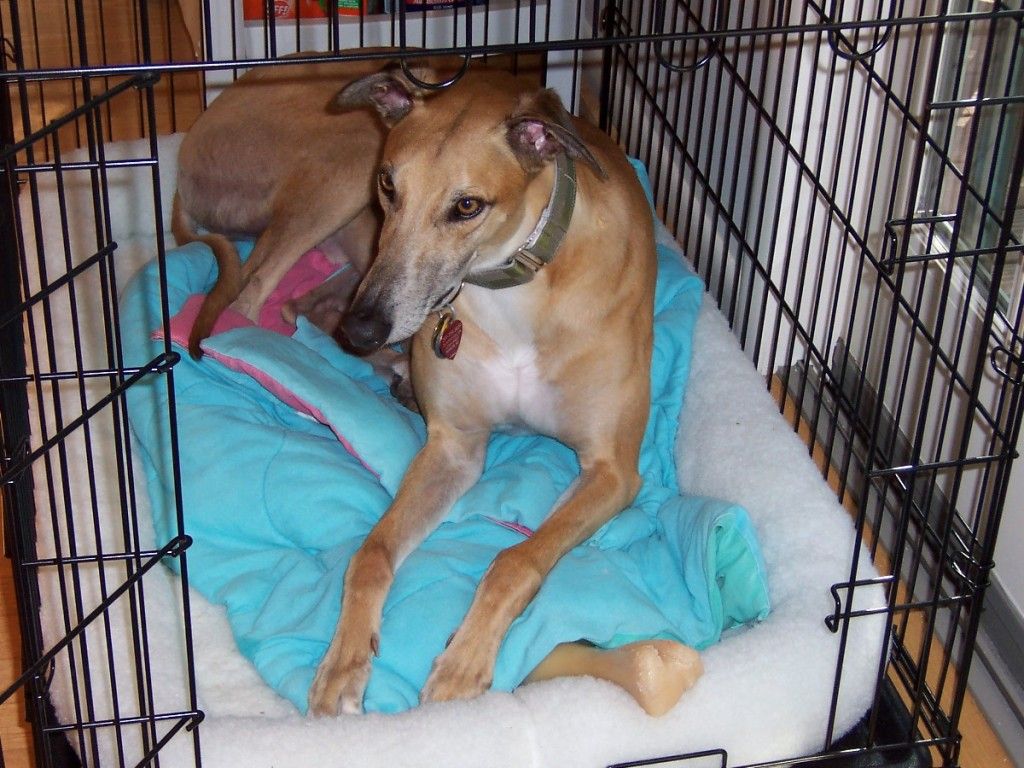
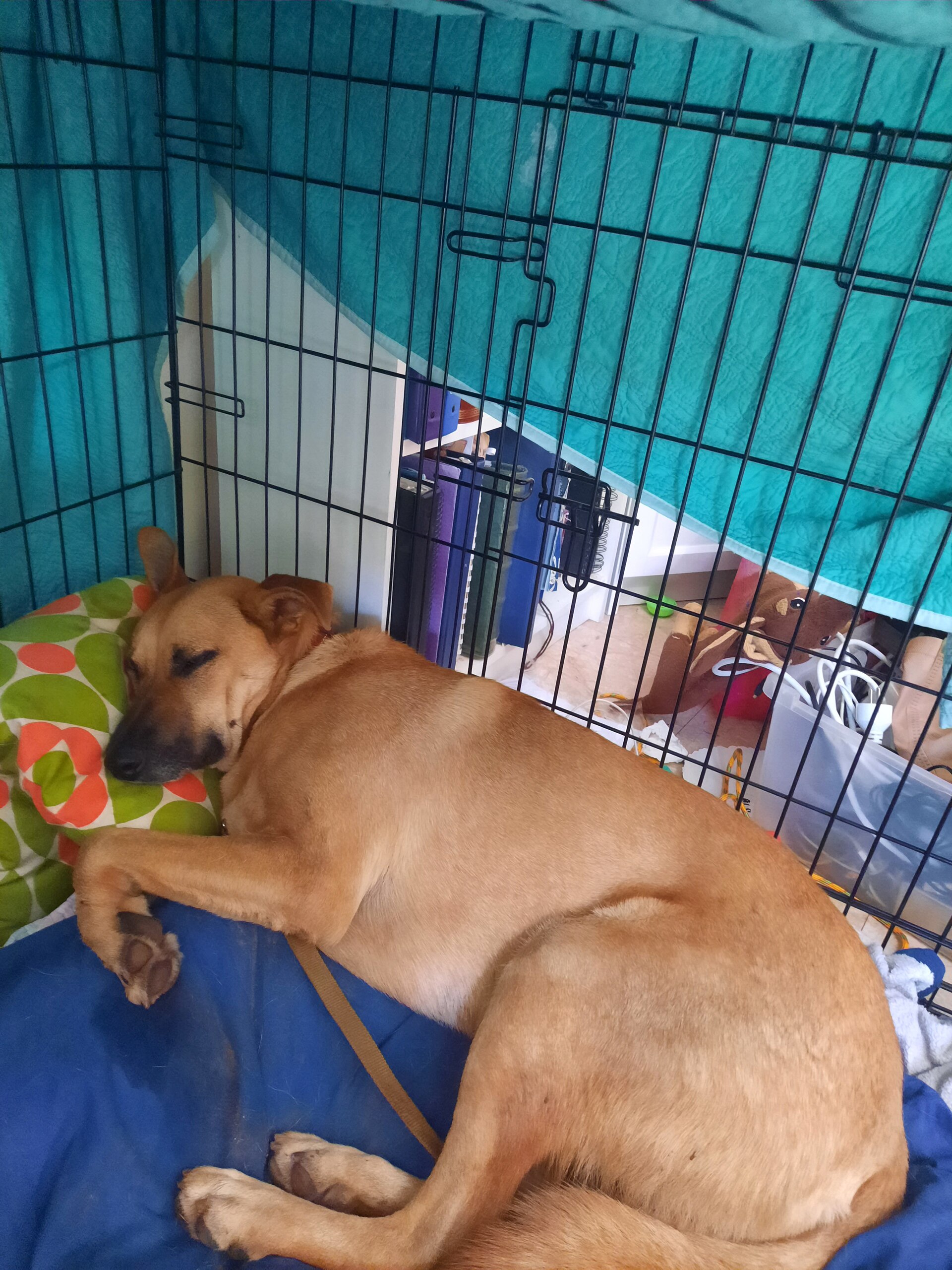
A properly sized crate should let the dog stand normally, turn around, lie on their side, and settle without being folded into the furniture. Ventilation matters, especially with crate covers. Bedding should suit the individual dog: comfortable, washable, and not something a determined chewer is likely to shred and swallow.
Remove collars, tags, harnesses, and anything else that can snag on bars or hardware before closing the crate. Only leave chews or food toys that you already know your dog can use safely without supervision. Water access depends on duration, temperature, health, and your veterinarian's advice; never withhold needed water simply to stretch crate time.
Signs your dog is not coping in the crate
A comfortable dog may shift position, chew briefly, then settle or sleep. Warning signs include:
- persistent panting when the room is not hot
- heavy drooling, trembling, frantic pacing, or repeated barking
- biting bars or clawing hard at the door
- bent nails, bleeding gums, facial scrapes, or other escape injuries
- refusing high-value food they normally enjoy
- repeated urine or stool accidents despite reasonable breaks
- freezing, cowering, or refusing to enter
- distress that begins as soon as departure cues appear
Do not assume a panicking dog is being stubborn. A crate does not cure separation anxiety, and a distressed dog can injure their teeth, nails, or body trying to escape. Use a camera during early practice sessions so you can see whether your dog truly settles after you leave.
If distress is intense, stop leaving the dog confined for long absences and talk with your veterinarian. A qualified behavior professional can help with a gradual plan. The Dogthread dog body language guide can also help you distinguish relaxation from shutdown or escalating stress.
Build crate duration instead of testing it
Good crate training is deliberately boring. Start with the door open, feed treats or meals near and inside the crate, and let the dog choose to enter. Close the door for seconds, not hours. Increase time only while the dog remains relaxed.
A practical progression looks like this:
- Let the dog explore the open crate without pressure.
- Reward voluntary entry and calm resting.
- Close the door briefly while you remain beside the crate.
- Add a few seconds or minutes at a time.
- Step out of sight briefly, then return before distress starts.
- Practice short departures before attempting a real errand.
- Use a camera and reduce duration if the dog cannot settle.
Our full crate training guide covers the process in more detail. For young dogs, pair that work with a realistic puppy training schedule rather than expecting confinement to do the teaching.
Should you leave a dog in a crate while at work?
Not for a full eight- or ten-hour workday without a break. A calm adult may manage part of the day, but regular access to a toilet, movement, water, and social contact still matters. Schedule a midday visit or use an alternative setup.
Possible alternatives include a puppy-proofed room, exercise pen, gated kitchen, or another dog-safe area. The safest choice depends on chewing, climbing, separation distress, house-training, other pets, and the home itself. Test any setup for short periods with a camera before trusting it for hours.
For puppies, a full workday in a crate is not realistic. Build a care schedule before the puppy arrives, including toilet breaks and supervision. The new puppy supply guide can help you set up a practical confinement area before the tiny chaos consultant comes home.
Crates in cars and during travel
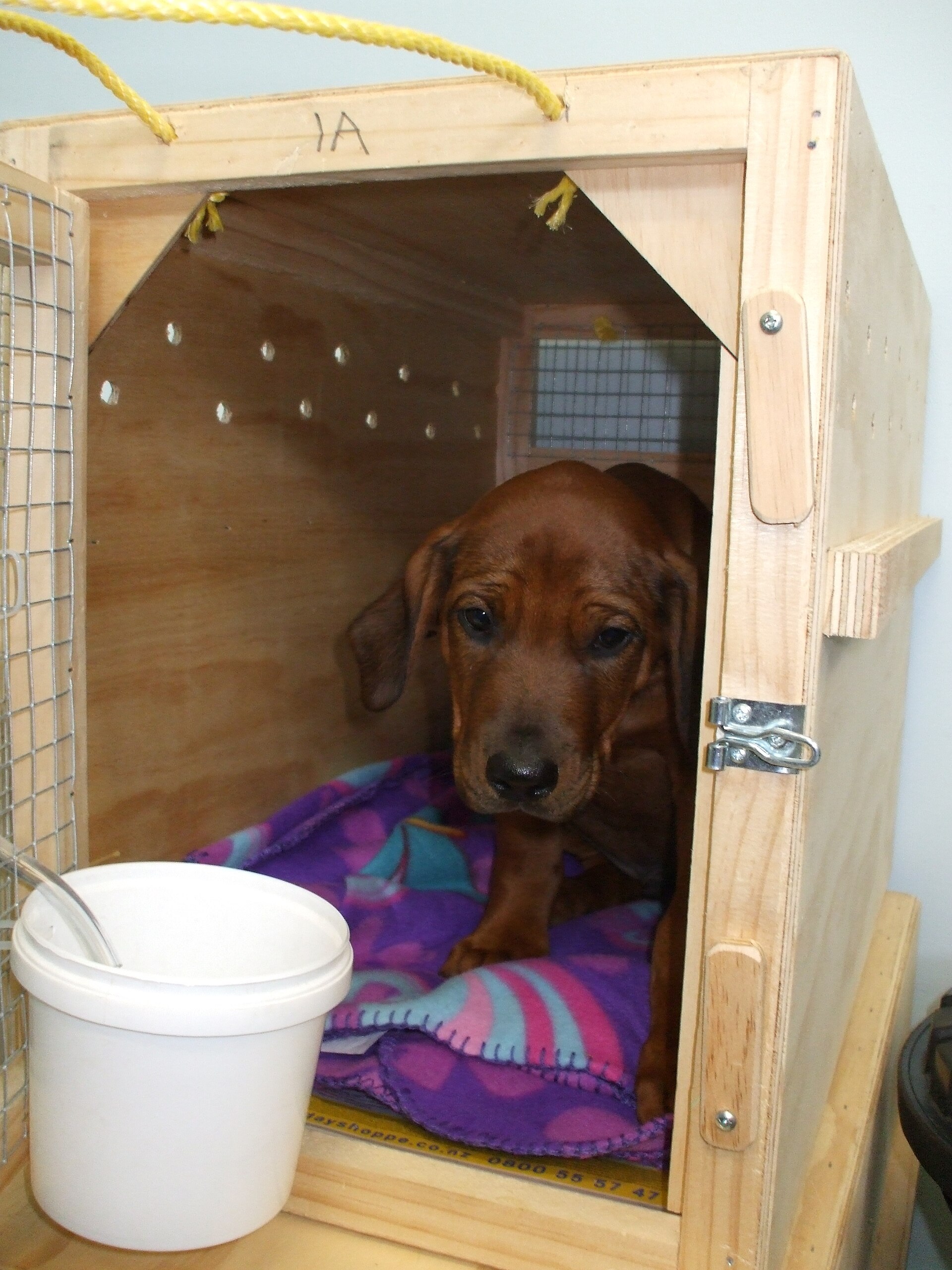
Travel crates can reduce roaming in a vehicle, but confinement time still counts. Give your dog toilet, water, and movement breaks on longer trips. Secure the crate appropriately and keep it ventilated; never place it where luggage can block airflow.
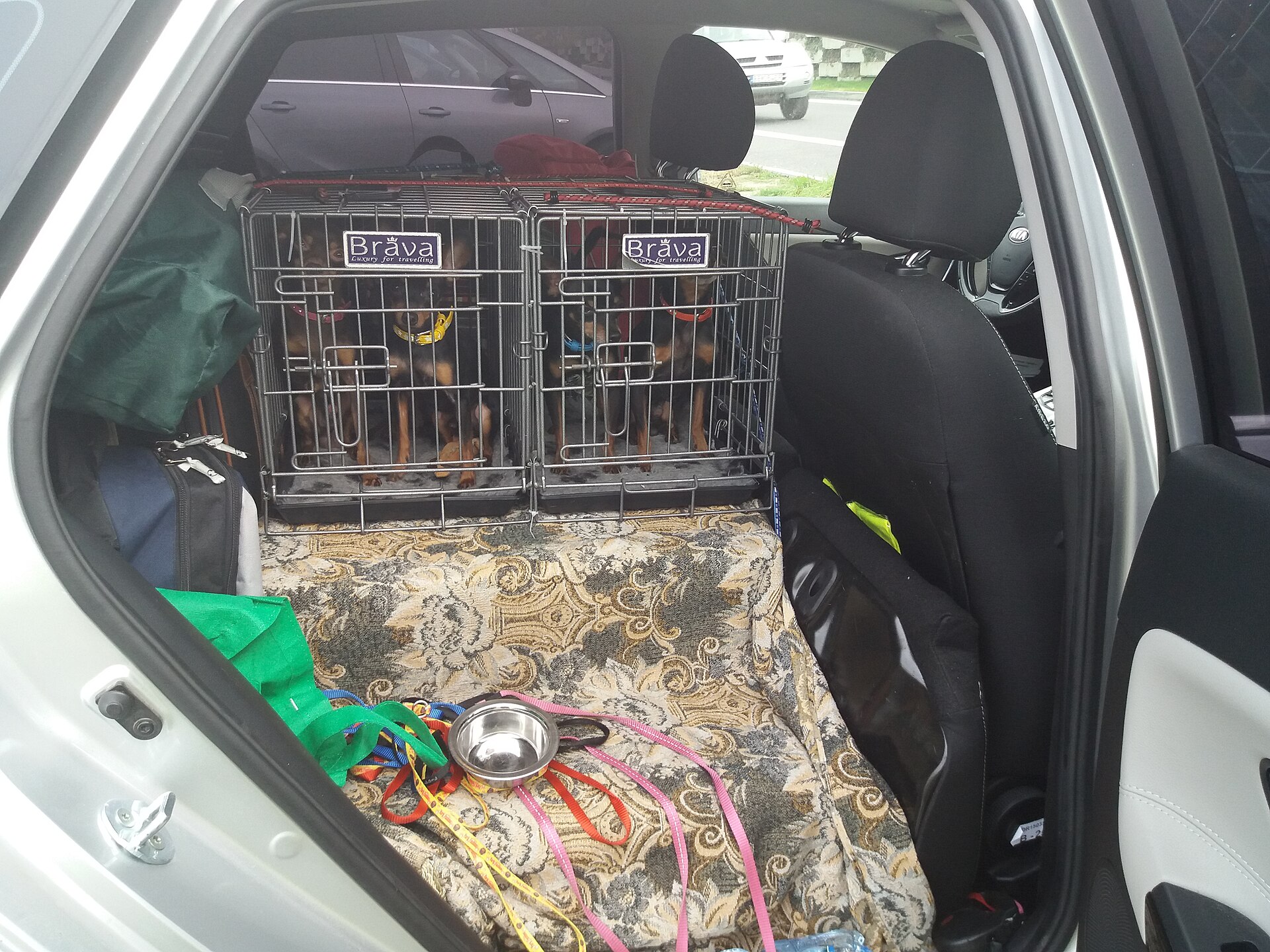
Never leave a dog unattended in a parked vehicle because a crate does not protect against dangerous heat or cold. For air travel, follow the current airline and destination rules and discuss sedation or medical concerns with your veterinarian—do not improvise medication on travel day.
When to ask your veterinarian
Contact your veterinarian if a previously house-trained dog suddenly cannot stay dry, urinates unusually often, strains to urinate, has diarrhea, seems painful getting up, drinks much more than usual, or becomes newly anxious in the crate. Those changes can be medical rather than training failures.
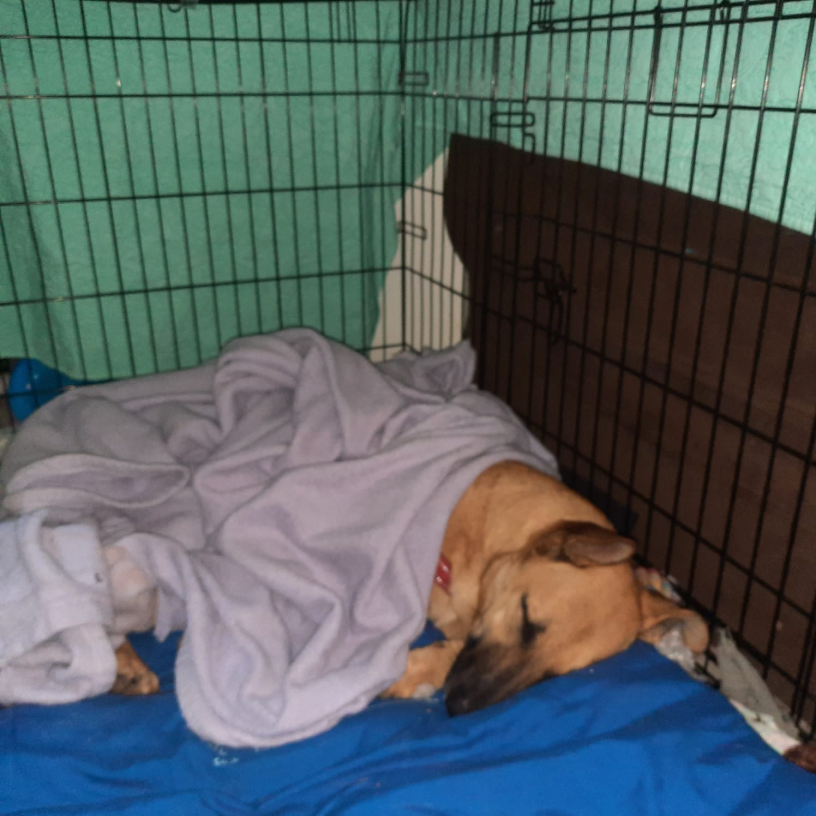
After surgery or injury, follow the veterinarian's confinement instructions even when they differ from general crate guidance. Medical rest may require a specific crate size, duration, leash-walk schedule, bedding, medication plan, and monitoring. Call the clinic if your dog cannot settle or appears painful; do not simply extend confinement and hope the dog gives up.
FAQ
Can a dog stay in a crate for eight hours?
A healthy, relaxed adult may sleep about eight hours overnight, but eight daytime hours without a break is too long as a regular routine. Arrange a toilet, movement, water, and social break during a workday.
How long can a puppy stay in a crate?
Young puppies often need a break every one to three hours during the day, sometimes sooner. Humane World for Animals advises that puppies under six months should not be crated longer than three to four hours at a time. Age-based rules are rough ceilings, not goals.
Is it okay to crate a dog while at work?
It can be part of the plan for a crate-trained adult if the stretch is reasonable and someone provides a midday break. Puppies and dogs with medical or anxiety needs require shorter intervals or a different setup.
Should a dog have water in the crate?
Dogs must have adequate water across the day. Whether a bowl belongs inside the crate depends on the session length, room temperature, spill risk, health, and veterinary advice. Use a secure crate-mounted bowl when water is needed, and never restrict water to force longer bladder holding.
What if my dog cries in the crate?
First rule out a toilet need, pain, overheating, fear, and separation distress. Brief complaining during early training is different from escalating panic. If crying persists or comes with drooling, frantic escape attempts, injury, or refusal to eat, shorten the session and get professional guidance.
Bottom line
For most healthy adult dogs, keep daytime crate stretches around four hours when possible and avoid exceeding roughly four to five hours as a routine. Puppies need much shorter intervals, and health or anxiety can shorten every estimate. Overnight sleep may be longer for a comfortable adult, but total daily confinement still matters.
The useful question is not “How long can my dog physically hold it?” It is “How long can my dog rest comfortably without sacrificing toileting, movement, safety, or emotional wellbeing?” That second question produces better schedules—and considerably fewer arguments with a wet crate.
Sources reviewed
- Humane World for Animals: How to crate train your dog or puppy
- VCA Animal Hospitals: Crate training and confinement for puppies and dogs
- American Kennel Club: How to crate train your dog
- ASPCA: Separation anxiety
This article provides general owner education, not veterinary diagnosis or individualized behavior advice.