How to Reward Calm Greetings Without Confusing Your Dog
Reward a calm greeting while it is happening: mark the instant your dog keeps four paws down, pauses, sits, or turns toward you, then deliver the treat low and close to the floor. If jumping starts, the person quietly removes attention. This teaches one clean rule: calm behavior makes people and rewards come closer; jumping makes them pause.
The confusing version is waving food above the dog's head, repeating “sit” while they bounce, or rewarding several seconds after the greeting. Your dog learns from the behavior immediately before the reward, so timing and treat placement matter more than speeches.
Pick one greeting rule
Decide what will count before anyone comes through the door. “Four paws on the floor” is usually easier and more flexible than demanding a sit. A sit can work too, but an excited dog may pop up as the person reaches down.
Everyone should follow the same sequence:
- The guest approaches only while the dog is grounded.
- You mark that calm moment with “yes” or a click.
- You place the reward low, beside or slightly behind the dog.
- The guest calmly greets the dog for a second or two.
- Jumping makes the guest turn away or step back; calm behavior starts the greeting again.
The reward can be food, petting, the guest moving closer, or permission to sniff. Food is useful at first because it is quick and precise, but access to the person is often the reward your dog wanted all along.
Mark first, then move the treat
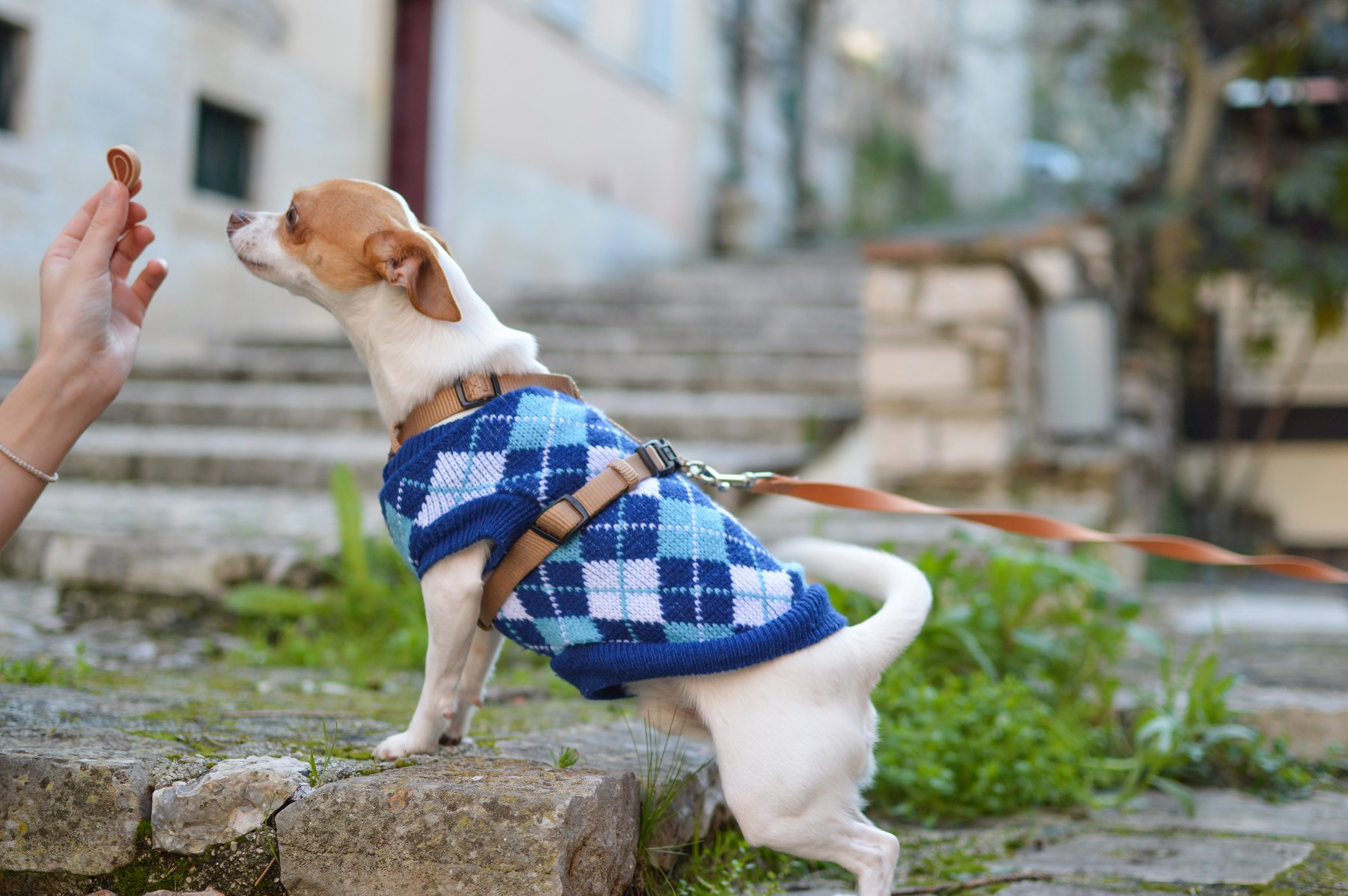
Use a short marker such as “yes” to identify the exact behavior that earned the reward. Say it while all four paws are down—not after you reach into your pocket.
Then deliver the treat low. Holding food at chest height can pull the dog's nose and front feet upward, accidentally rebuilding the jump you are trying to replace. Dropping or placing the treat between the front paws can reset the dog for another calm repetition. For dogs that guard dropped food, use hand delivery and get individualized professional guidance rather than scattering treats near guests or other animals.
Practice before a real guest arrives
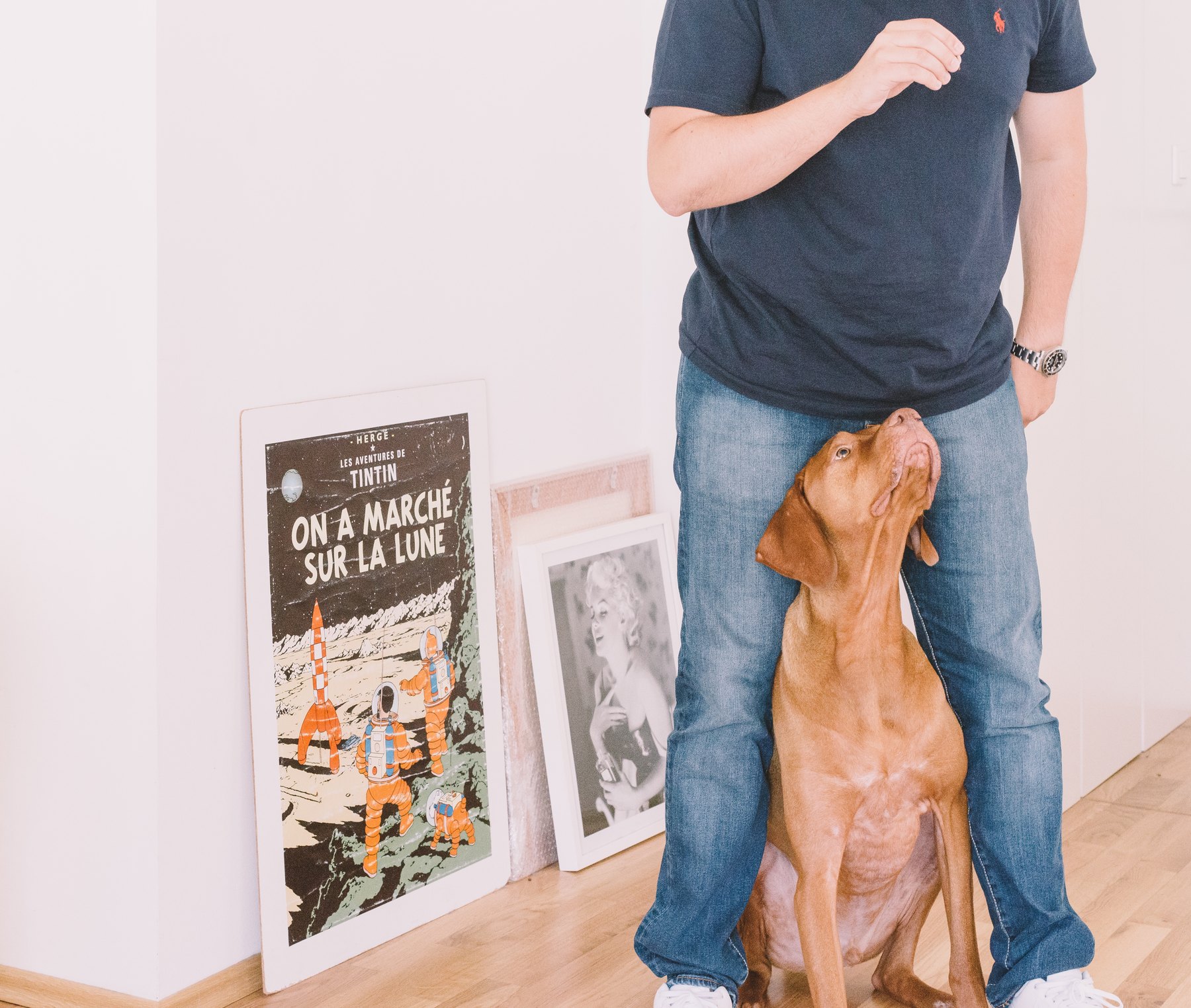
Doorbell chaos is a lousy classroom. Rehearse with one familiar helper when the house is quiet.
- Start with the helper several steps away.
- Mark and reward one second of four paws down.
- Let the helper approach one step.
- If the dog jumps, the helper stops or backs up without scolding.
- When paws return to the floor, mark, reward, and try again.
Keep sessions to a few successful minutes. If your dog cannot eat, respond to a familiar cue, or keep paws down even at a distance, the setup is too hard. Add distance, use a gate, or end the rehearsal. Five clean repetitions beat twenty frantic ones.
Use management so jumping does not keep paying
Training works faster when your dog cannot spend the rest of the week practicing the opposite behavior. Before opening the door, use a leash, baby gate, pen, or separate room with a chew. Management is not failure; it prevents a full-speed launch while the new habit is still fragile.
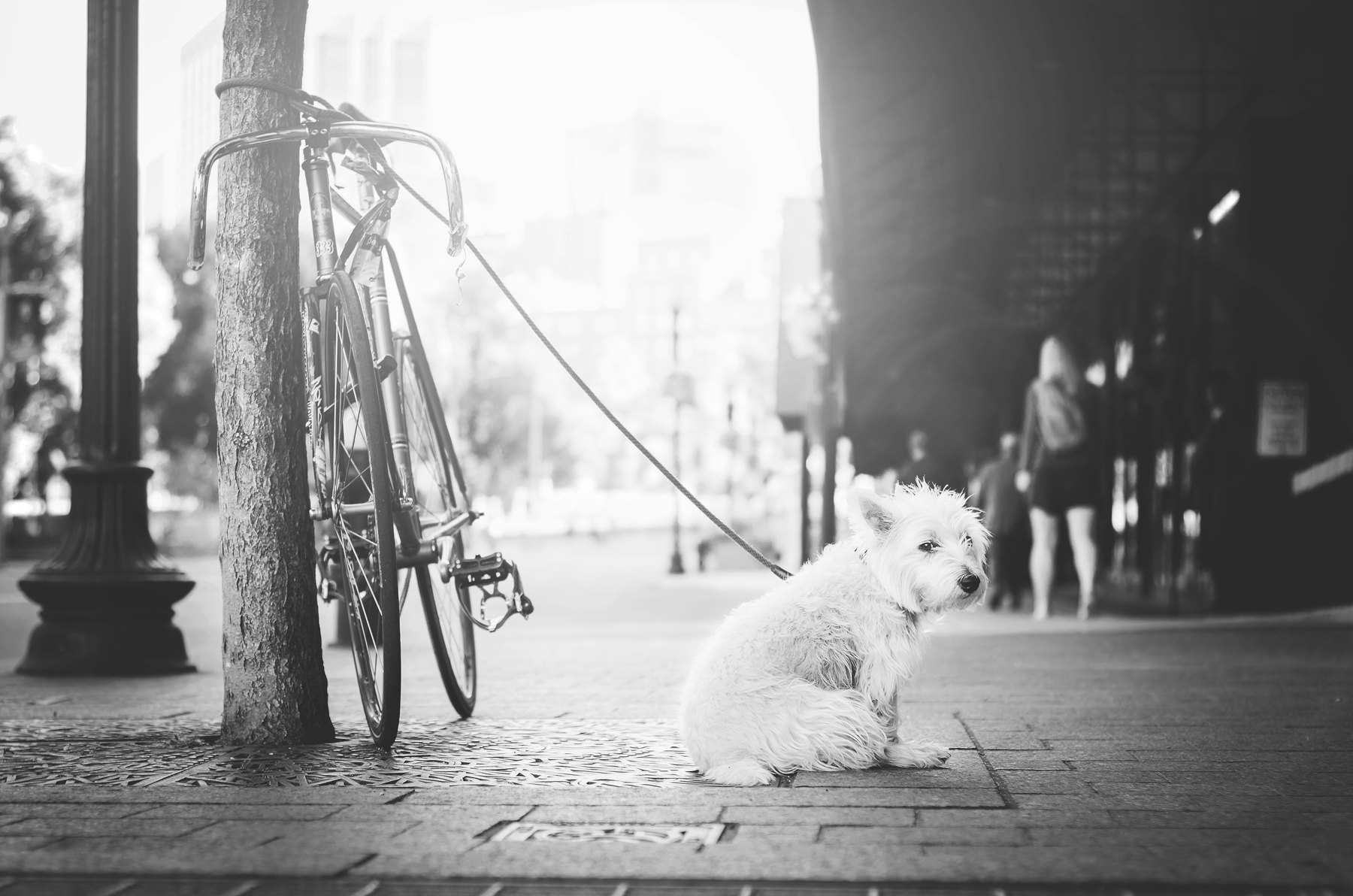
Keep the leash loose and supervised. Do not jerk it, pin the dog down, step on paws, or use the collar to hold the dog in a forced sit. Those tactics can add frustration or make visitors predict discomfort. Children, older adults, and anyone unsteady should stay out of the training setup until the dog can greet reliably with a barrier or capable adult handler.
Do not bribe the dog into position
A visible treat can become a bribe: the dog behaves only after seeing food. Instead, keep rewards in a pocket or container, mark the calm behavior first, and then produce the treat.
Once the pattern is reliable, vary the payoff. Sometimes give food; sometimes let the guest approach, offer calm petting, or toss a toy away from the doorway. Continue rewarding the hardest greetings—new people, exciting friends, or long gaps between practice—even after easy greetings improve.
What to do when your dog jumps anyway
Do less, not more. The guest should quietly turn their side or step away. Avoid shouting, pushing, kneeing, or flapping hands; to an excited dog, that can feel like attention or play.
Wait for paws to touch down. Mark that instant, reward low, and restart at an easier distance. If the dog immediately jumps again, pause the greeting behind a gate or in another room. The consequence is simple and brief: jumping pauses access; calm behavior restores it.
Do not punish enthusiasm. The goal is to give it a safer shape.
Common reasons the lesson gets muddy
Rewarding too late
If the dog sits, jumps, and then gets a treat, the jump may be what you reinforced. Mark the grounded moment immediately.
Petting while saying “off”
Touch and eye contact can reward social dogs even when your voice sounds annoyed. Remove attention cleanly instead.
Repeating cues
“Sit, sit, sit” teaches the dog that the first cue is optional. Give one cue if you use one, then change the setup if the dog cannot respond.
Asking for too much calm
At first, reward one second of four paws down. Build duration gradually instead of waiting for a perfect, statue-still dog.
Letting guests improvise
Explain the plan before they enter: “Please step back if she jumps. When her paws are down, I’ll say yes and you can greet her.” That is clearer than coaching during the explosion.
When to get professional help
Jumping from friendly excitement is different from greeting behavior involving stiff posture, freezing, hard staring, growling, snapping, panic, or a bite history. Use physical separation and contact a qualified reward-based trainer or veterinary behavior professional. A veterinarian should also assess a sudden behavior change, pain signs, or anxiety that is difficult to manage.
For the larger doorway plan, connect this exercise with our guide on how to stop dogs jumping on guests. Calm greetings also depend on reading stress and arousal accurately, which our dog body language guide covers in more detail.
Frequently asked questions
Should I reward my dog every time they do not jump?
At first, reward often enough that the rule is obvious. As calm greetings become reliable, gradually use fewer food rewards while continuing to reward with access, praise, petting, or play.
Is sitting required for a polite greeting?
No. Four paws on the floor is a clear, practical criterion. A sit is useful only if your dog can hold it comfortably while the person approaches.
What if treats make my dog more excited?
Use smaller, lower-value pieces, deliver them calmly near the floor, increase distance from the guest, and shorten the session. You can also use the guest's approach as the reward instead of food.
How long does calm-greeting training take?
There is no fixed timeline. Improvement depends on rehearsal history, arousal, household consistency, and how often you practice manageable setups. Look for better repetitions over time, not a promise measured in days.